
Top FAQs About Contrast-Enhanced Ultrasound (CEUS)
Medical imaging technology is constantly evolving, offering healthcare professionals new ways to diagnose and monitor conditions with greater precision. One such advancement gaining traction is Contrast-Enhanced Ultrasound (CEUS). While the technology has been available for some time, its application is expanding, leading to new questions from sonographers and other healthcare providers.
If you are looking to stay ahead of the curve in diagnostic imaging, understanding CEUS is essential. Here are the most frequently asked questions about this imaging technique.
What is Contrast-Enhanced Ultrasound (CEUS)?
Contrast-Enhanced Ultrasound is a diagnostic imaging technique that improves the visualization of blood flow and organ perfusion. Unlike standard ultrasound, which relies on sound waves bouncing off tissues, CEUS uses a contrast agent, typically microbubbles filled with gas, administered intravenously.
When these microbubbles are exposed to ultrasound waves, they oscillate and reflect a strong signal. This allows for real-time, high-resolution imaging of the microvasculature that might be invisible on a standard B-mode or Doppler ultrasound. It effectively bridges the gap between standard ultrasound and more complex modalities like CT or MRI, often without the radiation or nephrotoxicity risks.
How does the contrast agent differ from those used in CT or MRI?
This is a critical distinction for patient safety. The contrast agents used in CEUS are not dye-based like the iodinated contrast used in CT scans or the gadolinium-based agents used in MRIs.
CEUS agents are strictly intravascular. They stay within the blood vessels and are eventually exhaled through the lungs, rather than being filtered by the kidneys. This makes CEUS an excellent alternative for patients with renal impairment or allergies to iodine and gadolinium, as there is no risk of contrast-induced nephropathy.
What are the primary clinical applications for CEUS?
While originally utilized primarily for cardiac imaging (echocardiography), the applications for CEUS have expanded significantly. Today, it is widely used for:
- Liver Lesion Characterization: Differentiating between benign and malignant liver masses is one of the most common non-cardiac uses.
- Kidney Imaging: Assessing complex renal cysts and monitoring blood flow in kidney transplants.
- Trauma Assessment: Quickly identifying active bleeding or organ injury in emergency settings, particularly for pediatric patients where radiation exposure from a CT scan is a concern.
- Vascular Analysis: Evaluating carotid plaques and detecting endoleaks after aneurysm repair.
Is special equipment required to perform CEUS?
Yes and no. You generally do not need a separate machine, but your ultrasound system must be CEUS-enabled. Most modern, high-end ultrasound systems come with contrast-specific software packages. These software modes operate at a low mechanical index (MI) to prevent the ultrasound waves from bursting the microbubbles before the image is captured.
From a staffing perspective, the sonographer must be trained in IV cannulation (if they are administering the contrast) and the specific imaging protocols associated with contrast studies.
How does CEUS impact workflow and patient experience?
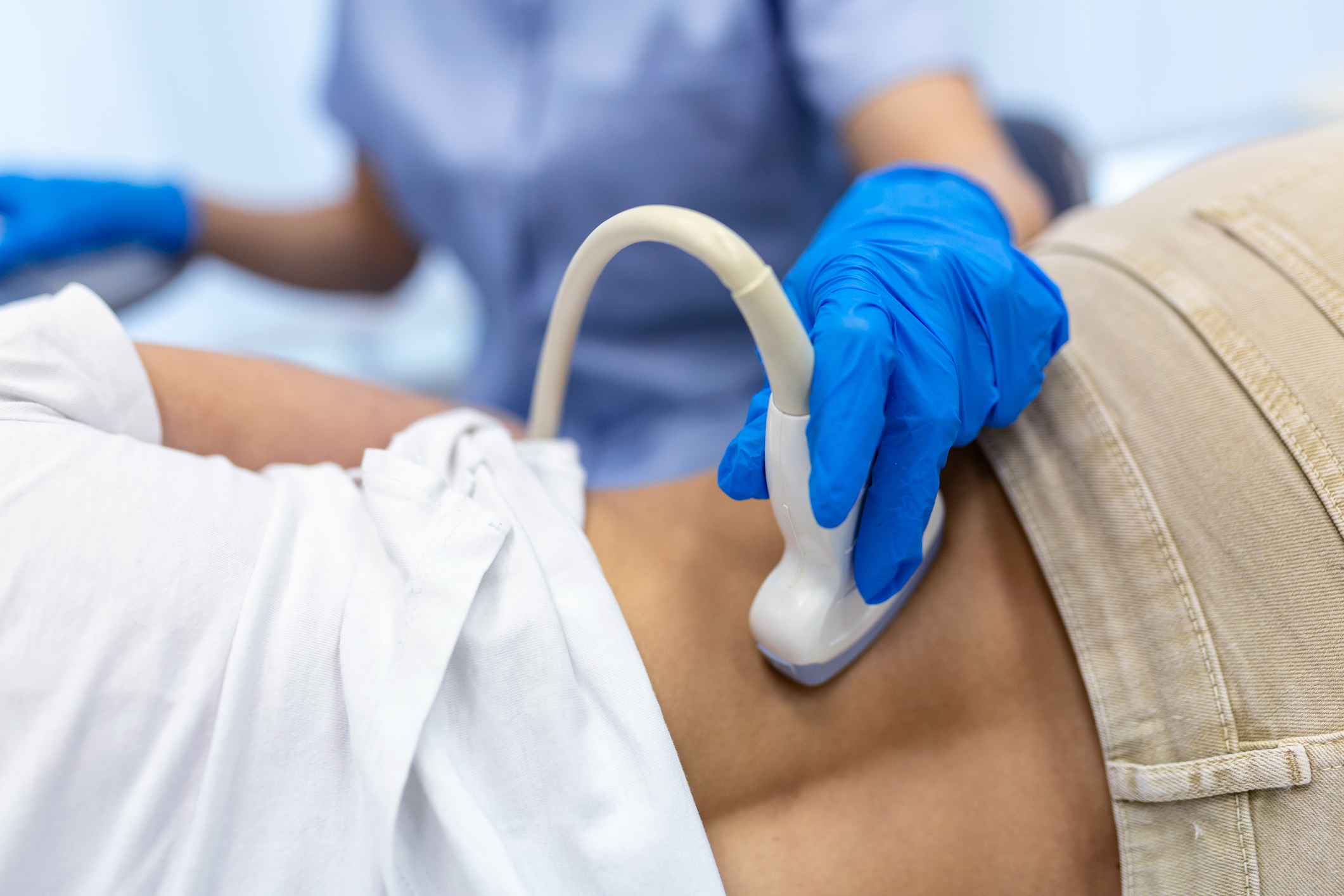
One of the biggest advantages of CEUS is efficiency. Because it is an ultrasound-based modality, it can be performed at the bedside. This is particularly beneficial for ICU patients who are too unstable to be transported to the CT or MRI suite.
For the patient, the experience is similar to a standard ultrasound, with the addition of a small IV injection. The exam is typically faster than a CT or MRI, and because it provides real-time dynamic imaging, the radiologist can often give an immediate interpretation. This reduces patient anxiety and accelerates the timeline for treatment decisions.

Discover Your Next Opportunity with AMN Healthcare
Staying proficient in advanced modalities like CEUS both improves patient care and enhances your career prospects. As an allied health professional, your skills are in high demand across the country. Whether you are an experienced sonographer looking to expand your horizons or a tech eager to work with cutting-edge equipment in top-tier facilities, travel staffing offers a unique pathway to professional growth.
AMN Healthcare connects talented healthcare professionals with exclusive travel assignments nationwide. From competitive pay packages to the chance to explore new cities, we help you find the role that fits your lifestyle and career goals.
Ready to take the next step? Browse our current travel assignments today.