
In-Person Interpreting Jobs In-Demand
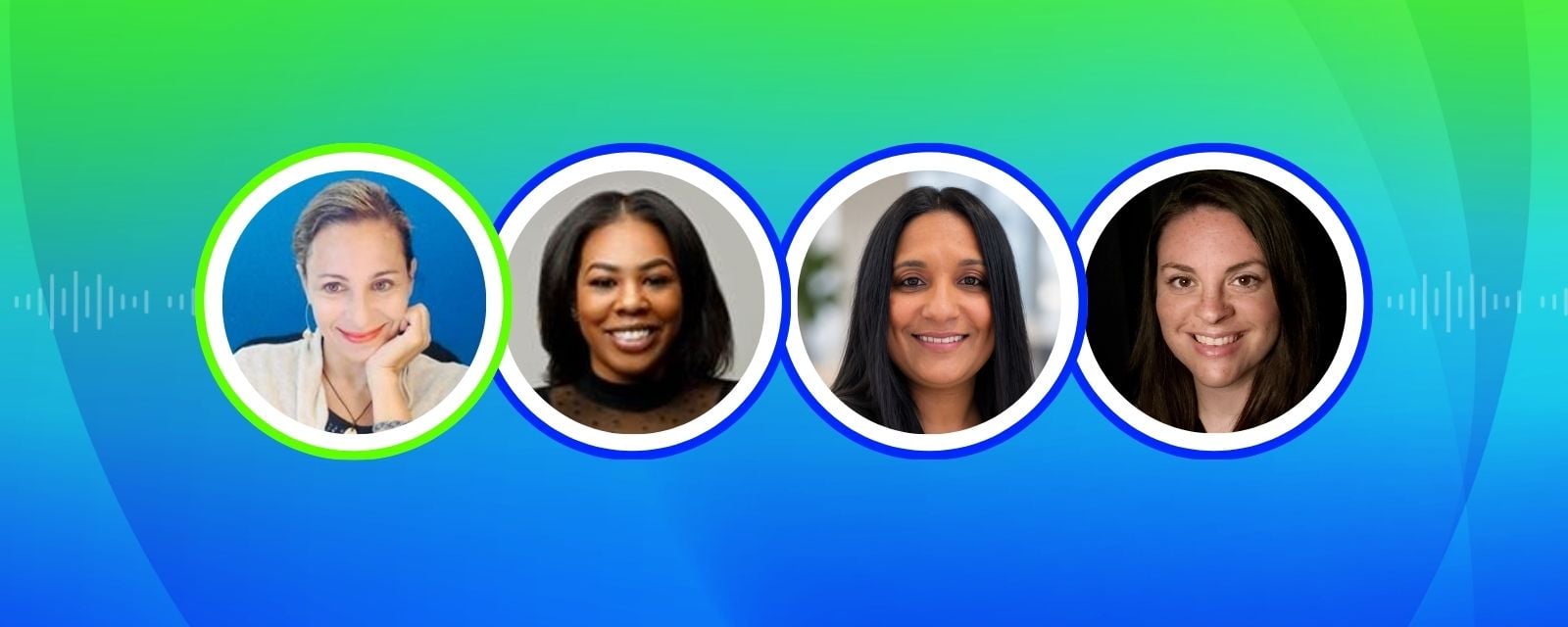
What does it take to bridge communication gaps for patients and providers, in person, every single day? In this episode of Making Meaning, AMN Healthcare's monthly live show from the Language Services department, host Natalia Jiron sits down with a panel of in-person interpreters and a talent acquisition consultant to pull back the curtain on what on-site medical interpreting actually looks like. From navigating hospital parking lots to processing vicarious trauma, this conversation covers the realities, rewards, and requirements of one of healthcare's most impactful roles.
Key Takeaways
- On-site interpreting involves far more than translating words. Interpreters prepare for sessions by gathering context, learning relevant terminology, and managing their time between back-to-back assignments.
- Building trust with both patients and providers starts with clear introductions and established boundaries before entering the room.
- AMN Healthcare requires a 40-plus hour interpreter training program from an accredited provider, proof of language proficiency, six months of professional interpreting experience, and a strong grasp of medical interpreting code of ethics.
- Vicarious trauma is a real and ongoing part of the job. Interpreters are encouraged to build in short mental resets between assignments and to prioritize self-care.
- AMN Healthcare currently has strong in-person demand for American Sign Language interpreters, along with openings for multiple languages across cities including Nashville, Richmond, McKinney, Denver, and Tallahassee.
- Candidates interested in in-person, hybrid, or remote roles can apply directly at amnhealthcare.com/interpreters.
Chapters
3:50 – Welcome and introduction to the Making Meaning live show
5:15 – Meet the panel: Kali, Alivia, and Betsy
7:06 – How each guest found their path into interpreting
10:17 – A day in the life of an on-site medical interpreter
13:10 – Accepting assignments and managing time between sessions
14:52 – Qualifications required for on-site interpreter roles
15:43 – Departments and settings interpreters work in most
17:18 – What happens before, during, and after an on-site session
19:14 – What recruiters look for in on-site interpreter candidates
21:00 – Collaborating with doctors and nurses during patient encounters
23:23 – Moving between specialties and departments throughout the day
27:29 – Opportunities for remote and overseas interpreters
28:24 – Building trust quickly with patients and providers
30:07 – Vicarious trauma and the emotional weight of the work
32:55 – What candidates can expect in terms of assignment volume
39:02 – Hybrid roles combining in-person and remote work
44:21 – Current high-demand in-person interpreting locations and languages
45:40 – Final thoughts: the rewards of being physically present with patients
51:16 – Advice for candidates interested in in-person interpreting roles
52:52 – Closing remarks and next show details
About the Guests
Kali is a talent acquisition consultant with AMN Healthcare Language Services, focused on recruiting and supporting interpreters across in-person, video, remote, and over-the-phone service lines.
Alivia is an American Sign Language interpreter providing on-site interpreting services, raised within the Deaf community and immersed in ASL from a young age.
Betsy is a Spanish medical interpreter who has worked in the field for several years, specializing in maternal fetal medicine and labor and delivery.
Full Transcript
[Natalia]
3:50 Good morning. Welcome to our live show, Making Meaning. This is the live show that the Language Services department at AMN holds every month. My name is Natalia Jiron, and I'm going to be your host for today. I'm a member of the Talent Acquisition team, and I'm also a CMI interpreter myself. Here with me on video, we have Jess, who is our CDI interpreter, who's always helping me out a lot behind the scenes. We have Kat, who's paired with Jess, and she's our ASL interpreter. To both of you ladies, thank you very much. To the people at home, this is a live show, so we're here for you. Without you, we cannot make it happen. We have a chat box, so please feel free to drop in your comments and your questions throughout the show, and I'm going to be reading through them as we go along. We would love to hear from you. Tell us where you're watching us from. Tell us who you are. We're here for you.
Today's topic is a very interesting one. We're going to be talking about in-person interpreting jobs, what's in demand currently for AMN. Now, to be able to do this, we're going to be going through a day in the life of the interpreters. Navigating the facility, stories from the field from our in-person interpreters, hot in-person interpreter jobs, and final thoughts from our guests. Now, friendly reminder: if you want to apply with AMN, feel free to send us your resume or apply through amnhealthcare.com/interpreters. A recruiter will contact you as soon as we can.
Now, we have a panel of guests today who are joining us, so let's bring them out so that we can get to meet them. Hello, ladies.
[Guests]
5:28 Hi, how are you?
5:30 Good morning.
5:30 Good morning, great morning.
[Natalia]
5:33 Thank you for joining us today. Let's go around the room and take a couple of minutes to introduce yourselves. We would love to hear from you. Kali, why don't we begin with you?
[Kali]
5:43 Hi, I'm Kali. I'm a talent acquisition consultant with AMN Healthcare Language Services. I mostly focus on recruiting and supporting interpreters across a variety of languages and service lines. Not only do I do in-person, I also do video remote and over-the-phone interpreting. I'm looking for interpreters that have a passion for building those strong relationships with our clients in a hospital setting. And I'm committed to finding amazing interpreters to help things go along.
[Natalia]
6:20 OK, yeah. Feel free to send Kali an email. She's going to help you get a job with AMN, hopefully. Alivia, let's hear from you.
[Alivia]
6:30 Hi there, everyone. My name is Alivia Parker, and I am one of the sign language interpreters for on-site interpreting here at AMN.
[Natalia]
6:38 Thank you. Thank you for joining us today. We're very lucky to have you. And Betsy, why don't you tell us about yourself?
[Betsy]
6:44 Good morning. My name is Betsy. I am a Spanish medical interpreter here for AMN, and I have been doing this for a couple of years now, and it's a great place to be and a great career.
[Natalia]
7:01 Well, thank you for joining us. We're very lucky to have you as well.
[Betsy]
7:04 Thank you.
[Natalia]
7:04 OK, let's get to it, ladies. Let's get to know a little bit about you. Alivia, why don't we begin with you? What is your language pair, and how do you go about learning a second language?
[Alivia]
7:17 Sure. My language pair is ASL, American Sign Language, and English. I was fortunate enough to be raised in the Deaf community by my hearing parents. They were involved with the DDeaf community long before I came along, and they just kind of kept going about their lives and threw me into it with them. So I was able to be immersed in the community at a very, very young age. And at that time, you have to communicate your needs and wants. So I was able to pick up American Sign Language, and I never stopped using it.
[Natalia]
7:56 Wow. And you were able to make a career out of it. That's wonderful.
[Alivia]
7:59 Thank you.
[Natalia]
8:00 Thank you for sharing that. Betsy, why don't you tell us what got you into in-person interpreting specifically?
[Betsy]
8:06 Well, first of all, coming from the island, having parents who speak Spanish. They don't speak the language. And that was something that I found very interesting, the fact that I was able to help my parents know exactly what was wrong with their health, and the fact that I can interact with people and make their life much easier just by pretty much standing next to them and being able to communicate between the provider and the patient. It's just something that, pretty much, you can't explain. It's something amazing, being able to help them. And currently, that's what I do on a daily basis.
I do Spanish to English and back and forth, and it's amazing. It's like a calling, something that makes you feel like you're there for that specific person, and you're there to help them and make a difference in the visit, the outcome of the visit.
[Natalia]
9:08 Yeah, we've heard that a lot from our interpreters. And I myself can attest to that, that it is like a calling, and you do feel that you're providing a service. So yeah, we all agree.
Thank you for sharing that. And Kali, tell us, what attracted you to recruiting for language services roles, which is very specific?
[Kali]
9:30 What attracted me to language services recruiting was knowing that the work goes far beyond access: understanding and connection to someone who may otherwise face language barriers. Being able to support the interpreters while contributing to a better patient experience makes this work extremely rewarding.
[Natalia]
9:57 Thank you. And on that topic, I have Hughes Pierre, who says that he wants to work for AMN as an interpreter. Well, Hughes, feel free to send your application to amnhealthcare.com/interpreters, and hopefully you're going to get Kali as a recruiter to contact you back. Sir, we hope to hear from you too.
OK, let's get into it. Let's talk about what a day in the life of each one of you ladies looks like. Alivia, walk us through a typical day as an on-site medical interpreter.
[Alivia]
10:28 As an on-site medical interpreter, the first thing you do is find parking. Allow yourself plenty of time to get parked and then navigate your way. Look for signs. I typically ask people where certain places are if there's no real clear sign set out. And then always make sure that the staff, the nurses, the doctors, or whoever's there know who you are and who you are here for. So making sure you have that information ready on hand, having your AMN app pulled up or having any information that can help guide you to where you're supposed to be on time, is what you do first. As soon as you get there, you're just introducing yourself. You're making sure that everybody knows that there's access available. Now you're here. Sometimes you switch out with another interpreter, so the staff already knows what you do, which is wonderful. You don't have to repeat the process and what it looks like again. Other than that, you just start interpreting. You do your job, you introduce yourself, be cordial, and then everything kind of goes great from there. That's basically the day in the life.
And then, once your time is done, you leave. My biggest thing is always say please and thank you. Make sure you're cordial because they're your customers as well, not just the Deaf person or the person you're interpreting for.
[Natalia]
12:09 It's true. Thank you. Yes, we do provide a service to both parties. Not only the healthcare providers, but the patients themselves. We have Florente Canela, who says, "That's really interesting." "I would love to work as an interpreter," but she lives in Mexico. "I would love to work for AMN, and I have two years of experience as a medical over-the-phone interpreter."
Kali, do you want to take this one? Are we currently hiring in-person from Mexico?
[Kali]
12:35 As of right now, we are not currently hiring for in-person in Mexico, but we do hire in Mexico. But at this time, we just don't have any VRI opportunities available.
[Natalia]
12:50 OK, OK. But again, as a recommendation or personal tip, please send your application regardless, amnhealthcare.com/interpreters, because we get those applications all the time. Our recruiters are going to contact you, and we can have you there for when openings do open up, because everything is constantly changing.
Betsy, let's go to you. How do you go about accepting assignments and managing your time as an on-site interpreter? How does that work?
[Betsy]
13:15 Usually for me, one of the first things that I do when I receive an assignment is I have to make sure of the language, the subject, and not only that, also the location and the duration of the time. Usually, once the assignment has been accepted by me, I have to make sure of what the factors are, the distance. Most of the time, I would say, I like to do the pre-session terminology. I like to get familiar with what's going on with the patient or what the assignment is going to be, the assignment itself. And usually I tell every interpreter that either shadows or is with me throughout the day: You have to make sure that you build in that little bit of time in between, a break, just to build your mental break and make sure that you prevent any fatigue. So pretty much, just make sure you're there on time, you can do the assignment, and you're prepared for it.
[Natalia]
14:25 That's wonderful. Yes, you never think about all these things that really come into play. What you need to get ready, and even the parking, Alivia, that was one thing I didn't consider myself, but it's very true. And it does play a role when you're doing in-person versus remote. It's very, very different. So thank you for sharing that with us.
We have Kenneth, who's saying thank you for everything that we do, and also Sarah B. Jenkins: "Thank you for the work that you guys do." So thank you to everybody.
Kali, let's hear from you. What are some of the qualifications that we require on-site interpreters to have before they can come to work for AMN? What would they look like?
[Kali]
15:02 Yeah, we're looking for interpreters that have completed a 40-plus-hour interpreter training program from an accredited program. We're also looking for proof of language proficiency in the target language, as well as six months of professional interpreting experience. Of course, a strong knowledge of the medical interpreting code of ethics.
[Natalia]
15:26 Yes, those things that Kali mentioned are key ingredients of the recipe of becoming a medical interpreter. You've got to have the training, you've got to have the experience, and you have to have knowledge of the code of ethics, because it comes into play at each and every one of your sessions. Alivia, what are some of the departments or settings that you find yourself working with most often?
[Alivia]
15:49 Yeah, it constantly changes. I think most of the settings that I find myself in are mental health and medical, and medical can be anything from a surgery to maternal post-birth. It kind of runs the gamut. You always get a little bit of information, but when you get there, you get a lot of information, which is really good. The more information we have, the better we're going to be at our job.
[Natalia]
16:24 And let me ask you, which one do you like the most? Personal choice, what do you like most?
[Alivia]
16:33 Honestly, I like both of them. The staff at all of the places that I've been to have just been wonderful. And regardless of how the patients are, the staff really makes it. You have to work with them. They are also your customer. And so the more friendly you are to them, the more friendly they'll be back to you, which kind of just makes your day go by much quicker. There's less to talk about, and more focus can be given to patient care when you're both at a place where you respect each other and you're friendly with each other.
[Natalia]
17:13 Yeah. They become a bit like your coworkers. That makes a lot of sense. Betsy, let's go to you. When people think about medical interpreting, they just think about the conversation. That's all they think about, but it's so much more.
17:26 We've been speaking about many things that really come into play. So tell me about the things that you do before, during, and after the on-site session, and the things that people don't really think about or get to see.
[Betsy]
17:38 Yeah, this is very crucial because people see that, "OK, you're just a medical interpreter." No, we're not. Most of the things that I usually like to do, I like to gather a lot of the context. I like to speak to the provider beforehand, which I try to do most of the time, just to gather some information about what the visit is going to be about and the specific medical vocabulary that I'm most likely going to be using throughout the session.
Sometimes we get into the sensitive, emotional dynamics of the visit, and things like that are what I like to know. I like to specialize. If there are any procedures or any pharmacology, it doesn't matter. Usually I do maternal fetal medicine, and that's something that I had to train myself into doing all over. A lot of the terminology is very different from other assignments, such as internal medicine. So pretty much, I like to gather as much information as I can. I like to go there prepared, knowing that I'm not just going to be looking at the patient and interpreting back and forth. I like to be prepared. I like them to know and understand that I'm there, but I'm also aware of what's going on, and I'm not just that person who is interpreting for them. I like to make sure they know that I'm there for them and that I know exactly what's going on.
[Natalia]
18:53 Well, to our in-person interpreters watching us at home, these are good tips. You should be taking notes. Yes, get ready, prepare, learn the terminology, and learn a little bit about the field that you're going to be interpreting for, because it really does vary from session to session or assignment to assignment. It varies a lot. So any prep that you can do goes a long way.
Kali, let's talk about the recruiting part of things. When you're inviting a candidate for an on-site interpreter role, what are some of the qualities you look for to help determine that they're up for the challenge?
[Kali]
19:25 That's a great question. Previous on-site experience is important because in-person interpreters must be comfortable managing real-time health interactions, navigating professional environments, and applying interpreting standards independently. Each session is going to be different from the next. So having that extra knowledge, that pre-knowledge of different medical terminology, is so important. To verify experience, we review candidates' resumes, discuss their interpreting background, and evaluate relevant work history. So even if it may not be exactly interpreting, we do look at your work history as a whole to see how we can connect that background knowledge or previous work history with your interpreting experience, as well as checking over training and any credentials needed for this position.
[Natalia]
20:37 Yeah, and you mentioned something that's really important: the experience that we require is basically so that you feel at ease. You're going to come across situations where you're interpreting for a surgeon or in a very high-stress situation, and the more experience you have, the more at ease and comfortable you're going to be managing those tough sessions or assignments. So yeah, OK, thank you for sharing that, Kali.
So let's get into it. Navigating the facility. Alivia, how do you collaborate with the doctors and the nurses? You mentioned that you work very well alongside the staff. So how do you do that during these patient encounters?
[Alivia]
21:15 Again, before they go into the room, it's important to introduce yourself, explain what you do, and make sure that everybody knows to look at the patient. We're not the patient. We are just there to ensure that the doctor can communicate with their patient and vice versa. Making sure that they know that prior to going into the room saves you a lot of time. It saves a lot of that awkward feeling of, "Wait, who do I look at?" And I think the doctors and nurses really appreciate that. A quick, five-second rundown of, "I'm the interpreter. I'll be interpreting for you. Please address your patient, and I will make sure that the communication is accessible for both of you." Make sure they understand that the doctors need us just as much as the Deaf people need us. I understand the Deaf person, but the doctors and the nurses don't understand the Deaf person. So they also need the interpreter. It's not a one-sided usage. If you can emphasize that, it also brings the autonomy and the empowerment back to the patient in terms of ensuring that you're all on the same page. Again, a smile goes a long way.
So if you can just be cordial and put whatever you're going through aside, the doctor really sees that you are genuinely here to interpret and that you want to be there, instead of thinking about your laundry list or the things you need to do that day. Maybe just put those off to the side for this interaction. Things go a lot smoother when you're more cordial and your mind is focused on the task at hand.
[Natalia]
23:13 Yes, that engagement. You're right, it really does open up doors, and it helps everybody. I feel much more connected, and things flow a little bit better afterward. All right, Betsy, how do you navigate moving from one specialty, one department, on to the next throughout the day?
[Betsy]
23:31 Sometimes it's just so hard to go, but I try. This is what I think. It's usually a mental reset. I have to give myself at least 30 seconds, and sometimes you don't have 30 seconds. You have to go from one room to the other. But I try to give myself those 30 seconds before I go see that other patient. I like to take that mindset off of the previous patient because, of course, it's not always the same specialty. It's not always the same. You don't see the same patient or that same specialty. So I do try to go in refreshed and give myself enough time to get there. I'm usually walking around with essential tools, a little something to write notes down, which is very important. I always like to give them a clear status of where I'm going or where I'm coming from. And when it comes to picking and choosing which assignments you're going to take, I'm not saying one is more important than the other, because with medical, everything is important. You can say, "I'm going to choose this one," but if I see that there is more of an urgency with one appointment over the other, that's usually how I pick the assignments when they're back-to-back. Like I said, I'm not saying that one is more important than the other, but that's a way of resetting your mind, clearing everything out, and picking the next assignment, and deciding which one is the priority at the moment you're picking an assignment.
[Natalia]
25:13 OK. And that's the thing about the in-person role. You have autonomy. You decide, "I'm going to choose this assignment at this location." You get to decide. So you can set it up in a way that works for you. And every in-person interpreter is very different. So yeah, OK. Kali, we already addressed this a little bit, but tell me more. Why is previous on-site experience required for interpreter roles? And how do you verify that candidates really do have interpreting experience before taking their first assignment with us?
[Kali]
25:47 Yes. A lot of times, we receive the resume, but we do have to dig deeper. We ask questions that are specific to interpreting and in-person interpreting. For us, we listen, but we also have to go a little bit beyond that, because we want to make sure that we are doing the proper vetting. People are going to be experiencing real-life, real-time interactions in the medical facility. So we always want to make sure that anyone we vet is properly vetted and has received all of the credentials needed. Because one thing we would never want to do is put someone who isn't fully prepared for this type of situation into that situation. So we always want to make sure that the interpreters we hire have their medical interpreter training and invest in their own continuing education credits, because this really does shape how we're able to show up as a company when it comes to serving our clients.
[Natalia]
27:08 And it is true. At AMN, we really believe in continuous education. I keep saying this every time I do this live show, but we really do work alongside those doctors, and doctors continue to study, learn, and train for the rest of their lives. So we are expected to be able to work alongside them. Everything is changing. So continuous education is really important.
Now, Kali, since I have you, we have Kenneth. He's asking, and this is a question I would like to ask too, whether AMN also works with interpreters who are not present in the U.S. and are working remotely, maybe video remote interpreting or over the phone. What are we doing recruiting-wise these days?
[Kali]
27:47 For right now, we are not recruiting for VRI remotely overseas. That could always change. So I would say keep checking AMN's careers page, because that will have the most updated information on whether we are hiring in your geographical location.
[Natalia]
28:11 OK, thank you for sharing that. But again, and I keep saying it, amnhealthcare.com/interpreters. Send us your application. Things change. We never know. So we're going to have your resume handy. OK, Alivia, let's go to you.
What tips can you provide for interpreters to quickly establish trust with both the patient and the provider?
[Alivia]
28:34 I think, again, just making sure that you introduce yourself to the patient prior to going into the patient's room. Sorry, to the doctors and the staff and whoever goes into the patient's room. Introduce yourself to them. Just say, "Hi, I'm your interpreter. I'm ready to go in when you are." And then when you go in, make sure you introduce yourself to the patient right before the doctor or the nurse introduces themselves to the patient, if that's your first encounter with the patient. Always remember that. I personally don't go into the patient's room unless there is a doctor, a nurse, or someone from that space with me. There's no need for us to be in the room without them. So it's really great when you can build trust by coming in when someone needs to say something to each other, and then leaving when they leave.
[Natalia]
29:41 OK, thank you. Yes. And I've heard that before. It's also best to establish roles and clear boundaries. That's good. We have Abner here, who says, "Hi, everyone. I used to work for a local hospital here in Colorado. I did in-person interpreting, and we were always given at least ten minutes before taking on the next assignment." So that's what Abner has to say. And Kenneth says, "Thank you for the clarification." You are very much welcome. Betsy, let's talk about vicarious trauma. That's the term. And that's a reality when you're a medical interpreter.
I'm sure our interpreters know it and have heard about it before. So how does being physically present in the room impact you? How do you process vicarious trauma when you actually experience it?
[Betsy]
30:29 That's a really good question. I can tell you it is hard, because as an interpreter, like I mentioned before, I'm not just there to speak word for word what's coming from the provider and coming from the patient. Most of the time, you have to walk in the patient's shoes and let them know that they're not only a fundamental part of the visit. You are there to help them. You're there to make sure they know that we're not just there with them for no specific reason. We're there because we're there to help. And a lot of their trauma becomes your trauma. A lot of their tears, everything, becomes yours as well. So it's something that stays with you for a long time. You're not just there, I would say, for a paycheck. No, you're there because you want to help them and make them feel like their suffering is also my suffering. So that's something that impacts your life on a daily basis. Sometimes you go home with it, and you're thinking, "Oh my God, I just hope that I was able to make a difference in this patient's life." And then you’re like, "Well, everything was well explained, and I was able to make a difference with this session”.
[Natalia]
31:58 Yeah. And you brought it up. We've spoken about this before, that medical interpreting has a bit of a calling aspect to it, because you are there to provide a service. So yeah, it's one of those jobs that is not just a nine-to-five. You are there experiencing people's trauma, and it's a little bit more complex than just doing the job and going home. Sometimes you do take it home. That's why self-care for medical interpreters is a very, very pivotal aspect of the role as well.
[Betsy]
32:23 And it's very different because you're not behind a camera. So they feel you, they see you, and they see that you're there because you want to be there. You have to feel compassion for the patient, because the patient is trusting you. They're putting their health in your hands as well as the provider's. So you have to make sure the patient feels that you're there for them.
[Natalia]
32:47 Yes, yes, thank you. Thank you for sharing that. And I'm sure all of our AMN interpreters are very good at doing that. Yeah, we have very good interpreters. Kali, before coming on board as an in-person interpreter with AMN, do candidates get a sense of the number of assignments they're going to be getting every day, or how does that work for each area?
[Kali]
33:07 Yes. Assignment volume for in-person interpreters can vary significantly based on client demand, the languages supported, and, of course, the specific geographical location being serviced. Because those factors fluctuate, we cannot guarantee a set number of appointments. However, we strive to keep all of our interpreters informed of available opportunities. New appointment requests are regularly distributed through our app, which allows interpreters to review and accept assignments that fit their availability and their travel preferences. This provides flexibility while ensuring interpreters remain aware of new opportunities as they become available in their area.
[Natalia]
34:00 OK, that's true. You will get the assignments through the app, and I'm sure the ladies here can attest to the fact that they can say whether they're going to take it or whether they're not able to take it, for whatever reason that may be. And along those lines, we have Nancy here, who is joining from Worcester, MA. "I'm a Spanish medical interpreter. Is your company only for ASL interpreters?" Kali, do you want to take this one?
[Kali]
34:25 No. We do actually have opportunities in the Worcester area. This is open to a lot of different languages, Spanish included. So if you go to our careers page at amnhealthcare.com/careers/language-interpreters, you will be able to apply for a position directly with us. Thank you.
[Natalia]
34:52 Thank you. Yes, keep sending us your applications and your resumes. We want to get them so that we can locate you or place you where you're needed. So thank you. OK, let's talk about stories from the field. We have the experts here joining me today. So let's get into it. Alivia, can you share a moment when you saw firsthand the impact that interpretation had on patient care?
[Alivia]
35:18 Yeah, one that definitely sticks out to me is mental health interpreting. The setting is very different from medical interpreting in a hospital or an outpatient clinic. The mental health setting thrives on group therapy, group participation, and those one-off conversations that happen while people are passing each other in the hallway or in the lounge area. It's imperative that the interpreters are out there with the clients, ensuring that they're also a part of the conversation. Mental health is a place where they get to hear stories from one another, and when the interpreter doesn't feel comfortable or isn't out there, it hinders their ability to get better. So I've seen a lot of positive impact when interpreters are out there interpreting those patient-to-patient conversations and being truly involved. And you see that the clients really have smiles on their faces, because both the hearing and the Deaf clients feel heard and understood, and they can have a conversation with each other. That brings a smile to my face, because I know that maybe for the first time ever, each person is being understood and heard just by having the interpreter in the room and available.
[Natalia]
37:03 Yeah. Being heard and understood. That's it. That's what you're helping them do. In all sorts of settings, but that's very important. Thank you. We appreciate that. Betsy, can you share a patient interaction that has stayed with you? Anything that happened that you still think about?
[Betsy]
37:20 Well, Betsy here is very sensitive when it comes to babies and kids, and they break my heart. I did a labor and delivery where there was a fetal demise. It was a stillbirth, and I still have the pictures in my head of the whole family. They were a complete mess. She was grabbing all the baby stuff, her bag, and discarding it in the trash. That's something that stayed with me. But one good and happy outcome was that about a year and a half, close to two years later, the patient recognized me at the hospital. She came running over with this beautiful little girl, about a year and a half old. And she said, "Hey, my husband and I decided to give it a try. This time it was successful. We have this little girl. God blessed us with this little girl." So that's something that stayed with me. I love maternal fetal medicine and labor and delivery, but unfortunately, it's not always a happy outcome. This was very nice because she had a bad experience with the first pregnancy, but the second time around, it was successful.
[Natalia]
38:34 And it's so great that you got to know that. That you found out. That's one—
[Betsy]
38:41 Yes, it made my day. I felt like I hit the jackpot.
[Natalia]
38:46 Yes, yes, yes. But you're right. Not everything is good. Sometimes bad things happen, but then again, good things happen too. So it's really great.
[Betsy]
38:53 That's correct.
[Natalia]
38:54 OK. Thank you for sharing that. Kali, what other opportunities do we currently have for interpreters, other than the in-person roles we've been speaking about? Tell me about the hybrid role.
[Kali]
39:04 Yes, we do offer hybrid roles that include the availability to take on in-person assignments as well as some over-the-phone and remote interpreting. Both are still going to be contractor positions, but they do give you the flexibility to take more calls and be a little more available. As we know, in-person is really based on our client and service needs. Whereas with OPI, we work with so many [clients], so you have the opportunity to do both at the same time.
[Natalia]
39:45 Yes. So again, if you're interested in the hybrid role, and I keep saying this, amnhealthcare.com/interpreters. Send us your application, and hopefully you'll get Kali, because she's a very good recruiter. So thank you, Kali, for sharing that with us. OK, let's talk about the hot in-person interpreting jobs we currently have. Alivia, tell me about your area. In the area where you currently do on-site interpreting, what's the volume of assignments? Are they all at the same facility, or multiple locations? What does that look like for you?
[Alivia]
40:15 Yeah. In the Austin area, we have a little over 25 locations, all within probably an hour to an hour and a half of where I currently live. So there are a lot of places I could be called to. Each facility varies in how it's structured, its size, and so on. But overall, we don't get too much every day. It's more like once or twice a week. Sometimes there are emergency requests, and I get a phone call at 11:00 p.m. asking if I can hop in and go on-site. It varies. It's not all the time, which is nice, but at the same time, it is steady. I would say for Austin, with a large Deaf community here, there's a good volume of work. It's not daily, but it definitely comes weekly here in Austin, at least.
[Natalia]
41:39 OK. And you mentioned the element of surprise in healthcare. Not everything is planned and booked well in advance. Emergencies happen all the time in healthcare. So yeah, it's good that we have interpreters who are willing to take that last-minute session at 11:00 in the evening. So if you took that one, thank you, Alivia. We appreciate your willingness to help AMN out. OK, same question for you, Betsy. What are assignments looking like week to week? Are they at the same facility or various locations?
[Betsy]
42:10 Well, I have been blessed to be able to stay at the same facility. All right. They call it the towers, and I named it the twin towers because there are two towers at the same facility. One is maternal, where I see maternal fetal medicine, and the other one is, I'm sorry, the Women's Health Center. So I am blessed to be in one specific building.
I try to cover- We are usually looking at between 15 and 20 patients a day.
I have the schedule, and like Alivia said, sometimes the patients are back-to-back, back-to-back, and I have to refresh my memory every 30 to 40 seconds and go see the next patient. But I am very fortunate that pretty much all my patients are here. Unfortunately, I don't have time to see every patient, but I try to see as many patients as I can. Usually on the schedule, it's between 15 and 20 patients that we help on a daily basis. And I am very happy with that.
[Natalia]
43:21 You're very busy. Fifteen.
[Betsy]
43:23 We are very busy. Yeah, some days I have a patient for 30 minutes, and then all of a sudden there's an emergency and I have to stay with the patient. So two hours, two and a half hours can go by, and you're like, "Oh my God, I'm still here." But it's nice, because personally, I don't like to leave the patient. I'm going to be there for you from the moment I start the visit until you're done. I make sure I go through the checkout process and the check-in process. So I'm here. I'm going to be here for the patient regardless. It doesn't matter if it's 15 seconds. It doesn't matter if it's two or three hours later. I'm going to be there. And I'm fortunate to be in one facility, one building, covering that whole building.
[Natalia]
44:04 So the commuting you do is within the building. You commute within the campus.
[Betsy]
44:08 Yep, mostly. Even when I walk to the other building, it's less than a two-minute walk, but it's mostly the Women's Health Center.
[Natalia]
44:20 OK, OK, thank you. Well, you're very lucky, so good for you. Let's talk about what we're recruiting for these days. What are the highest-demand positions? What are the openings for in-person interpreting at AMN?
[Kali]
44:34 Yes. We do have a lot of in-person opportunities currently. One of our strongest areas of need for in-person interpreting is American Sign Language. We have openings in Gainesville, Nashville, Fort Worth, and Kentucky, as well as a need in Plymouth, MA; Richmond, VA; and McKinney, TX. The areas where we're mostly looking for a lot of different languages include Nashville, TN; Frankfort, Connecticut; Georgetown, Texas; St. Petersburg, FL; Plymouth, MA; Easton, PA; Beverly, MA; Richmond, VA; McKinney, TX; Denver, CO; Tallahassee, FL; and Allentown, PA.
[Natalia]
45:28 OK, so our recruiters are very busy, and we need candidates. So please, once again, amnhealthcare.com/interpreters. Send us your application. We would love to hear from you so that we can connect. So, final thoughts from our guests. We're getting to the end of the show today. Alivia, what is the most rewarding part of being physically present as an interpreter with the patient and the provider?
[Alivia]
45:53 Virtual interpretation is wonderful for quick emergencies, or when you already have the on-site interpreter on their way but you need some information. Pulling up the video remote interpreter is always a great first option for getting information fast. Showing up as the on-site interpreter afterward is even better, because the patient and the staff don't have to deal with the choppiness. They don't have to deal with the cutting in and out. They don't have to deal with the possibility that this interpreter doesn't understand this Deaf patient, or vice versa. Maybe the interpreter just isn't skilled in this area of medical expertise. All of those things put together in one little iPad is not the best experience for our customers, our patients. And being able to come in as the on-site interpreter and seeing their body just say, "Yes, I have an in-person interpreter"— It's one thing to be 2D. It's great, again, as a means until the 3D option shows up. And when the 3D option shows up, you can see everything, and it's better. You can be in the places the Deaf person needs you. Instead of being stuck over on the right side, maybe you can move over to the left side of the bed. Or you can go anywhere the patient goes. So you're not limited to, "Oh, I'm sorry, I have to be stuck and plugged into the wall. You can't move me around." Now it's, "Oh, I have a live body that can move with me and go with me where I need to go," and all of that. So yeah, it's really great being the person who shows up and everybody goes, "Finally." A sigh of relief.
[Natalia]
48:13 Yes, yes. And if you want to become a member of our on-site interpreters, just like Alivia is describing, and provide such a wonderful service, again, amnhealthcare.com/interpreters. Send us your application, and hopefully Kali can help you, because she does a great job at it as well. Betsy, what keeps you passionate about this job and this opportunity?
[Betsy]
48:35 What keeps me passionate about this job is the continuous learning. And like Alivia said in her comment, it is very different when you're stuck on a wall, sharing your space with a cart. It's not the same as coming into a facility and being able to show the patient that you are there for them. You tackle different little puzzles, and you use your problem-solving skills. You help them out. It keeps me going. Knowing that I can make a meaningful impact on that patient, and having the patient come back the following week or six months from now and say, "Oh my God, I am so happy that you're here." It just makes them feel so much better. It makes a big difference. And they know that you made them feel so welcome. It just keeps me waking up every morning and saying, "Hey, I'm going to go to work." I have not felt this way in years, where I can actually say I love going to work. I just love interacting with other people. And not only that, I have been blessed by the fact that I'm here at the towers. I have a wonderful director, the managers, and even the team, my colleagues that I work with. It's a way for us to share goals. We brainstorm. So we have all that opportunity. When you're doing in-person interpreting, you can share your opinions. Sometimes I feel like I want to cry with the patient. I don't do it, but it's different. I know it makes you feel different just by coming here and actually being in person. It's very rewarding, and I just love coming here and being able to make a difference in a patient's life.
[Natalia]
50:21 Yes, and you mentioned something about the meaningful impact that you have on people's lives. And I think that when you're on-site, it's more palpable. You're there in the room. You can touch it. You can feel it. Like you said, sometimes you want to cry. So yeah, it's humans helping humans. It's a very, very good profession.
[Betsy]
50:50 It's very rewarding. I always stand by it. I really defend medical interpreters because it's a very good job. It's very rewarding. And like I mentioned previously, it is a beautiful thing. It is amazing to come here every day and know that you can make a difference for a patient.
[Natalia]
51:14 No, thank you. Thank you for sharing that. Kali, final question to you: what last piece of advice do you have for candidates who are interested in the in-person interpreting opportunities with AMN?
[Kali]
51:29 My biggest piece of advice is to be open, flexible, and responsive. Interpreters who tend to be more successful are those who keep their availability updated, respond promptly to opportunities, and remain open to assignments within their service area. I encourage candidates to come prepared with strong professional interpreting skills, a commitment to reliability, and a passion for helping others communicate. Every assignment is definitely a new experience and an opportunity to make a meaningful impact. And those who approach this type of work with professionalism and flexibility do tend to have the greatest success.
[Natalia]
52:14 Thank you. Yes, we want the good interpreters to work with AMN. And we're very proud of the ones that we do have. So that brings us to the end of today's show. To you ladies, thank you very much for joining me. You made my job so much easier. Thank you very much. It was lovely to have you here. To Jess, thank you very much. And also to Kat, behind the scenes. I very much appreciate everything that you do with me and for me every month that we do this. To the folks at home, thank you for taking the time to join us today. Remember, this show, the Making Meaning show, is for you: for people at home, for interpreters, and for anyone interested in the medical interpreting profession. So we're going to come back. We do so every month. The next show will be on the third Wednesday of November. So for today, thank you very much. Have a good day. Much gratitude from me, and thank you.