

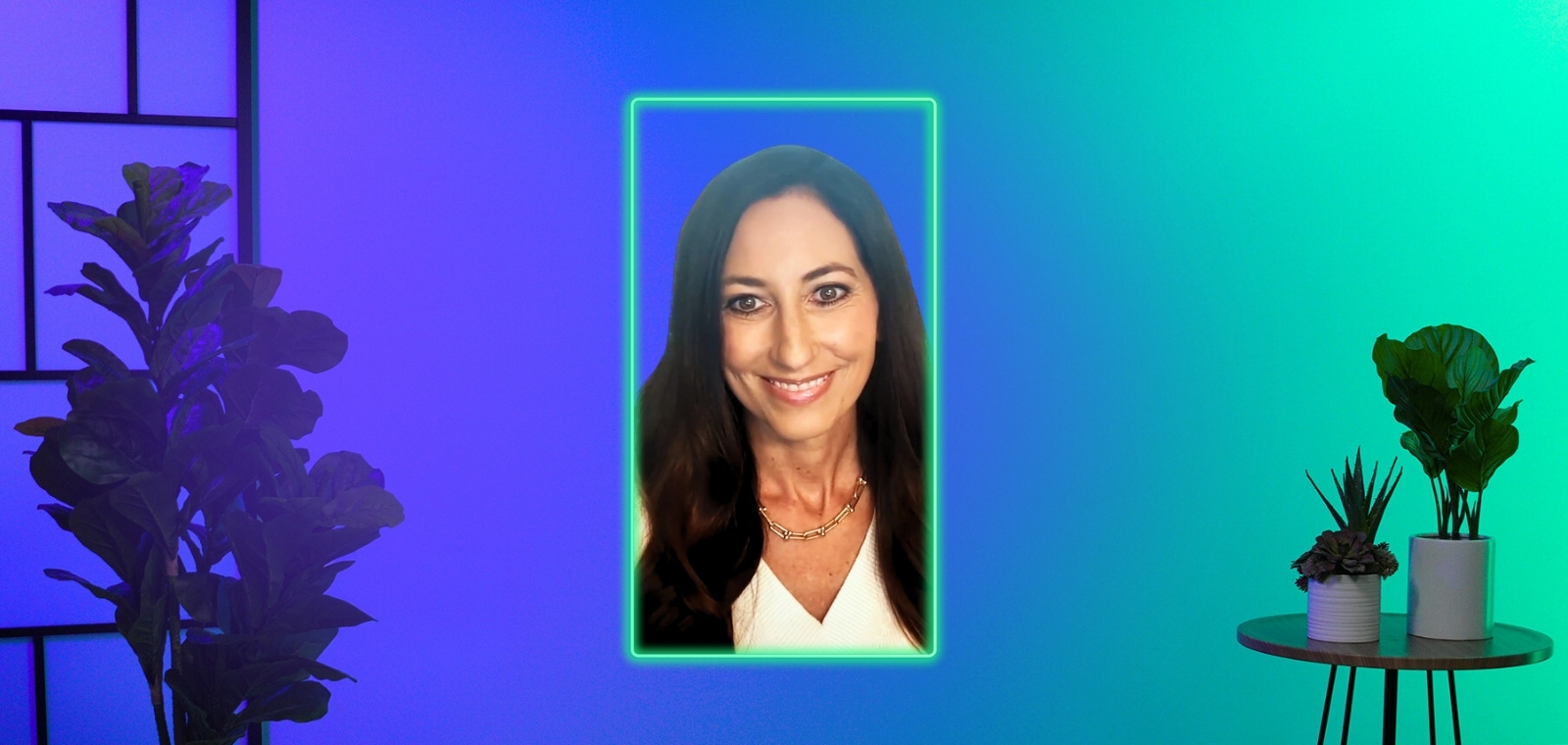
Ep. 146: Erin Weiner on Autizan: How AI Extends Speech Therapy
Welcome to another episode of SLP Full Disclosure. In this episode, host Michelle Gage sits down with Erin Weiner, M.S., CCC-SLP, a speech-language pathologist, innovator, and founder of Autizan—a scalable AI platform designed to support social communication for neurodivergent individuals across school, home, and clinical settings.
Erin shares the clinical frustrations that sparked her vision, walks us through how Autizan works in real therapy and home environments, and makes a compelling case for why SLPs who embrace AI thoughtfully will be better equipped to serve their clients.
After nearly two decades of working in pragmatics and social communication, Erin Weiner noticed something shifting. Her clients were no longer engaged by traditional curricula. They were online, motivated by media and games—and she was only seeing them for one hour a week. So she did something unconventional: she built a solution.
Autizan is an AI-powered platform that meets neurodivergent individuals where they are. Through an AI Chat Buddy avatar, interest-based conversations, and a guided Minecraft-based social world, users practice communication skills in a low-pressure, non-judgmental environment while SLPs and families track progress through a back-end dashboard. The platform is designed not to replace therapy, but to extend it.
This episode is packed with real success stories, practical guidance for SLPs and families, and a frank conversation about what it means to bring AI into ethical, effective clinical practice.
Follow SLP Full Disclosure on Instagram at @AMN_Allied for show updates and SLP opportunities.
Subscribe to the Podcast!



Key Takeaways
- Interest-Based Learning Works: When the platform meets users where they are, whether that's Sonic the Hedgehog, Minecraft, or ice cream, engagement follows naturally, and goals are woven into the conversation without the user even realizing it.
- AI Bridges the Gap Between Sessions: Autizan gives clients a place to turn when situations arise between therapy appointments, helping prevent regression and reducing the need for crisis intervention.
- The AI Chat Buddy Avatar Supports All Ages: Users eight and up who can read at approximately a third-grade level can interact with the avatar. Speaking is not required, making it accessible to a wide range of communicators.
- Minecraft as a Social Skills Lab: The platform's guided Minecraft world lets users practice real-world skills like teamwork, negotiation, and handling unexpected change in a safe, structured environment where four of the five characters are neurodivergent.
- Self-Regulation Benefits Were Unexpected: Multiple teachers and parents reported that Autizan helped with emotional regulation, not just communication goals—a discovery Erin hadn't originally anticipated.
- The Dashboard Gives SLPs Actionable Data: The back-end portal lets professionals and parents review session transcripts, monitor goal progress, and track usage—all exportable for IEP meetings and documentation.
- AI Complements SLPs—It Doesn't Replace Them: Erin is clear that Autizan is a tool, not a therapist. The human connection remains irreplaceable; AI simply extends the reach and frequency of meaningful practice.
Chapters
00:00 – Introduction: Host Michelle Gage welcomes Erin Weiner and shares her full bio
01:55 – Erin's clinical journey: noticing the shift in client engagement and identifying key pain points
03:34 – The "why" behind Autizan: limited session time, real-time needs, and the role of AI
05:12 – How Autizan was built: starting with pain points, hiring developers, and leaning on mentors
06:19 – What Autizan is: an AI-powered, interest-based social communication platform
07:06 – How SLPs use Autizan: school groups, IEP goals, no prep required
08:20 – The AI Chat Buddy avatar: what a session looks like and how goals are embedded
09:18 – Home use and carryover: parents putting goals into the platform and seeing results
10:19 – The Minecraft component: rebuilding a village, learning teamwork, and the neurodivergent-majority world
11:33 – How Autizan works within Minecraft (without selling the game)
11:57 – Platform access: web-based, available on phones, iPads, and computers
12:41 – Age ranges and accessibility: who benefits most from the avatar vs. the Minecraft component
13:15 – School-based feedback: teacher responses, token limits, and session make-ups
14:08 – The back-end dashboard: transcripts, goal tracking, and documentation for IEPs
15:06 – Success story: the child in meltdown who connected with the "Autizan woman"
15:52 – Self-regulation outcomes: an unexpected but significant benefit reported by teachers
16:29 – Success story: the young adult with a job who used Autizan during an unexpected workplace closure
17:03 – How AI is changing speech pathology, and why it won't replace SLPs
18:46 – The value of extra practice: how repetition with the avatar built conversational flexibility
20:50 – Advice for SLPs hesitant about AI: get on board or get left behind
22:57 – Advice for families: supplement therapy, create custom social stories, personalize the experience
23:28 – Closing remarks and where to find Autizan and Erin online
Meet and Connect with Erin Weiner and Autizan
Erin Weiner, M.S., CCC-SLP is a speech-language pathologist, innovator, and the founder of Autizan. Erin earned her Master's degree in Speech-Language Pathology from Florida International University and her Bachelor of Arts from The George Washington University. She's certified by the American Speech-Language-Hearing Association (ASHA), trained in Michelle Garcia Winner's Social Thinking methodology and UCLA's PEERS Program, and she brings nearly two decades of experience in pragmatics and social communication to everything she does.
What makes Erin such a joy to talk with is how she blends deep clinical know-how with a genuine drive to try something new. After years of meeting clients where they are, she noticed the world shifting. Instead of fighting it, she built a solution. That solution is Autizan: a scalable AI platform designed to support social communication for neurodivergent individuals, along with the families, teachers, and clinicians who support them across school, home, and clinical settings.
- Website: www.autizan.com
- Erin's LinkedIn: linkedin.com/in/erin-weiner-2904a34
- Autizan on Instagram: instagram.com/autizanofficial
- Autizan on Facebook: facebook.com/profile.php?id=61580818370224
- Autizan on LinkedIn: linkedin.com/company/autizan
Transcript
Michelle Gage (00:00)
Hey y'all. It's Michelle with SLP Full Disclosure. And welcome to the podcast today. We are joined by Erin Weiner.
So Erin, thank you so much for joining us. I'm so happy to have you here.
Erin Weiner (00:10)
Yeah, thanks for having me.
Michelle Gage (00:11)
So let me tell you guys a little bit about Erin. Erin is a speech language pathologist, innovator, and founder of Autisan, a scalable AI platform designed to support social communication for neurodivergent individuals and those who support them across school, home, and clinical settings. Erin earned her master's degree in speech language pathology from Florida International University and her Bachelor of Arts from the University or sorry.
Erin earned her master's degree in speech language pathology from Florida International University and her Bachelor of Arts from the George Washington University. She is certified by the American Speech Language Hearing Association, trained in Michelle Garcia Winter's Social Thinking Methodology and UCLA's Peers Program, and certified in human subjects research. Combining nearly two decades of experience in pragmatics and social communication with emerging technology.
Erin creates scalable, accessible interventions that extend beyond traditional therapy. Her work focuses on helping individuals build meaningful relationships, strengthen emotional intelligence, and navigate social environments with confidence. She is passionate about innovation, research-backed solutions, and developing tools that empower neurodivergent individuals to thrive socially and emotionally. Wow.
What an amazing bio. I'm so excited to pick your brain about this amazing
platform. But first, Erin, tell us about your journey as an SLP and where you've been in your career and what led you into this world of AI. I know I keep trying to avoid AI. I use it very generally. Create me a list, create me a short story. But you did something very different and it is absolutely unbelievable. So tell us about yourself.
Erin Weiner (01:55)
So as you mentioned, I've been in this space for quite some time now. And I started noticing some issues in the community. I had this social communication curriculum that I created. And at some point, over time, I noticed that there was a shift. And my clients were no longer interested in it.
Michelle Gage (02:14)
Mm-hmm.
Erin Weiner (02:15)
They were online. They were learning more from the Simpsons than they were from the social communication curriculum.
Michelle Gage (02:19)
Yeah. The
world changed and it became so media heavy.
Erin Weiner (02:24)
Yeah, yeah. then, you know, parents were coming to me, they were telling me stories of their kids losing passwords online, getting taken advantage of and bullied. A lot of really concerning things.
Michelle Gage (02:36)
Mm-hmm.
Erin Weiner (02:37)
You know, it's the Wild West out there right now in terms of
Michelle Gage (02:39)
Yeah, things we didn't have
to worry about fifteen or twenty years ago.
Erin Weiner (02:43)
Right, right. And there was another issue that really took me some time to figure out how to address it in my own practice. that was I would see clients for one hour a week, and in between, things would come up and people needed more support. And I did something a little bit unconventional, which is kind of my style.
Michelle Gage (03:04)
I love that.
Erin Weiner (03:05)
And I gave my number out and parents would contact me for an emergency. They usually it was something behavioral. They weren't sure how to handle a situation with their child. And the kids would also contact me in an emergency situation, could be typically with something social.
Michelle Gage (03:23)
Mm-hmm.
Erin Weiner (03:23)
They didn't know how to ask a friend to come over and play. If we didn't address it in the moment,
it would snowball. And by the time I came back the next week, we'd be starting all over again. And so
Michelle Gage (03:33)
Right.
Erin Weiner (03:34)
that's what I was doing in my practice. And then when AI came out, I realized we had an opportunity to revolutionize the way that we teach social communication.
Michelle Gage (03:44)
Yeah.
Erin Weiner (03:44)
And we could address all of these issues, especially the fact that they needed more support in between sessions.
Michelle Gage (03:52)
Yeah. You're working primarily with children, is it children or adults, both on the autism spectrum? That's primarily your population, correct?
Erin Weiner (04:01)
So yeah, I work with children all the way up to adults on the autism spectrum and
Michelle Gage (04:05)
Okay.
Erin Weiner (04:06)
anyone who's struggling with social communication,
Michelle Gage (04:09)
Mm-hmm.
Erin Weiner (04:10)
even if they're not diagnosed on the autism spectrum.
Michelle Gage (04:12)
Yeah. What were the biggest challenges that you faced in your practice when this world became so media heavy? and just getting your kids to interact with you on a human connection basis versus that on the screen.
Erin Weiner (04:27)
So most of the challenges are that the kids really weren't motivated by anything that wasn't online. And
Michelle Gage (04:34)
Right.
Erin Weiner (04:35)
it was really hard to get them interested. And my whole practice was built on meeting kids where they are. I say kids, but kids all the way up to adults. Meeting them where
Michelle Gage (04:42)
Mm-hmm.
Erin Weiner (04:44)
they are, using what's motivating and their interests. And if they're no longer interested in hanging out face to face and they are interested in being online.
I felt like I needed to meet them where they were.
Michelle Gage (04:57)
Yeah. So you have to figure out a way to do that and to build that. So what you did was you built that online connection into your practice by developing Autism. So when you decided to develop this platform, where did you start, Erin? Like how
Erin Weiner (05:12)
the
Michelle Gage (05:12)
did you even know where to begin and how long did it take you?
Erin Weiner (05:16)
So I wish I could say it happened overnight. I
Michelle Gage (05:18)
Yeah.
Erin Weiner (05:19)
feel like I used like every, all of the years of my clinical knowledge and I put it into the platform,
Michelle Gage (05:25)
Mm-hmm.
Erin Weiner (05:26)
hired a team of developers and I'm very fortunate to have some wonderful mentors who have helped walk me through the process of doing something like this. I started with the pain points. So,
you know, the things I mentioned before, trying to capture my client's attention.
Michelle Gage (05:45)
Mm-hmm.
Erin Weiner (05:45)
I didn't look at technology as, as the enemy. looked at it as something that I could utilize to, to really, improve the lives of my clients.
Michelle Gage (05:56)
Yeah, I love that. Cause you can't look at technology as an enemy because it is so present in these kids, young adults, and even adults' lives. I mean, I've got my phone sitting right here with me. So it's everywhere we look. So why not, I guess just why not use it to your advantage, right? So
Erin Weiner (06:13)
Right.
Michelle Gage (06:14)
tell us exactly what Autisan is and what makes it special.
Erin Weiner (06:19)
Yeah, so AutoZan is an AI power platform. It's designed for the neurodivergent community and it's for individuals and those who support them. It's a place where they can practice conversations and get answers to questions in real time. It's highly personalized and based off the user's interests. And it's designed to be fun, engaging and non-judgmental.
So
many users don't even realize that they're working. They think they're just having fun. At the same time, Autosam provides tools for parents and professionals.
Michelle Gage (06:50)
Okay. Let's let's break that in. So there are th that was my next question. There are two com where it's really designed for working with those children, but let's talk about the piece that the speech pathologist would use. How is it beneficial and how do you use it in your practice?
Erin Weiner (07:06)
Right. There are so many ways that it can be used. It can be used in a number of different environments. It can be used in the schools by teachers or by speech pathologists, or it can be used in the homes with families and their kids. As a speech language pathologist, one of the ways I remember going into the classrooms and having five to eight kids in a group
Michelle Gage (07:27)
Mm-hmm.
Erin Weiner (07:27)
It
would be a 30 minute session and I would spend hours finding some activity that would meet everyone's goals. But with Autozan, the curriculum is built in and you can put individualized goals into it for each user. So let's say you have five kids that you see for 30 minutes. There's no prep. The curriculum is there. And then in addition, you put in their specific IEP goal and you sit back and they are all working on those goals.
at the same time. So
Michelle Gage (07:56)
Wow.
Erin Weiner (07:57)
it's really neat. It's very efficient in that sense. Now, there is one other way, or multiple ways it can be used, but another way that it can be used is in between sessions. So the parents put in their goals. If you're using it with a family at home, you have your own goals. And then in between the once a week sessions, they're on there and they can hop on and ask questions whenever a situation comes up and get help in real time.
Michelle Gage (08:20)
Yeah.
Erin Weiner (08:20)
While
they're talking about what they're interested in, the platform is weaving the social communication curriculum into those topics.
Michelle Gage (08:28)
Wow, that is amazing. So you talked about the curriculum. So when you log on, and this is a question that just popped into my head that we have not talked about. So when you log on and you have this group of three to five kids and you've put all their individual goals in there, is it a 30-minute session? Is it an activity? Or is it a video? What does it look like?
Erin Weiner (08:50)
Right, so the example I gave you was if I was a speech pathologist going into a school and I had my students that I'm supposed to meet with. In
Michelle Gage (08:59)
Mm-hmm.
Erin Weiner (08:59)
that case, they hop on, they pull up their computer, they have a custom avatar that they're gonna chat with. They can type in anything they're interested in. They can talk about biking, they can talk about ice cream, anything. And once they start talking, that's when the goals come up.
and the curriculum comes up around the topics that they're talking about.
Michelle Gage (09:18)
That is absolutely amazing. Do you have of the majority of your students that you use it with, are their families using it at home as well? Are you seeing a lot of carryover in the home?
Erin Weiner (09:27)
Yeah, it's been really interesting. So I just met with a parent who said, well, her son won't listen to her. He's listening to the Avatar. And in between sessions, there was something having to do with she had a topic on taking medicine, and she wasn't able to convince him. But once he spoke to the Avatar,
and she put the goal in on the background, but he didn't know it, then he listened to the avatar and she was very happy with the progress.
Michelle Gage (10:00)
That is amazing. So there are also there's another component that I want you to talk about, which is which was super interesting to me because I work with elementary school kids. and they're all interested in the video games and the Minecraft. So let's talk about the the gaming aspect with Minecraft that is part of Autozam.
Erin Weiner (10:19)
Yeah, so I'm going to start by saying that the first part is the AI Chat Buddy where you learn the skills and then
Michelle Gage (10:25)
Right.
Erin Weiner (10:25)
you utilize those skills in our safe guided Minecraft based world. So this can be done in a school setting with the first part using the AI Chat Buddy and the second part being Minecraft or therapists can run groups after school once a week and the kids come in.
They are rebuilding a village that was blown away from a storm. And they are learning things like teamwork, planning, negotiating. And there are five characters built in. We don't say it, but four of them are neurodivergent and one is neurotypical.
Michelle Gage (11:02)
Okay.
Erin Weiner (11:04)
So it is a backwards world. So yeah,
Michelle Gage (11:05)
So you did that deliberately, right?
Erin Weiner (11:08)
I want people to feel at home.
In
Michelle Gage (11:09)
Yeah.
Erin Weiner (11:10)
fact, one of the characters often wonders why the neurotypical villager acts so strangely and does things like, says things he doesn't mean and, you know, so, yeah.
Michelle Gage (11:20)
Wow.
That is incredible. And the Minecraft piece, because that was one of the questions that I asked you during our intro call, was how did you get the contract with Minecraft? So explain how Minecraft works within Autisan.
Erin Weiner (11:33)
Yeah, so Minecraft actually allows you to build within it.
Michelle Gage (11:38)
Mm-hmm.
Erin Weiner (11:39)
I should say we are not selling Minecraft. have just made some adjustments to it
Michelle Gage (11:49)
Mm-hmm.
Erin Weiner (11:50)
to make it specific to the neurodivergent community.
Michelle Gage (11:53)
Okay, I love it. And this is a web based program, correct?
Erin Weiner (11:57)
Yes.
Michelle Gage (11:58)
So do you have an iOS version, like an app or anything like that yet?
Erin Weiner (12:01)
So it's a web-based app. And so
Michelle Gage (12:06)
Mm-hmm.
Erin Weiner (12:07)
you can use Apple. You can use any product. It's
Michelle Gage (12:10)
Okay.
Erin Weiner (12:11)
available on phones, your computer, and your iPad.
Michelle Gage (12:14)
Okay. I love it. have you found that there's a specific age group that is more interested in the personalized avatar piece, like that learning teaching piece versus the Minecraft? So they go in and create a personalized avatar where they practice
Erin Weiner (12:28)
Mm-hmm.
Michelle Gage (12:29)
these skills and then the skills that they've learned, they then take over into Minecraft, into the gaming aspect, and that's where they practice it. Did I get that right? Okay. is there an age group that
That likes it more than others.
Erin Weiner (12:41)
It's interesting, the avatar seems to be a big hit with all ages, eight and up. You do need to be able to type and be able to read at approximately a third grade level to
Michelle Gage (12:52)
Mm-hmm.
Erin Weiner (12:53)
interact with the avatar. Now, you don't need to be able to speak.
Michelle Gage (12:57)
Interesting.
Erin Weiner (12:58)
So I would say there's...
I think the kids all the way up to adults seem to enjoy it. are, from Minecraft, I think it would be more towards the younger end,
Michelle Gage (13:11)
Yeah.
Erin Weiner (13:12)
seem to enjoy Minecraft and they get into other games as they get older.
Michelle Gage (13:15)
What has the response been from your school based therapists, teachers, other OTPT? What has the response been in that regard?
Erin Weiner (13:26)
It's really been such a pleasure working with them, getting their feedback. One of the biggest complaints I got was that the way we set up the platform, you have a hundred tokens to use per day. We don't want kids on there all the time, nonstop. But the biggest complaint that teachers have is that they've already used their time up for that day and a situation occurs and they need to problem solve. They would like to have another option.
to be able to problem solve. So that's been very interesting. The kids, they said, seem to really enjoy it. And if they miss a session, they ask to make it up the next day. It's all very good feedback. And we've heard some really good success stories on meeting goals.
Michelle Gage (14:08)
How do the speech pathologists track that progress and track their usage? What is that piece like?
Erin Weiner (14:14)
So we have a dashboard on the back end that only the parents or teachers see. And it tells you how long the user has been on there, the topics they've discussed, shows an entire transcript of what they said. And they can see on the back end when the goals are working, they can see the whole conversation.
Michelle Gage (14:32)
Wow. Is that something that you can print out? Is that something that you can download and save so that you can present it at IEP meetings and things like that? Wow. I love it. What about some success stories? Tell us more success stories. I loved the story about taking medicine. Do you have any others to share?
Erin Weiner (14:47)
Okay, so the first kiddo that I had use the platform, I walked into his house. Mom is a teacher and dad said that, so I walk into the house and the child is on the floor kicking and screaming that he wants Sonic. And I was a little nervous, know, I wasn't sure if I would get him on the platform. And I said, would you like to try autism? And he said, can you?
can it give me Sonic? And I said, well, why don't you ask it? So he got on and he said, can you give me Sonic? And it said, I can't give you Sonic, but what's your favorite part about Sonic? And next thing you know, 45 minutes later, he is calm and he is writing a story about Sonic, because it's interest-based, right? About a week later, mom reports that he got upset about something and he asked to talk to the autism woman.
Michelle Gage (15:36)
No way.
Erin Weiner (15:37)
So that was really interesting. was really happy that that happened. My goal in creating this platform was to give people a place to go, to ask questions, to handle social situations. I didn't realize it was going to help with self-regulation so much.
Michelle Gage (15:52)
Mm-hmm.
Erin Weiner (15:53)
I got more reports from the teachers at school that not only was it helping the kids meet their goals, but
It was also helping with self-regulation. So I'll share another story. One of the students was an older student who had a job. His goal was, and I remember putting these goals in, his goal was to be able to handle change and unexpected events. So he shows up to work with the person that goes with him and he worked at a preschool and the preschool was shut down with no notice.
I think you or I would be very upset if we showed up to work.
Michelle Gage (16:28)
Right.
Erin Weiner (16:29)
you're right. So previously in the past, the teachers reported in situations that were unexpected, he would either scream or hit. They said they put him on autism and there was no screaming, no hitting. And he was hopeful about starting a different job. So that was, that was fascinating.
Michelle Gage (16:46)
So the avatar actually talks back to and responds to the questions. So there's not like a set limit number of questions. You're talking to it just as if it were a person, but it's an avatar, right?
That is absolutely amazing. Erin, how do you see AI changing the field of speech pathology?
Erin Weiner (17:03)
I
definitely don't see it taking the place of SLPs. I think, that, yeah.
Michelle Gage (17:07)
Thank you. That's what everybody
says. I mean, the human connection piece is the piece that's so important. And AI can only do what we train it to do. I have learned that from all of my very professional guests. But it is changing the way we deliver our services.
Erin Weiner (17:22)
Yes, for sure. I think that we use it as a tool. It is not meant to be something to take over our jobs. There's still a ways to go, but we can certainly use it and help with things like the time between therapy or giving extra practice to kids. It's really interesting. I'll give you one other story that
that explains why this extra practice is so helpful for clients. One of the students at the school was asking everyone, what is your name and what car do you drive? Now, as a therapist, I would have assumed that his interest was cars and people's names.
Michelle Gage (18:02)
Mm-hmm.
Erin Weiner (18:03)
And it wasn't until he got on the app and he was talking with it that his repertoire
became larger and he just naturally stopped asking those questions and started asking other questions. So his goal that he was trying to meet before he got on the app, they had groups, they met up, they had social groups, gaming groups, but that extra practice talking back and forth with the avatar learning that you have to say hello and then wait and that they say hello, that is what ultimately helped him be able to communicate more effectively.
And that's something that AI does very well. as speech pathologists, we only have so much time in the day. So
Michelle Gage (18:42)
Mm-hmm.
Erin Weiner (18:43)
that would be an appropriate way to use AI.
Michelle Gage (18:46)
And I think it's a great way to bring that extra practice into the classroom, but more importantly, into the home. Because you're right. We're seeing these kids 30 minutes to an hour a week. What about the other 23 hours of the day, seven days a week? You know, they're not getting that practice. And it's a great way to kind of bridge that gap between that therapy time, that one on one therapy time, and get that extra practice. And using AI, like you said, using it to your advantage. I mean, it's such a media heavy world.
The kids are always on games. That's all they want to talk about. When I my kids come in on Monday, I'm like, what'd you do over the weekend? I played video games. And I know nothing about video games. So I think that this is going to be a great app, a great platform for speech pathologists to research and start bringing into your therapy. Because, like I said in your in your bio, it's non-traditional therapy. We're used to that, you know, sitting down and doing drills and doing practice. But
Like you said, there are things that come up. I have a nephew that's on the autism spectrum and he has actually worked with Michelle Garcia Winter, who's actually also been a guest on the show. And I love her. She was amazing. but he did go through the social thinking program, and one of his biggest challenges was forgetting his PIN number to his debit card. And he would get really angry. And when he gets really angry, he uses lots of profanity, which, you know, he's 22, 23 years old now.
So he's an an adult man, which could be startling to someone if you're in the grocery store or in the pharmacy and there's a grown man using profanity. So it gave him a way to they they work together, finding those ways and finding ways to ma manage those challenges outside of therapy, because that's probably not something you talk about in that group, but you can put it into that, into your autisan.
And it brings that topic up and you can practice and have that conversation with your with your avatar.
Erin Weiner (20:37)
Yeah, actually, you know, you can put your goal in on the background. You can even put your your password number in there and have it remember it for you. It remembers you in between the sessions. So, yeah, there's a whole bunch of things that you can do.
Michelle Gage (20:50)
Yeah, we could probably talk for a really long time about this app. If you had one piece of advice for first, let's do speech pathologists that are hesitant to use AI because the AI that I use, like I said, create me a minimal pairs list, create me a short story
Erin Weiner (21:09)
Love it.
Michelle Gage (21:10)
on third grade level with these type questions. But this is different.
I've never used AI in my actual therapy sessions, but I'm gonna be using it next year because I'm gonna have a different caseload. What would you say to the speech pathologist that is hesitant to step outside their box because speechies like to be in their little boxes, and bringing AI and going a non-traditional route in your therapy sessions?
Erin Weiner (21:34)
Well look, I am all about the natural environment, doing things in real life. The whole purpose of this platform is that when the kids talk with the avatar, it encourages them to interact with other people in real life. So that's important to know. I would say if you don't get on board, you're going to be left behind because
Michelle Gage (21:54)
Mm-hmm.
Erin Weiner (21:56)
the cat's out of the bag.
Michelle Gage (21:57)
Yeah.
Erin Weiner (21:59)
You know, years ago, I started using bejeweled to teach kids prepositions. I would control it and I would say to the right, to the left, on top, below. people weren't very happy with that. They didn't like that. Now we are teaching through games. And this is, I think, the way of the future. So I think if it's used properly,
There are so many ways it can benefit your clients. So you just
Michelle Gage (22:25)
Yeah.
Erin Weiner (22:25)
have to use it properly.
Michelle Gage (22:26)
You have to use it properly and you have and I love that it's a safe environment. I love that it is kind of it's contained, not kind of, it is very contained. So you still get that gaming aspect with Minecraft, but you're not having to worry about the safety issues of being taken advantage of online because they're still getting to do the gaming piece, but it's controlled and it's contained. I love that.
If you had one piece of advice for families that were looking at using this Autisan with their child or with their family, what would that advice be?
Erin Weiner (22:57)
I think you can use this in between therapy sessions to help you navigate different situations. You can create custom social stories for your kids. There's a lot of ways that you can use this to make your life easier and to supplement therapy. And if you're open-minded and you're willing to try, you can really
personalize things for your kids and hopefully help them be able to communicate more effectively and efficiently.
Michelle Gage (23:28)
I love that. Erin, thank you so much for joining us today. It has been amazing. We're gonna have all of the con all of your contact information, and we're gonna also have Audazan linked in the podcast so that all the speech pathologists that are out there, and you know that primarily our listeners are our younger graduate students and those kinds of that population, that Gen Z population. So they're really into AI and they're really into trying something new. but even if you're like me and you're
pretty seasoned and you've been doing this for 25 plus years, just like you said, Erin. You've either got to get on the train and you have to embrace it and use it in a safe, ethical way, or you're going to be left behind. And there are so many amazing things that AI can do to help us in our everyday therapy sessions. And AutoZan is just one of them. So thank you so much for joining us. Thank you for sharing this amazing platform. And we're going to have all of your contact information. So if any of our listeners have questions,
I'm sure they would they can get in get in touch with you. So Erin, thank you.
Erin Weiner (24:26)
Thank you, Michelle.
Michelle Gage (24:27)
You guys have a great day.


