

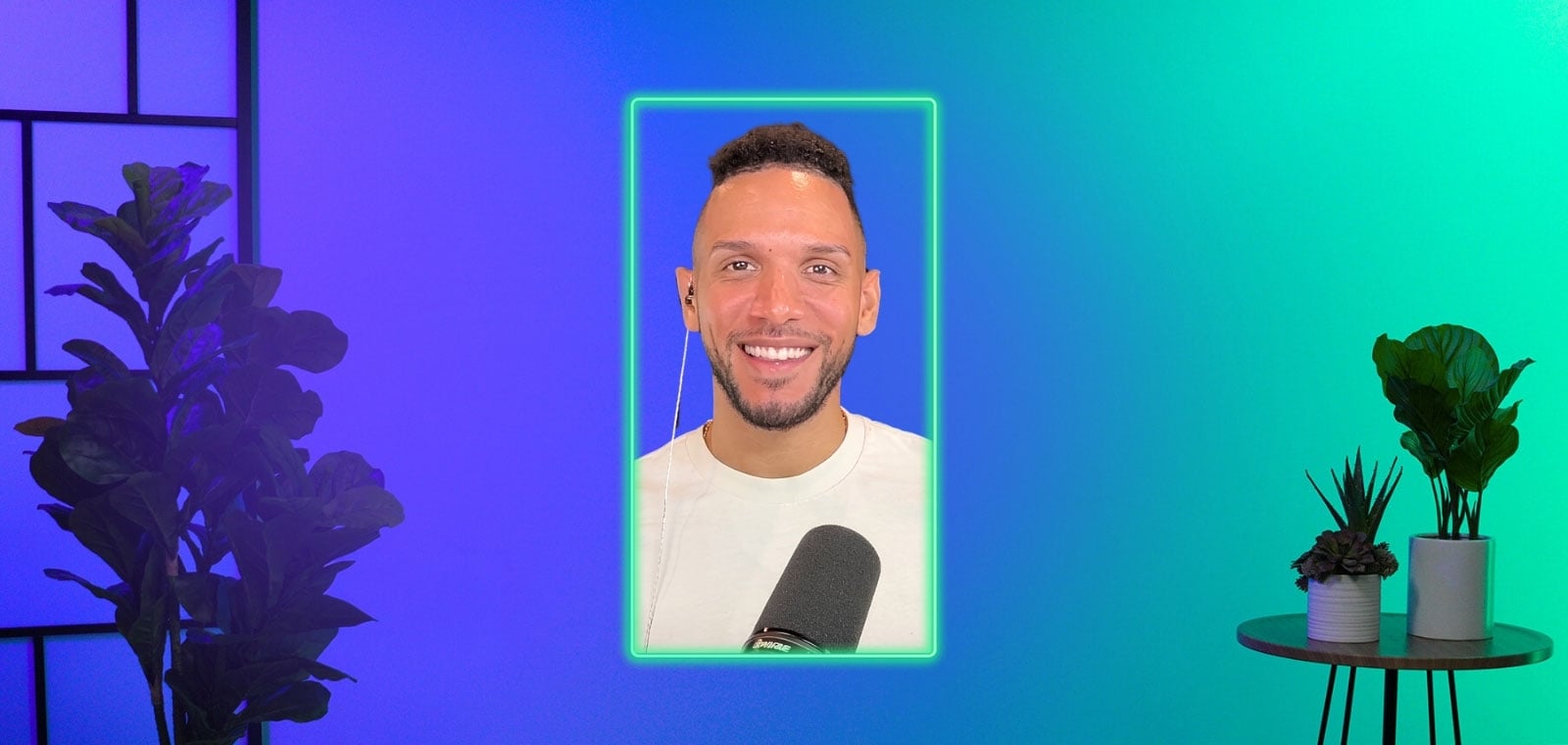
Ep. 144: Voice Therapy with Maurice Goodwin
Welcome back to another episode of the SLP Full Disclosure podcast. In Episode 144, host Michelle sits down with Maurice Goodwin, a licensed speech-language pathologist and voice teacher based in Houston, Texas. Maurice is the founder of Goodwin Voice and Speech, adjunct faculty at Lamar University and Marymount University, and a specialist in voice and upper airway disorders. Together, they pull back the curtain on a subspecialty that many SLPs rarely encounter—and explain why that needs to change.
Maurice shares his unique path into speech pathology—from vocal performance and music in undergrad to becoming a voice specialist who works with professional singers, performers, and medical patients alike. The conversation covers the full spectrum of voice disorders, diagnostic tools (many of them free), therapy approaches for pediatric and adult clients, and the critical importance of medical collaboration. Michelle also opens up about her own post-surgical voice experience, making for a candid and relatable discussion. Whether you're a new grad, a school-based SLP who has never seen a voice referral, or a seasoned clinician curious about expanding your scope, this episode delivers practical insight and genuine encouragement.
Subscribe to the Podcast!



Key Takeaways
- Voice Is a Broader Scope Than Most SLPs Realize: Voice disorders range from nodules and muscle tension dysphonia to neurologic conditions like spasmodic dysphonia, head and neck cancer, and post-surgical dysphonia. Hospital-based clinics manage the most medically complex cases, but community-based and school SLPs have real opportunities for early impact.
- Free Tools Exist for Voice Diagnostics: The CAPE-V, the GRBAS scale, pediatric patient-reported outcome measures, and Praat acoustic analysis software are all accessible and implementable without expensive equipment.
- Move Away from "Stop It" Therapy: Rather than telling clients what not to do, effective voice therapy focuses on active skill-building—using play-based activities, shaping voice behavior in real contexts, and teaching healthy voice use.
- Voice Therapy Is Not Harmful, but It Can Be Unhelpful: Without complete diagnostics or a clear understanding of the etiology, therapy may not produce results. Good diagnostics and medical collaboration are key to ensuring intervention is targeted and effective.
- SLPs Are Professional Voice Users Too: Using your voice for eight to 10 hours a day in clinical and social settings adds up. Awareness, balance, and rest are foundational to vocal health for clinicians themselves.
Chapters
- 00:00:00 – Introduction: Michelle welcomes Maurice Goodwin and shares his background
- 00:02:11 – Maurice's origin story: from vocal performer to speech-language pathologist
- 00:03:39 – Inside a hospital-based voice clinic: what clients and diagnoses look like
- 00:06:08 – What therapy looks like for medical voice patients vs. professional performers
- 00:08:35 – Diagnostics in the school setting: free tools and accessible resources
- 00:12:44 – What voice therapy looks like for pediatric clients
- 00:14:44 – The problem with "stop it" therapy and why active therapy wins
- 00:15:39 – Unpacking the statement: "Voice therapy is not harmful, but may not be helpful"
- 00:17:10 – The medical diagnosis gap: why laryngeal imaging matters
- 00:18:27 – Michelle's personal experience with post-surgical dysphonia
- 00:22:42 – Vocal health for SLPs: voice fatigue, balance, and knowing when to rest
- 00:25:17 – ASHA resources, perspectives, and the practice portal for voice disorders
- 00:27:37 – Advice for new grads and early-career SLPs interested in voice
About Michelle
Meet Patrick O'Connor, President of AMN Healthcare's K-12 Schools Division. Since joining AMN in 2011, Pat has led sales, recruitment, and operational teams while championing student-centered care and school safety. His deep industry knowledge offers SLPs and new grads a rare look at how the right partner can shape a fulfilling career.
Ready to take charge of your career journey? Subscribe to SLP Full Disclosure and share this episode with a fellow clinician today! You can also find show updates and SLP opportunities on Instagram at @amnallied.
Transcript
00:00:00.040 — 00:00:12.800 · Speaker 1 Hey y'all, it's Michelle with SLP. Full Disclosure, welcome to the podcast. Today I'm super excited to introduce you guys to a fellow speech language pathologist, Maurice Goodwin. Maurice, thank you so much for joining us today.
00:00:13.000 — 00:00:14.320 · Speaker 2 Thank you for having me today.
00:00:14.360 — 00:02:11.860 · Speaker 1 Yes, I stalked him and found out that Maurice is a private practice owner in the Houston, Texas area, and he specializes in voice therapy and voice training for professional singers and performers. So I love connecting with professionals that specialize in these very niche areas of speech pathology so that I can learn because I have been practicing for over 25 years.
Maurice I'm probably old enough to be your mother, but I don't have a lot of experience in voice therapy. My my, um, setting has been the school district, so I've never gotten, honestly, a voice referral ever in over 25 years. And voice therapy is something that is very niche. But you said something in our intro call, and we're going to talk about it a little bit later in the podcast.
But Maurice said in our intro call, voice therapy is not harmful, that it may not be helpful. And that was very intriguing to me. So we are going to be talking about voice therapy, things that we can do to keep our voices healthy every day as speech pathologists, because we talk all day long. And this the diagnostics and treatment of voice disorders.
So Maurice, thank you so much for joining us. I want to give our guests a little bit of background on you. Maurice is a licensed speech language pathologist and voice teacher based in Houston, Texas. He specializes in the care of voice and upper airway disorders with a focus on professional voice users.
Maurice is the founder of Goodwin Voice and Speech and serves as adjunct faculty at Lamar University and Marymount University. His work bridges clinical voice care, education, and advocacy for inclusive evidence based practice. He's been involved with Asha and the CAA board for several years, focusing on graduate education standards and clinical training for graduate students and clinical fellows in the areas of voice.
So excited to have you here and pick your brain. So, Maurice, first of all, tell us just about yourself and what led you to become a speech language pathologist?
00:02:11.900 — 00:03:12.650 · Speaker 2 Yeah. Thank you again for having me. Yes. A little bit about myself. You know, I've been in Texas now for a little over seven years. I'm from the northeast, so I grew up with that northeast hustle. It's been nice to slow down a little bit and be here in the South. I love living in the South. The food's good, the people are great.
And it's the place where. Yeah, it's the place where I got to kind of grow as a human and as a clinician. So I got into speech pathology after studying vocal performance and music in undergrad and was a singer for a very short time, but a great time. And it was in that time that I realized I was more interested in how the voice worked, and how we help folks that have voice challenges, myself included.
And so I just started to geek out a lot about how things worked and what we did when they don't work. And that led me directly into speech pathology and ultimately doing a post back program and then attending graduate school for speech pathology.
00:03:12.650 — 00:03:19.890 · Speaker 1 I love that. So it's your personal experience as a voice performer, um, that led you into speech pathology?
00:03:19.930 — 00:03:33.610 · Speaker 2 Yeah, that's and that's actually a pretty common, not the only, but a pretty common pipeline for folks that end up practicing in voice and upper airway. We have some relationship to, to voice, whether it be our own or other folks that we work with.
00:03:33.610 — 00:03:44.170 · Speaker 1 So yeah. Okay, so prior to opening your private practice, you worked in a voice clinic. What types of clients were you seeing in that voice clinic when they were coming to see you?
00:03:44.210 — 00:04:33.960 · Speaker 2 Sure. Yeah, we saw a little bit of everything. Voice, especially in the in the context of a hospital based clinic, is everything to do with the larynx and the upper airway. So we would see some of the more common diagnoses like muscle tension dysphonia, nodules, vocal fold paralysis, vocal fold atrophy, or aging voice clients.
And then we'd see some more unique cases like our neurologic voice disorders like spasmodic dysphonia or tremor. We'd see vocal fold sulcus and the voice related to head and neck cancer, and then even some airway cases. So I felt like my exposure in the hospital was quite deep and broad. So there was a lot to learn, and it was a setting that I probably didn't even feel comfortable in until 4 or 5 years into my career.
Just because there's so much to learn in this hospital based clinics.
00:04:33.960 — 00:04:39.960 · Speaker 1 Yeah, yeah. And that's why I think it's that's why voice is so, I think frightening to me.
00:04:40.000 — 00:04:40.400 · Speaker 2 Yeah.
00:04:40.440 — 00:04:53.990 · Speaker 1 But it sounds like if you're, if, if a client has a voice disorder or an upper airway disorder, it's more medical based. And that's why we're not seeing these voice cases in the school system. Is that correct? Would you agree with that statement?
00:04:53.990 — 00:05:16.790 · Speaker 2 I think. Often by the time they make it to the hospital, they tend to be more medically managed. I do think that a lot of us who are based outside of those hospital clinics probably do interact in some way with voice, even at a not a small scale or a mild scale. And there's big opportunity for impact before, maybe even before it gets to the hospital setting.
To me.
00:05:16.790 — 00:05:26.670 · Speaker 1 Yeah, I'm thinking about when you were talking about all the different clients that you see. I'm thinking about RFK Jr, who has disease. What does he have? Spasmodic dysphonia. Is that what he has?
00:05:26.710 — 00:05:27.350 · Speaker 2 Mhm. Like a.
00:05:27.350 — 00:05:27.950 · Speaker 1 Spasmodic.
00:05:28.550 — 00:05:28.910 · Speaker 2 Mhm.
00:05:28.950 — 00:06:11.820 · Speaker 1 Yeah. And then we also had a guest on the show that's a speech language pathologist that had a traumatic injury from a car accident and lost her voice completely for years. And she actually said that she never went to a voice therapist. Wow. She never saw a speech language pathologist. So it was really interesting.
I mean, so anything from just vocal nodules, because when I think of voice therapy, I think of vocal nodules, you know, just extreme hoarseness and those kinds of things. But you're talking about head and throat and neck cancers, and you're talking about some very, very medically involved disorders that are requiring voice therapy.
What will you do with those clients when they come to see you? What does a therapy session look like for a patient like that?
00:06:11.860 — 00:07:07.370 · Speaker 2 Sure. It depends on the etiology. Right. Why are they there? What's going on? And those hospital based clinics, one of the kind of how they're set up is that we work alongside the ents and more specifically, the larynx. So those kind of voice, specialized ear, nose and throat doctors, so often in the hospital setting, we're collaborating in our care, at least with the ENT and often some other medical professionals, depending on the severity or the systemic nature of why they have a voice problem.
But a therapy session can look like education. A therapy session can look like pre and post op counseling. A therapy session can look like indirect therapy where we talk about voice hygiene. Voice conservation or then direct therapy. Things like resonant voice therapy. Straw phonation, vocal function exercises.
So to. It really kind of uses the full to me, scope of what we do as a speech pathologist when it comes to client interaction.
00:07:07.410 — 00:07:22.610 · Speaker 1 Yeah. So but that is going to look very different than the the clients that you see that are professional performers and professional singers. Right. So what is the therapy session like that look like? I know you can't tell us, but have you worked in Vegas?
00:07:23.250 — 00:07:30.610 · Speaker 2 I have had the opportunity to work with really awesome people who put out music and perform regularly. So that has been a lot of fun.
00:07:30.730 — 00:07:36.810 · Speaker 1 Wow. That's awesome. So what do you do with those clients that are coming to you for those types of services?
00:07:36.850 — 00:08:26.640 · Speaker 2 Sure, yeah. My my role as a speech pathologist has certainly shifted since I left the hospital. I'm still doing some forms of traditional voice therapy. They come from maybe an int clinic or even the voice center that I had worked at previous. I see their clients out in the community, and so I'll see them under the, you know, the umbrella of insurance and my scope of practice as a speech pathologist.
And then I'm also working with clients just generally on vocal health and voice, wellness and voice function. Singers and performers and people who use their voice professionally are using their voice to like it's its highest extent. Right? It's it's the athlete that plays in the NFL or the NBA, right?
They're expected to be at the top of their game. And so I consider myself a member of the team that keeps them healthy and keeps them in the game in the way that they want to be participating. So it's a fun new role that's exciting.
00:08:26.640 — 00:08:30.680 · Speaker 1 So look at all the wonderful. Another thing that you can do as a speech pathologist, I think.
00:08:31.280 — 00:08:31.760 · Speaker 2 It's pretty.
00:08:31.760 — 00:09:16.630 · Speaker 1 Cool. It really is. Let's talk about the diagnostic piece, because like I said, in the school, I've not in 20, over 25 years, I've not had a voice referral. I get your traditional articulation, your fluency, your language, those kinds of things. But for diagnostic evaluation with a voice referral, you're going to need special equipment.
I remember when I was in graduate school, as my daughter likes to say, in the late 1900s, I remember the voice room, and I remember that setup, and I remember all of the equipment. So a school system is not going to have that kind of equipment that you have in a medical client and a medical clinic or a private practice.
So in that case, what does the speech pathologist do and what does that diagnostics look like?
00:09:16.670 — 00:10:44.690 · Speaker 2 Yeah, there are there are a fair number of tools that can be applied that do not cost money and are fairly easy to implement and get trained on. I think a lot of speech pathologists understand when maybe something isn't right, whether it's the person reporting right. My voice, I'm losing my voice or my voice hurts or we can hear it.
This person sounds hoarse, but then where do we go from there? Right. Some easy auditory perceptual. How do we document the sound of someone's voice rather than just saying hoarse. We can use rating scales like the Cape Verde, which if you Google Cape Verde, you'll be able to find the actual form that you can fill out with a client.
It's free to use or the Garbus scale. Garbus and that helps rate the quality of someone's voice, considering characteristics like roughness, breathy ness, weakness, or strain. And those things can be helpful tools for just documenting. Maybe. What what does the voice sound like? How is it different from what we would normally or typically expect?
And then we have pediatric patient reported outcome measures that rely on the client in front of you and patient report. So we have like the Pediatric Voice Handicap Index or the pediatric voice related quality of life. And those again are tools that can be pretty easily implemented. We can send them home to parents and they ask questions about the child's voice.
What does it sound like? How is it functioning? Is it impacting their ability to participate.
00:10:45.850 — 00:11:00.650 · Speaker 2 And then there are free and reasonable tools that can be implemented. Some acoustic tools. If you've gone to grad school in the last few years, you've probably used Pratt Pratt, which is a completely free, open source acoustic analysis software.
00:11:00.690 — 00:11:18.770 · Speaker 1 Not the last few years. I probably didn't have that in the 1900s, more so, but we're going to have all of these links, so keep going. Talk about the free tools. Yeah. So we're going to have all of these linked in the show notes. Because this is the information that I didn't have and I don't have that. I think our listeners need all these free tools I love it.
00:11:18.770 — 00:12:41.030 · Speaker 2 So there's there's Pratt, which is a free software. And Pratt alone can be quite complex, but there are scripts that can be run as what they're called that help you analyze an acoustic voice sample off of just your client using their voice. So often, what stops us from feeling like we can even approach voice is like, where do I start?
And what do I do? Right? But we would approach voice like we would approach any other thing in speech and language. We would evaluate. We would be able to measure maybe how it's different from expected or typical or standard, and from that data then create some sort of intervention plan or program. And voice is the same way.
We just need a way to collect that data. Um, there is a doctor. James Curtis is a voice and swallowing researcher based out of New York City, who has a ton of great free resources on his website for doing acoustic and aerodynamic analysis. And these things really are super, super simple and easy to implement.
Sometimes it can be a little bit of a how do I do this? But all the resources are there to do it. And these are the tools that I use in my practice. We've talked about how my practice is sub specialized, and I get to work at probably a high level in some instances, and every resource that I use is free for evaluation now, because that's how good and accessible the data is.
And so it's definitely something that we can integrate if needed pretty easily into the school setting.
00:12:41.070 — 00:13:08.270 · Speaker 1 I love that. Um, what would what advice do you have? Or I don't know, really know if it's advice. So let's say we've done our diagnostics. Let's say we get the the straight voice disorder that comes across our desk in a school setting. Yeah, we've done our diagnostics. We've used all of these amazing free tools.
What does therapy look like? What are how does it does it would you say that that therapy in a school setting would differ from what you would do in a medical setting, or would it look the same?
00:13:08.310 — 00:13:53.980 · Speaker 2 Yeah, I think there were probably some aspects of it that are quite similar, some that are different, just given the nature and the age of the client. But therapy is about awareness building and then actually implementing strategies that are going to help improve based on the diagnostic information that you have.
So with any pediatric client, I find that I'm balancing indirect the term being indirect versus direct therapy. Indirect would be voice hygiene maybe classroom modification, parent education all things that we know make a big difference in the child's life and in their environment that can help them improve.
And then direct therapy can look like straw donation games that target different voice qualities. And then, yeah, building awareness in the child around how their voice is working and what they can do to take care of their voice.
00:13:54.020 — 00:14:15.380 · Speaker 1 I love that because it sounds like a lot of our voice is what we do to protect our voice, voice therapy. Now, there are obviously instances with, you know, traumas and cancers and things like that, that but that are out of our control. Like I said earlier, when I think of voice disorders, I think of vocal nodules.
And there's a plethora of other things that cause voice disorders.
00:14:15.420 — 00:14:16.180 · Speaker 2 Yeah.
00:14:16.780 — 00:14:34.220 · Speaker 1 So you talked about the games you talked about, do you do you have any little tips and tricks that SLPs can maybe put in their toolbox as they're thinking about a new grad, thinking about someone that's in graduate school, just something that they can do and put in their toolbox that they can kind of pull out when needed.
00:14:34.220 — 00:15:38.840 · Speaker 2 This is maybe going to pre Prejudge the statement that I had made that we're going to talk about later. But I think that new grads can be encouraged that we don't just want to do stop at therapy. And that's that's what happens a lot when we do voice therapy. This child has nodules, and nodules are due to using their voice.
So what we want to do is not use the voice. Stop it. Therapy as rooted in telling someone what not to do. And we really, really want to get in the trenches and help them figure out what to do. Right? And so, just like any other type of therapy, we can make this play based. Maybe we go to the gym, maybe we play a really intense game where the kid usually gets very loud and very active.
How can we shape voice and behavior in that setting, rather than we're going to spend the next 20 minutes being quiet, right? We're going to talk about how not to use your voice. No, let's get in there and teach the and play with the kid and show them how to use their voice. And maybe when they raise their hand in the classroom and ask questions, how can we do that in a way that's supported and that doesn't continue to produce strain on their voice?
We really want to be active in our therapy so that the folks who interact with us have options when they leave.
00:15:38.880 — 00:15:53.960 · Speaker 1 Yeah. And you you mentioned that comment. And I do want you to explain that because it was very, um. It really stuck with me that voice therapy is not harmful, but there are instances where it can't be helped, where it can be not helpful. Right. Yeah. So what did you mean by that?
00:15:54.600 — 00:16:49.830 · Speaker 2 I think I felt a pretty strong duty to myself. My license, the clients that I see in the other speech pathologists, you know, in our field and often what what I end up seeing as a voice specialist is that none of the tools that we have for therapy are going to probably make someone's voice worse. You know, if you implement straw phonation for eight, 12 or 20 weeks, it's not like you're going to cause someone harm.
But there are situations where either because our diagnostics are incomplete or we really just really don't know what we're doing, that we implement therapy, that's not helpful. And it ends up being kind of a a waste of our time Science time medical dollars which are limited and becoming more expensive.
And so that's why I encourage, if you have a voice client to do a little research, reach out to people. I find voice therapists to generally be a pretty friendly bunch of humans, and they're they're willing to help.
00:16:50.150 — 00:16:51.430 · Speaker 1 In general, I think.
00:16:51.990 — 00:17:09.870 · Speaker 2 Yeah, there are a lot of great resources online. Um, and so try, try things. And if a client is not improving, then consider where do we go next. How do we continue to advance the case to make sure that we are actually treating the thing that we think we're treating and implementing therapy in a reasonable way?
00:17:09.910 — 00:17:23.069 · Speaker 1 How important is that medical diagnosis piece? Because, I mean, I can't diagnose a nodule even if it's something as simple. Not that vocal nodules are simple, but I can't diagnose that in a school setting. So how important is that medical piece?
00:17:23.110 — 00:18:25.820 · Speaker 2 Yeah, this is a huge kind of gap between voice therapy that happens in a hospital based clinic, and voice therapy that often happens in the community or the schools, is the access to equipment. And so you'll hear the dysphagia colleagues saying the same thing. We don't want to be treating dysphagia without some form of instrumental evaluation.
And that's where we're really moving in voice. Voice disorders are unique and that you can have the same voice disorder with about 20 different acoustic presentations. Right. It could be the same disorder and sound 20 different ways. And what we've also found is that the severity of quality isn't always linked to the severity of pathology.
And so sometimes we under treat severe pathology or over treat mild pathology. Right. We aren't good at guessing these things, which is why we need some form of observation of the larynx. Our best diagnostic equipment is stroboscopic but not everyone has access to that equipment. So at a minimum we want to get some form of laryngeal endoscopy.
And as speech pathologist, it can be a role of ours to build a case for evaluation with ENT.
00:18:25.860 — 00:20:31.870 · Speaker 1 Yeah. So I'm thinking about my own personal Um, experience with some difficulties with my voice. So I had had two anterior cervical disc fusions, um, where they butt and I have a scar here on my neck. They go in the front, and I had, um, two herniated discs in my cervical spine that the neurologist went in and repaired.
I had 1 in 2008, and then, um, had to go back in in 2011 for my second one. And they tell you ahead of time, hey, we're I mean, because they're going in the front, they're going, they're moving all these things around and they're like, you're going to experience hoarseness. You're going to experience some difficulties with your voice.
And it can last anywhere from 3 to 6 weeks is normal. And sure enough, I had excessive hoarseness with the first one. It lasted a few weeks, nothing major, and I was like, okay, I'm good. I was expecting it. I mean, of course they, you know, they've clamped everything and moved everything over. So there's some trauma to the vocal folds and all of that.
The second surgery rolls around and they tell me the same thing in my pre-op. You're going to experience some hoarseness. 3 to 6 weeks. Well, three weeks came and went and my voice was still really hoarse. Five weeks came. I was still very hoarse. Six. Eight. Ten. I think I was about 12 weeks. And I started getting very anxious.
And when I say hoarse, I mean it sounded like I had been smoking for 50 years. Like it was that strained. What causes something like that? Is it? And in my mind, as a speech pathologist, I know the anatomy and physiology in my mind. I'm thinking that scar tissue. And I've got, you know, some scar tissue maybe I didn't know.
So that's been my experience. And I'm going to tell you it was frightening. Yeah. And since my voice did come back, I have noticed. I mean, I am not a singer by any stretch of the means, Maurice, but I do like to sing along in the car. I do like to sing. And my I, my voice is not the same. I don't sound the same. And I've noticed a difference in my voice since 2011 since that second surgery.
So what would call something like that? Is that just trauma and the surgery?
00:20:31.910 — 00:21:36.700 · Speaker 2 Yeah. There are. There are so many pieces and parts in the larynx and and any, any procedure to the neck, to the upper chest, to the head, to the face, to the mouth has the potential to change the way some form of voice or speech works. And often clients of ours and even us, those of us that have surgeries. I've had surgery to the head in the neck over the last year.
Even those of us who are within the field can have unexpected changes, whether that be due to post-operative edema and its impact on the actual structures or nerves, whether it's intraoperative nerve related changes which are pretty frequent, and procedures to the head and the neck and the intubation tube can be a cause of temporary or even permanent dysphonia and structural changes within the larynx.
So there's all sorts of things that can happen. We we really in the hospital based clinics, trying to advocate for surgeons who do these procedures to at least give some form of warning, you know, and not just the warning, but what can we do if this dysphonia or if this voice change doesn't resolve?
00:21:37.020 — 00:21:42.700 · Speaker 1 Yeah. And every time I would go back to the doctor for my follow up and I was sounding like this, they were like, yeah. Do you think we might.
00:21:42.740 — 00:21:43.940 · Speaker 3 Just give it more time?
00:21:44.540 — 00:23:07.530 · Speaker 1 Yeah. And they're like, oh, you'll be fine. I'm like, really? You'll be fine. You know, I can't really I can't really, you know, voice. And another thing that what I was telling you, um, that I thought about you last night, my nephew is a baseball player, and he was pitching in a playoff game last night. Biggest game of his career.
They had lost the first game. They had the win last night. So they they did. He was he pitched the entire game. Good job. He's I'm so proud of you. So but anyway at the game it got pretty intense. And we were screaming and yelling and everybody was cheering. And when I got in the car to come home, I was I felt it just in that, you know, it was a two hour or 2.5 hour baseball game.
I obviously didn't scream and cheer the entire game, just a few moments of like explosive cheering when he did really well and struck out the side, you know? But I could tell a difference. And when I got in my car coming home, I was like, hmm, Maurice is not going to be happy with me tomorrow because I was not very good to my voice.
So that leads me into my next question. What are some things? Because as a speech pathologist, you know, I told you we had the guest that was a speech pathologist and had a traumatic injury and a car accident and lost her voice. And I had never thought what would happen to me in my career if I completely lost my voice.
Like, what would happen? I've never thought about that. But let's talk about some things that we can do as speech pathologists, or maybe just anyone to care for our voice and make it healthy and keep it healthy.
00:23:07.570 — 00:24:21.310 · Speaker 2 Yeah, I think the the recommendations are probably going to be, of course, you know, like humans specific what's happening in your life? What do you need your voice to do? Some of the biggest or the biggest variable for me, though, is just kind of holding in our brain that our voice is working all of the time, and whether we see ourselves as professional voice users or not.
As clinical speech pathologists often were responsible for using our voice to lead someone in therapy, or to talk to a parent, or to collaborate with a colleague for 8 to 10 or more hours a day. That's a lot of voice you. And then on top of that, we're humans. So we have social lives, we have families, we have spouses, we have partners.
We have friends. We want to go out to the bar and have a glass of wine. You know, like that is a very normal human experience. We want to go to a game and cheer. And so I think it all falls under the remembering that we do not, unfortunately, have endless amounts of physical energy to do all the things that we need to do, and it's completely reasonable to go out and have fun and then the next day require a little bit of rest to recover.
So it's about balance what's happening with our body, understanding these as muscles and tissue that can take some amount of stress too much, and we might find ourselves kind of tipping into al or I need to stop.
00:24:21.750 — 00:24:28.830 · Speaker 1 Yeah, or. That doesn't sound right. Yeah. And my voice last night. It felt kind of. My throat kind of felt scratchy and dry.
00:24:28.870 — 00:24:30.110 · Speaker 2 Yeah, yeah.
00:24:30.150 — 00:24:38.230 · Speaker 1 Yeah, it could have been the fact that my blood pressure was up high for 2.5 hours because we were so nervous, but it was also the screaming, inhaling that we were doing. But it did.
00:24:38.270 — 00:24:38.950 · Speaker 3 It felt it.
00:24:38.950 — 00:24:40.990 · Speaker 1 Felt different and sounded different.
00:24:41.030 — 00:25:13.710 · Speaker 2 Yeah. All of those are signs and signals. They're signs from the body. Not all, even temporary dysphonia is a sign that we are harming ourselves or doing something wrong. Often when I'm working with professionals and performers, they'll have maybe a two hour show where they're on stage, where they'll have a six hour rehearsal while they're putting that show together, and they'll get to the end of that rehearsal and be like, wow, my voice is really tired.
And I'm like, yeah, if you ran a marathon, you would be tired as well. Right, right. Being exhausted does not mean that you've done something wrong. It is, however, a sign from your body that it's time to rest.
00:25:13.750 — 00:25:14.150 · Speaker 3 Mhm.
00:25:14.190 — 00:25:55.580 · Speaker 1 Yeah that's true. We've talked about a lot of things. You've talked about the free resources, you're going to get all of that over for us to link in the show notes, but also in our intro call. I do want to talk briefly. You referenced an article in our intro call, but what articles are out there? I know you work closely with Asha.
I know that you know you're working with the graduate students and getting all of that together so that the graduate students that are coming out have that knowledge and have that that confidence in voice therapy. Um, yeah. But what is the current data showing? Is there new data? You said that there was a lot of data and a lot of research out there.
Where can the speech pathologist listening or the graduate students listening go to find some of that information?
00:25:55.620 — 00:27:24.440 · Speaker 2 Yeah, I mean, things that Asha certainly are changing in terms of access to some of the more clinically relevant data. So I know the Asha perspectives are now kind of being open to anyone who's a member at Asha. And so there's a lot, a lot of good clinically relevant information under voice and upper airway, which used to be the big three perspectives.
So much good stuff there. And how do I start? Voice therapy. There's an article specifically on like voice therapy for the beginning clinician. That's really great. A voice therapy or upper airway therapy for the new clinician. Cough therapy. So there's all sorts of resources geared at helping especially early career clinicians or new to voice clinicians can figure out their next steps.
I like the Asha practice portal was put together by people working in the field. And so sometimes I know when you think of Asha, you think, is this like gigantic non-human situation, right? Yeah. But the resources themselves were put together by colleagues of mine, and these are excellent resources.
And so the practice portal for voice disorders is excellent. And some of the articles and perspectives, and I think we should be encouraged that the data for speech intervention in voice disorders is really positive. People get better when they do something to address their voice problem. And whether that is indirect therapy again, like hygiene, voice conservation, environmental considerations and adaptions or direct voice therapy, voice exercises, tools that they can implement at home, but the data is positive.
If we are involved, people get.
00:27:24.440 — 00:27:24.720 · Speaker 3 Better.
00:27:24.720 — 00:27:25.120 · Speaker 1 I love.
00:27:25.120 — 00:27:25.840 · Speaker 3 That.
00:27:26.040 — 00:27:46.240 · Speaker 1 Yeah, you kind of answered my last question. My last question I always asked my guess is to give advice for new SLPs or grad students clinical fellows. What advice do you have them in regard to voice therapy and what they can do, and tools they can have in their toolbox to best serve their clients?
00:27:46.280 — 00:28:45.230 · Speaker 2 Yeah, I think often speech pathologists, especially when we consider subspecialty categories, they think, you know, if I didn't get exposure to that in grad school or my clinical fellowship wasn't in that subspecialty area, I could never have a career in that. And I mean, our careers are so long that I wouldn't encourage anybody out there listening if if you even imagine a small piece of your career being about voice disorders or helping people communicate with their voice, am I?
Goodness there's so much opportunity, especially opportunity outside of these major medical centers. And there's a lot of humans who do not live within a reasonable distance or have the insurance access to get those services, but they might have you. And that's a really powerful thing, right? And so we want to think if this is an interest of ours, how can we start collecting tools, mentorship and then really get experience and jump into the thing?
I'm all about more clinicians, um, digging their feet into this stuff. I'm a geek about it. Um, so so I'm a little bit biased, but I know it could be great.
00:28:45.270 — 00:29:15.980 · Speaker 1 We I mean, I think it like you said earlier, it's a subspecialty that if you, you feel like if you didn't get that experience, that it's not something you can do. But that's not true. You can always get that experience. And there are people like yourself and other mentors that are out there that can help guide you if that is something that you're interested in.
And I love your story of how you are a professional performer and you are a singer, and that's what led you to speech pathology. You know, you always wonder what brought you to this, this profession. And that's a beautiful story, I love that.
00:29:16.020 — 00:29:18.300 · Speaker 2 Yeah, I feel very lucky. So that's good.
00:29:18.340 — 00:29:29.740 · Speaker 1 Gosh, Maurice, thank you so much for joining us today. It has been a pleasure having you. I've learned so much about how to take care of my own voice as a speech pathologist and as an aunt to a baseball player, so.
00:29:30.260 — 00:29:31.100 · Speaker 3 I love that.
00:29:31.780 — 00:30:02.700 · Speaker 1 All right. Thank you guys for joining us. And we will talk to you all soon. Thank you for tuning in to SLP. Full disclosure you can learn more about this episode and our show on our website at AMN healthcare. Com. If you enjoyed this episode, share it with a friend and subscribe to our show on your favorite podcast platform.
You can also find show updates and SLP opportunities on our Instagram @AMNAllied. Special thanks to AMN healthcare for making this show possible. See you all next time!


