
What Makes an Interpreter Qualified & Why It Matters
Join AMN Healthcare’s Talent Acquisition team and a panel of experienced medical interpreters as we discuss what “qualified” really means in healthcare interpreting and why it matters more than ever.
Watch the full episode to learn what it takes to succeed in this profession, how to stand out as a candidate, and how professional interpreters navigate the emotional and technical challenges of the job.
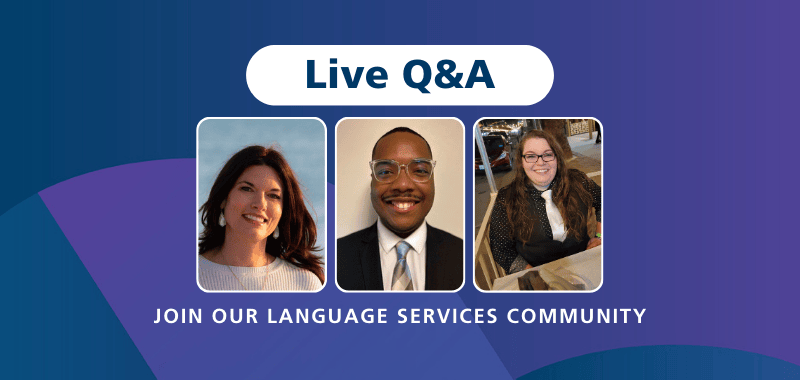
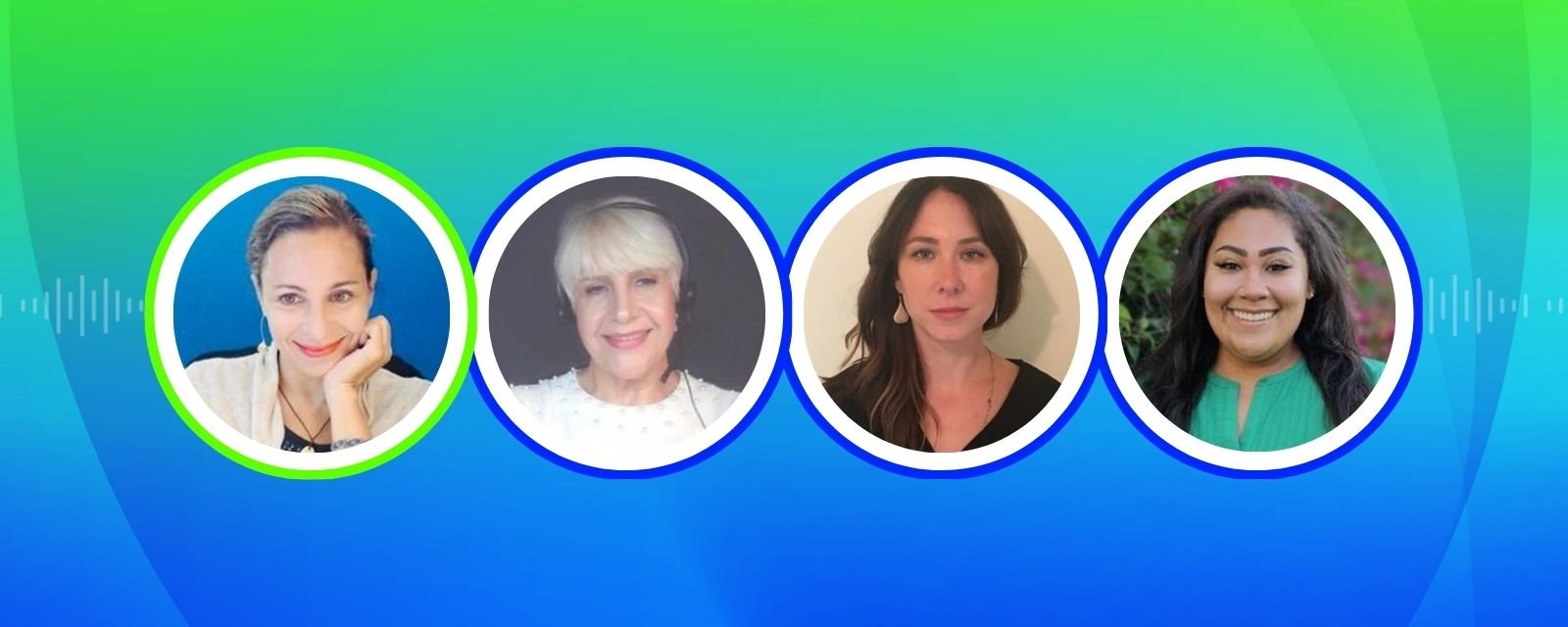
In this episode of Making Meaning Live, host Natalia Jiron, a Spanish medical interpreter and AMN Talent Acquisition specialist, welcomes expert guests Deanna (Language Services Recruiter), Celine (French Medical Interpreter), and Tatiana (Russian Medical Interpreter) for a candid conversation about qualifications, training, and the realities of medical interpreting.
Together, they break down the core components of becoming a qualified interpreter: from formal training to lived experience, continuous learning, emotional resilience, and ethical commitment.
Key Highlights from the Show
What “Qualified” Really Means
- Why a minimum 40‑hour medical interpreter training is essential—not optional.
- The difference between being bilingual and being a trained interpreter.
- How national certifications like CCHI elevate the profession.
- Why training directly impacts patient safety and health outcomes.
Inspiring Interpreter Journeys
- How the COVID‑19 pandemic sparked Tatiana’s entry into interpreting and shaped her calling.
- Celine’s bilingual upbringing and how volunteering strengthened her real‑world communication skills.
- Deanna’s perspective as a recruiter: what makes candidates stand out and how she matches interpreters to their ideal roles.
Training, Skills & Professional Growth
- The ethics, accuracy standards, and conversational management techniques taught in interpreter training.
- How interpreters build vocabulary daily through podcasts, note‑taking, and active immersion.
- The AMN Vocabulary Channel: a collaborative learning resource interpreters use to grow together.
- Why ongoing education is critical—interpreting is a profession of constant improvement.
Navigating Emotional & High‑Stress Sessions
- Real examples of misinterpretations that led to dangerous misunderstandings—and how trained interpreters prevent them.
- How interpreters manage emotionally intense sessions using grounding strategies like,
“It’s a mess, but it’s not mine.”
- When and why an interpreter must ethically withdraw from a session.
Live Q&A with the Audience
The panel answered questions about:
- How to apply to AMN
- “Hot” languages currently in demand
- How to handle burnout
- Opportunities for candidates outside the U.S.
- Training options (Bridging the Gap, Ulta, AMN internal programs)
- Requirements for bilingual candidates just starting out
- Community interpreter certificates and how they fit into medical work
Ready to Start Your Interpreting Journey?
Apply today:
👉 https://www.amnhealthcare.com/careers/language-interpreters/
Stay connected:
Follow us for monthly episodes of Making Meaning Live featuring expert guests, career advice, and behind‑the‑scenes perspectives from AMN’s Language Services team
Transcript
Host — Natalia Jiron (Natalia), Talent Acquisition; Spanish Medical Interpreter
Guest — Deanna Isham (“Dean”), Recruiter, Language Services
Guest — Celine Aganmayo (Celine), French Medical Interpreter
Guest — Tatiana Vavilova (Tatiana), Russian Medical Interpreter
ASL Interpreter — Jessica Brown (with Audrey Kohan co-interpreting behind the scenes)
[03:52] Natalia (Host)
Good morning, everybody, and welcome to Making Meaning Live. My name is Natalia Jiron. I’ll be your host today. I’m part of the Talent Acquisition team, and I’m also a Spanish medical interpreter with more than 15 years of experience.
[04:08] Natalia
On video with me is Jessica, our ASL interpreter, and behind the scenes supporting Jessica is Audrey. Thank you both for helping today.
[04:20] Natalia
For everyone in the audience: tell us where you’re watching from. Use the chat to drop your comments and questions—we’ll answer them throughout the show. We already see messages coming in, including folks from Mexico City and questions about how to reach recruiting. If you’re interested in applying, go to amnhealthcare.com/interpreters. We’d love to hear from you.
[04:56] Natalia
Today’s topic is what makes an interpreter qualified, and why that’s important. By the end of the show, you’ll have the answer. We’ve invited a lovely panel of guests to help us. Let’s bring them on.
[05:23] Natalia
Hello, ladies—Deanna, Celine, and Tatiana. Thank you for joining us. Let’s do quick introductions. Dean, want to start?
Introductions
[05:41] Deanna
Hello, everyone. I’m Deanna. I’ve been a recruiter in our Language Services department for about four and a half years, working on both employee and contract hiring. I love this field—interpreting is so active and requires continuous learning. I’m inspired daily by the interpreting professionals I work with and grateful to help create opportunities for them.
[06:29] Natalia
Thank you, Dean—we’re very happy you’re here. Celine?
[06:34] Celine
Hello, everyone. I’m Celine Aganmayo, a French interpreter. I’ve been interpreting for about 10 years and have worked with AMN for almost three years. Happy to be here with you all.
[06:49] Natalia
We’re happy to have you too. Tatiana?
[06:53] Tatiana
Hello, everybody. My name is Tatiana. I’m a Russian interpreter and I work on the AMN team. I’ve been with AMN for almost three years, and I’m happy to share my experiences with you today.
How We Got Into Interpreting
[07:14] Natalia → Tatiana
How did you get into interpreting?
[07:20] Tatiana
I became a professional interpreter when the COVID lockdown started. There was a huge demand for remote community interpreters—interpreters became like first responders to help maintain health, well‑being, and critical infrastructure. In summer 2020, I completed a four‑week call‑center training and became a remote community interpreter, and later a video medical interpreter. That’s how I started.
[08:11] Natalia → Celine
What led you specifically to the medical field?
[08:17] Celine
I’d say the medical field chose me. After completing a 40‑hour training, I started working in person. Most assignments were in clinics and hospitals, so I naturally focused on medical work and grew from there.
[08:50] Natalia → Deanna
Dean, what’s your favorite part of helping interpreters find their dream job?
[08:55] Deanna
Seeing interpreters progress—whether they’re just starting or are seasoned pros. I love keeping in touch, watching their confidence grow, hearing what projects they’re taking on, and matching them with roles that fit their experience and lifestyle.
Language Backgrounds & Learning
[09:32] Natalia → Tatiana
Tell us about your language background. How did you become proficient in more than one language?
[09:41] Tatiana
My native language is Russian. I’ve loved foreign languages since childhood—they were my window to the world. I graduated from a pedagogical university in Russia, studying English, German, and Latin, specializing in teaching English as a foreign language. I later taught English to Russian‑speaking students across the former Soviet Union and worked on an academic paper about English phraseology—hoping to pursue a PhD in linguistics, which didn’t happen.
After the Soviet Union dissolved in the early ’90s, I shifted to translation and paralegal work, helping thousands of refugees with immigration papers. That expanded my legal vocabulary.
Interpreting and translating are different: translators work with written text, with time to research and edit; interpreters work in real time under pressure, often with minimal tools. Consecutive—and especially simultaneous—interpreting demands very high proficiency. I had little exposure to spoken English until I came to the U.S., where I learned differences between American and British English. Even now, I keep expanding my vocabulary and skills. Professional growth is a constant climb—there’s “always another mountain.”
[13:35] Natalia → Celine
What inspired you to learn more than one language?
[13:41] Celine
I grew up in the U.S. in a bilingual French–English household. That meant I still had to study to read and write well and keep improving grammar. I love communication, so I’ve always worked on those skills. Since French is spoken in 26 countries, I wanted to communicate effectively across different varieties. I’ve also done volunteer work in the Francophone community, which pushed me to keep growing.
Hiring Needs & “Hot” Languages
[14:50] Natalia → Deanna
What are some “hot” languages we’re recruiting for right now?
[14:56] Deanna
We’re excited to hire American Sign Language (ASL) interpreters for remote and in‑person roles across the U.S. We’ve also expanded Cantonese and Vietnamese to Mexico, and we have continued need for some rarer languages like Q’eqchi and Rohingya. If you want to apply, visit amnhealthcare.com/interpreters.
Why Medical Interpreter Training Matters
[15:31] Natalia → Tatiana
From your experience, why is medical interpreter training important before working as a medical interpreter?
[15:43] Tatiana
Training is non‑negotiable in healthcare. You must be 18+, bilingual, and complete a course of training. Even medical personnel who speak another language aren’t legally permitted to interpret without being trained and vetted. When patients try to communicate without an interpreter, misunderstandings can lead to bad outcomes. Here are two examples I’ve encountered:
A family member reported “chest pain” when the patient actually had breast pain. In Russian, the same word can be used for both. The provider assumed a potential emergency. With an interpreter, we clarified it wasn’t emergent.
A patient threatened to sue a surgeon after a sterilization procedure, believing her tubes would be tied, not removed. She had signed consent without fully understanding. With an interpreter beforehand, that misunderstanding—and possible malpractice—might have been avoided.
Before I moved into medical interpreting, I trained as a community interpreter for broad settings (finance, police, utilities, schools, clinics, ERs). Phone work brought chronic stress: poor audio, people speaking over one another, yelling, and gaps in cultural knowledge.
A 40‑hour medical interpreter training changed everything: I learned tools and protocols, bias awareness, and self‑care to prevent burnout. The skills reduced stress and improved performance. Training equips you with the knowledge and tools to do the job successfully.
Audience Q&A (Live Chat)
Note: Questions below came in via the live chat. Each is labeled.
[20:40] [chat question] “If I’m here today, am I being considered for a position?” — Audience
Natalia: Unfortunately, no. Please apply on our website at amnhealthcare.com/interpreters. A recruiter will contact you.
[21:02] [chat question] “I started my application but was missing a certification, which I’ve now completed. What should I do?” — Mariama
Natalia: Send in all your updated credentials. We review files regularly and will follow up.
Key Learnings from Training
[21:22] Natalia → Celine
What key learning from medical interpreter training did you take into the job?
[21:33] Celine
Ethics and accuracy. Training prepares you to handle situations professionally. One coach told me, “No matter how accurate you are, you can always be more accurate.” That’s stuck with me. I constantly look for ways to improve, including learning to clarify without disrupting the conversation so sessions flow smoothly.
[23:23] [chat question] “How do you handle burnout after an emotionally crushing session?” — Kiranya
Natalia → Tatiana: Thoughts?
Tatiana: At AMN we learn continuously—there’s a learning portal where short, daily modules help. One phrase that stuck with me from a colleague’s reflection: “It’s a mess, but it’s not mine.” If we’re overwhelmed by emotion, we can’t perform our role. Focus on the job in the moment and process later. Don’t take it personally or imagine you’re the patient. After hard sessions, I remind myself to value my health and practice self‑care. Over time, I’ve learned tools to handle stress and even learn from each experience.
[26:21] [chat question] “Do you have openings for Pashto and Dari? Are you hiring from abroad?” — Fawad Masoodi
Deanna: We have some in‑person opportunities depending on the U.S. city. We’re not currently hiring outside the U.S. for most languages, though there are some opportunities in Costa Rica and Mexico. Please apply and contact a recruiter for specifics.
Requirements & Credentialing
[27:03] Natalia → Deanna
Can you share our training requirements for interpreters?
[27:09] Deanna
Whether employee or contractor, we require a minimum 40‑hour medical interpreter training. This aligns with standards (e.g., NCIHC and Joint Commission expectations). You must also complete a language proficiency assessment (English + target language) and HIPAA training. For employees, we provide these; contractors submit them during credentialing. Contact a recruiter for details.
[28:11] Natalia → Tatiana
After you completed training, how did you prove language proficiency and medical terminology knowledge?
[28:21] Tatiana
I worked full time while studying for national certification. I passed the exam and became CCHI‑certified (Certification Commission for Healthcare Interpreters). Every day on the job continues to prove my proficiency.
Preparing for Language Assessments
[29:09] Natalia → Celine
Tips to prepare for the language assessment test?
[29:17] Celine
Become a little obsessed with vocabulary. Throughout your day—TV, radio, podcasts—note words you can’t yet interpret both ways.
Set weekly word goals and use flashcards.
Think through real medical situations (questions doctors ask, common terms). If basic terminology is hard, keep studying.
Listen to medical podcasts in both languages.
Compare terminology on reputable medical websites in English and your other language(s).
This approach helped me prepare and keep growing.
[31:39] [chat question] “I have a community interpreter certificate. Can I apply?” — Audience
Deanna: Definitely apply. Community interpreter trainings often include some medical content. Employees also complete internal training with us to get acclimated.
[32:12] Natalia → Deanna
How do we assess language proficiency at AMN?
[32:19] Deanna
We require language proficiency testing wherever available. For employees, we facilitate testing during interviews; contractors provide third‑party test results. Tests typically cover listening, speaking, reading, and writing for each language. Keep terminology current; accuracy is graded. Once we have results, we proceed with interviews. Recruiters can recommend vendors and guide you through the process.
Building Experience
[33:19] Natalia → Tatiana
After training, how did you build experience?
[33:30] Tatiana
I worked full time as a video medical interpreter and did post‑session research every day. At AMN, we have a vocabulary channel where interpreters share new terms and procedures. That mix of individual and collective learning accelerates growth and builds team unity. We also have short learning modules that sharpen critical thinking and reinforce ethics—our pledge emphasizes integrity, accountability, compassion, competence, respect, confidentiality, fairness, and lack of bias. That’s my motto.
[36:09] Natalia → Celine
Did you gain experience before AMN, and how did it help?
[36:22] Celine
Yes. After a 40‑hour community training, I interpreted in person at clinics and hospitals, and sometimes in schools. I later worked remotely handling video and audio calls across many industries—healthcare, insurance, banking, law, and court settings. During the pandemic I interpreted immigration court proceedings remotely and took additional simultaneous interpreting training. The diversity was overwhelming at first but helped me grow, handle different situations, and ultimately return to focus on medical interpreting with AMN.
[38:39] Natalia → Deanna
What experience does AMN look for?
[38:48] Deanna
Ideally, 6+ months of interpreting experience or exposure and a genuine interest in the field. Candidates complete our onboarding: language proficiency, interpreter training, and HIPAA. Then we’re excited to welcome you.
Handling Difficult Situations
[39:23] Natalia → Tatiana
Share a time when your qualifications helped you navigate a difficult situation.
[39:35] Tatiana
I use my training in every session: active listening, note‑taking, memory, self‑assessment, and reflective practice. Training taught me to be mindful, which has become second nature at work and in life.
One session stands out: a 45‑minute high‑stakes meeting in a conference room full of providers speaking with the parents of a young child. It hit close to home because of my own family experience. Internally, I was shaking, but I kept going—until, at the very end, my mind went blank. Luckily, the session concluded.
My lesson: withdraw if you become too emotional to perform, just as simultaneous interpreters work in pairs and take breaks. Training prepared me to recognize those limits and prioritize accuracy and safety.
[44:22] [chat question] “Do you have remote positions for insurance agents?” — Plotsey Garcia
Natalia: No. AMN recruits medical interpreters.
[44:36] [chat question] “I’m a dentist with no medical interpreting experience—guidance?” — Wessam
Deanna: Speak with a recruiter. We’ve helped candidates transition careers. We can recommend internal or third‑party training to set you up for success.
When a Medical Interpreter Is Essential
[45:24] Natalia → Celine
Give examples of sessions where a trained medical interpreter is needed.
[45:35] Celine
Everyone has a right to understand and communicate clearly with their medical provider, which means every session deserves a trained interpreter. A few clear cases:
New or complex diagnoses — terminology and emotions can be hard to process.
Surgical discussions/consent — accuracy is critical for informed decisions.
Therapy sessions — patients must fully express feelings; trained interpreters manage these dynamics so therapy remains effective even when interpreted.
Family members often want to interpret, but they’re not trained in terminology or ethics and may omit sensitive information. A professional interpreter ensures accuracy, completeness, and neutrality.
[48:17] [chat question] “Are you needing Rohingya or Bengali translators/interpreters? And where can I learn about the 40‑hour training?” — Sheikh & Elaine
Natalia & Deanna: We recruit interpreters (translation is written). Apply at amnhealthcare.com/interpreters. For 40‑hour medical training, there are several third‑party options we can recommend, including Bridging the Gap and ALTA; AMN also offers an internal training for employees. Programs typically start at 40 hours and can extend to 100–160 hours, depending on depth. Contact a recruiter for guidance.
What Recruiters Look For
[49:10] Natalia → Deanna
When reviewing resumes, what key details help you determine if a candidate is qualified?
[49:20] Deanna
Detail matters. List all languages and dialects, proficiency levels, employment/contract dates, companies, modes of interpretation (consecutive, simultaneous, VRI/OPI), industries, and special projects. The more relevant information you include, the easier it is to match you with openings. Resumes can be long; make sure key information is easy to find.
What Makes an Interpreter “Qualified”?
[50:30] Natalia → Tatiana
In a nutshell: what makes an interpreter qualified, and why does it matter?
[50:40] Tatiana
Requirements: Be 18+, fluent in at least two languages, complete 40 hours of medical interpreter training, pass a language proficiency test, and ultimately pursue national certification in medical interpreting (the highest level). Training transforms a bilingual person into a professional who follows a shared code of ethics—and that consistency saves lives.
[52:06] [chat question] “I received one email after submitting my resumeé—was that the recruiter, and do I need to reapply?” — Audience
Natalia: If you received an email, your application is in the system and someone is working with it. No need to reapply.
[52:33] Natalia → Celine
One piece of advice for multilingual candidates seeking to qualify as medical interpreters?
[52:43] Celine
Training is essential—no exceptions. A common misconception is that being bilingual automatically makes you a good interpreter. It doesn’t. There’s a whole skill set—technique, ethics, accuracy, role boundaries—that training develops so we can truly help people and, ultimately, protect patient safety.
[54:05] Natalia → Deanna
Last advice for candidates interested in working with AMN?
[54:13] Deanna
Reach out today—don’t wait. Our hiring needs are ongoing and evolving. Stay connected with recruiters and our social channels for new opportunities. If you need training or experience, we can talk through options and get the ball rolling.
Closing
[54:41] Natalia
Please apply at amnhealthcare.com/interpreters. Even if the exact opening isn’t active today, things change—you’ll hear from us.
[55:01] Natalia
Huge thanks to Deanna, Celine, and Tatiana for helping us learn more about the interpreting profession. Thanks to everyone who joined us today. We do the show once a month—the next one is on the third Wednesday of April. Bring your questions; this is a direct line to the AMN recruiting team. Thanks again for joining us—it’s been a pleasure.