
Tips to Master Medical Terminology
Medical terminology is vast and complex. For interpreters working between a provider and a patient, mastering technical language is the difference between empowering someone to make an informed decision and leaving them without the information they need.
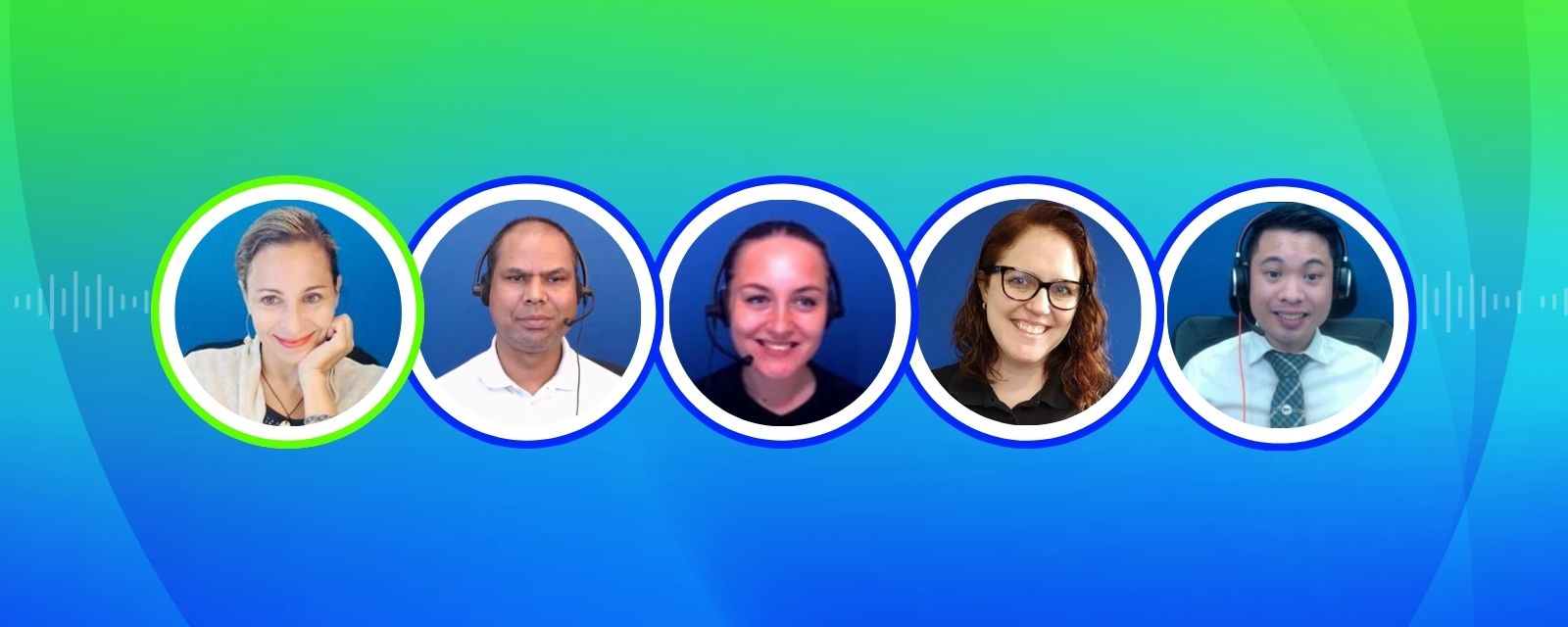
In this episode of Making Meaning, host Natalia J. sits down with a panel of seasoned interpreters and language operations leaders from AMN Healthcare Language Services. They break down why medical terminology matters, how to build it from the ground up, and the practical resources and techniques that turn overwhelmed newcomers into confident professionals.
Key Takeaways
- Accuracy protects patients. Providing the exact term in a patient's native language empowers them to research their condition, ask the right questions, and make autonomous, informed decisions.
- Learn the building blocks. Mastering Greek and Latin prefixes, roots, and suffixes gives you the context to decode unfamiliar terms without memorizing every single one.
- Context beats memorization. You'll never know every term—and providers don't expect you to. Understanding structure and context lets you render meaning accurately.
- Build your own glossary. Organize terms around real interpreting encounters (OBGYN, emergency room, pediatrics) rather than alphabetically. Your glossary is yours, built for what you know and what you don't.
- Ask for clarification professionally. Saying "This is the interpreter speaking. This is the first time the interpreter has encountered this term. Is there a more lay term?" keeps you accurate and professional.
- Never stop learning. Language is fluid, and healthcare evolves daily. Continuing education keeps your skills sharp and your interpretations current.
Chapters
- [3:48] Welcome and Introductions—Meet host Natalia J. and the panel of interpreters and language operations leaders.
- [11:32] Meet the Panel: What's Your Why?—Each guest shares what drives their passion for medical interpreting.
- [17:54] Why Medical Terminology Matters—How accurate terminology improves patient safety, autonomy, and quality of care.
- [26:06] Getting Started—The panel's biggest early challenges and how they overcame them.
- [35:56] Terminology Resources—Training programs, free online platforms, and where beginners should start.
- [47:33] Techniques for Mastery—Visualization, context-based glossaries, and staying current with evolving terms.
- [52:55] Impacting the Field—Real stories where terminology knowledge and cultural nuance shaped meaningful communication.
- [1:01:45] Final Thoughts—Last pieces of advice for building medical vocabulary without becoming overwhelmed.
About the Guests
- Natalia J. (Host)—A CMI Spanish interpreter of many years and a member of AMN Healthcare's talent acquisition team.
- Margarita E.—A certified Russian interpreter with over 10 years of experience and a background in linguistics, passionate about authentic, effective communication.
- Mohan—A Nepali interpreter with more than 16 years of experience in the medical field and author of Advanced English-Nepali Medical Glossary.
- Nick—A training coach at AMN Healthcare with seven years of interpreting experience, certified as an HCI interpreter in Oregon, and creator of the workshop "Decoding the Doctor Talk."
- Elsa—Manager for Language Operations Recruiting and a Portuguese interpreter, holding a master's in strategic leadership and management.
Transcript
Introduction and Panel Introductions
[3:48]
Natalia: Good morning. Welcome to our live show, Making Meaning. We're here for you. We're the Language Services department of AMN. My name is Natalia Jiron and I'm going to be your host. I am a CMI Spanish interpreter of many, many years and I'm also a member of the talent acquisition team.
Now here with me on video, we have Jessica, our CDI interpreter and off screen Co interpreting with Jessica we have Catherine or Cat. Thank you ladies, to both of you because you really help me a lot in this job. So thank you very much to the audience at home, to the folks at home, this show is for you.
It is a live show, so we would love to hear from you. We have a chat here, drop your comments, your questions, and I'm going to be reading them as we go along. We really do want to hear from you. We're here to help. Today's topic is a very interesting one. It's called the medical terminology tips to master medical terminology.
Now, if you're an interpreter, and we have many interpreters that are watching, I'm sure you know the importance of such a big topic because these big words do come up and we need to be able to tackle them. So we're going to be learning a lot about them. We're going to be going through why it's important, getting started, the terminology, resources, techniques for mastery of such words, impacting the field when you're interpreting, and final thoughts from our guest.
Now, this topic, I'm not going to be doing it by myself. I have a huge panel of guests and they're wonderful and they have a lot of expertise on the matter. So without much further ado, let's bring them out so that we can meet them.
Good morning. Thank you for being here and helping me with such a complex topic. Thank you very much. We really appreciate it. Why don't we go around the room so that you can tell us a little bit about yourself so that we can get to know each other? Margarita, let's begin with you.
[5:43]
Margarita: Sure, I would love to. My name is Margarita Estevez. I've been an interpreter for over 10 years. I'm a certified Russian interpreter, despite what my last name might suggest. I've been in this field for, as I said, over 10 years, and I just love how it keeps me connected to my language, because I love Russian culture, I love Russian language. I have a background in linguistics, and my love for communication has space in this profession. I believe that we have huge changes in the communication landscape thanks to technology. So authentic and effective communication, connecting to people, has been really interesting and important for me personally.
And I just love the way that we as medical interpreters specifically have this unique opportunity to be there for very vulnerable moments in people's lives. As communication professionals, as people who are able to read not just verbal messages but non-verbal messages, we as interpreters are privy to all those nuances of meaning and feelings that are going on in the medical encounters. We can meet people with compassion and serve them in the most vulnerable moments and really make an impact for them. And I'm very, very grateful for that.
Natalia: Well, we're grateful to have you here. We're very lucky. Very wise words. Thank you very much. Mohan, tell us a little bit about yourself.
[7:25]
Mohan: Hi, good morning, everyone. My name is Mohan. I am a certified Nepali interpreter with 16-plus years of experience in the medical field as a Nepali interpreter, and I am also the author of Advanced English-Nepali Medical Glossary. It is a pleasure to be with you all today and share my experience.
Natalia: Thank you for being here as well. Nick, tell us a bit about yourself.
[8:00]
Nick: Hi, I'm one of the training coaches here at AMN. I have seven years of interpreting experience. Five of those years were audio, two of those years were video. I've also had the pleasure to work with Duolingo, getting the experience of what it's like to translate and having that perspective of learning a language, or the other end of that, helping others learn a language. Besides that, I am certified with the state of Oregon as an HCI interpreter.
For me, I have been very passionate about interpreting, same as Margarita. It's a really great way to be able to bridge the community and help those that are in a vulnerable position.
Natalia: I cannot hear you very well. I'm sorry, Nick. Remember, this is a live show, folks, so these things happen. Technology. Are you able to hear me now?
Nick: Perfect. Yes, thank you. Bringing the community and the healthcare community together, supporting people that are vulnerable and meeting them in a way that's compassionate, where their health is at stake. For me specifically, I've been focusing very heavily on learning about the basic building blocks of medical terminology, which are the prefixes, roots, and suffixes. And you're going to hear more about that a little bit later.
Natalia: Well, we appreciate your expertise, and we're going to need it for today's topic. Thank you very much. Elsa, tell us a little bit about yourself.
[9:49]
Elsa: Hi, I'm currently the manager for Language Operations Recruiting. I recently took on this position in April of this year after having interpreted for AMN for four years as a Portuguese interpreter. I am a HUB CMI interpreter as well. I started interpreting around 2012. I did in-person and over the phone, and I started VRI, the video remote, in 2022 with AMN. Because of my background, I have a master's in strategic leadership and management, and I have a bachelor's in management as well, I was able to move up in the company, and I'm very glad. I have a wonderful team.
Natalia: Yes, thank you. She's a very, very strong asset. Thank you very much, all of you, for being here to help me with this topic.
Now, from the audience, we have Aswath , a Burmese medical interpreter from Bangladesh. Hello, Aswath, watching us from afar. And I have another candidate here who says that he's not yet in contact with AMN but has vast experience in international organizations and is a certified court interpreter and would like to continue with medical interpretation. For that, and this is a very important piece of information: if you want to work with us, feel free to send your application to amnhealthcare.com/interpreters. Send an updated resume in English, please. It has to also have your language pair. It's really important for us to have that. And a recruiter will be contacting you.
Panelists Share Their "Why"
[11:39]
Natalia: So let's get to it. I'd like to take some time to meet the panel, to get to know you a bit. Let's dive deep. Margarita, let's begin with you. What's your why? Why do you work as a medical interpreter, and what keeps you going?
Margarita: My connection with my language is very important to me. I love how this profession gives me an opportunity to stay connected with the Russian language, and I'm interested in healthcare in general and in communication. So those three things—being connected to my culture and my language in a professional way, an interest in communication in general, and being there for people and making an impact—those are three things that I find very, very meaningful. And I would say the fourth one, personally, is that we have a great working environment. I love my colleagues. I love how professional everybody is. So that's a side note, but the first three would be connection to my culture, the ability to make an impact for people in meaningful moments, and the ability to study and master communication as an avenue of human interaction.
Natalia: Yes, and medical interpretation ties all of those very well together. So thank you. Mohan, why don't you share what you love most about working in the medical field in particular?
Mohan: What I love about working as a medical interpreter is being able to bridge language and cultural barriers and help patients clearly understand their healthcare. Knowing that my work can support effective communication, patient dignity, and better care is deeply rewarding always.
Natalia: Thank you for sharing that. I appreciate it. Nick, why don't you tell us about your passion for medical interpreting? What about training?
Nick: Well, it started with an opportunity to be able to spread knowledge to my colleagues, because it was about learning about symptoms and syndromes. I was wondering what's the difference between that. It was one of the ongoing educations, and I wanted to ask about that and ask the training team if it was possible to have material on that. The team lead actually referred me to Lorena, and she gave me the opportunity to do this research on my own and create the presentation, which I was very honored to be able to do.
That's how it started with training, and now it's really more about helping colleagues, which indirectly helps patients. Because with an interpreting background, it's something that I can relate to, and it's so close to home. So whenever I meet a colleague who's an interpreter or somebody who's interested in becoming an interpreter, it really hits very close to home, where I'm able to share my experience and hopefully help them find the best path that will really help them enrich themselves, as well as help them support vulnerable patients and providers that are trying to provide the best care that they can.
Natalia: Thank you for sharing that. Elsa, why don't you tell us a bit more about your background and how you got into the role you're currently working in?
Elsa: Sure. I have some management experience. I worked for ALDI, a grocery store. I ran floors for them for five years. I was a district manager, and then I also ran a translation and interpretation agency. I stepped away from leadership to be with my family and came back to it after having interpreted. So I did interpretation and translation as a freelancer, and then for four years with AMN. It helped because it gave me a really nice work-life balance that I needed at the time to be with my family.
Some of the things that I think were important to be able to move up were being a good interpreter—yes, your medical terminology, yes, you're certified and do well with interpretation—but also you want to be a good employee. You want to have amazing metrics: good ring time, no declined calls, on camera even when you're not in session. You get good customer reviews because you have good customer service.
And then, if you really want to move up, you want to be helpful. You want to get engaged with your colleagues, not in a fake way, but in a way that you're genuinely trying to help your colleagues. In general, my rule of thumb is propose solutions and not problems. So if you see something and you want to go to your manager, say, "I've noticed X, and I think the solution is Y." When this position opened up as the recruiting manager, it's a nice marriage of the two things that I love the most, which is interpreting and leadership. Like Nick said, he's still indirectly helping patients by helping colleagues. I'm helping put interpreters in positions to help patients as well. So I think those are all the factors that brought me to the Manager, Language Operations Recruitment position.
Natalia: Yes, thank you. And a quality life balance is really important. At AMN, we value that a lot.
To the folks at home, we have Abid, who is a Pashto and Urdu interpreter from Pakistan with three years of experience. Hello, Abid. And Royce is watching us from Nairobi, Kenya, very far away. Eli is joining us from Turkey, and Mohammed says hello, everybody. So hello, Mohammed as well.
Importance of Medical Terminology
[17:54]
Natalia: Let's get into it. Let's talk about the importance of medical terminology within the medical interpreting career. It is a very important aspect of the job that we do. So let's learn why. Margarita, why don't you tell us a bit about how understanding terminology improves accuracy and patient safety?
[19:14]
Margarita: Well, our goal as medical interpreters is to ensure patient autonomy in making their decisions. So the whole purpose of the medical interpreter being there is for the patient to have full understanding of what's going on and to empower them to make their own decisions as much as an English-speaking patient would. By providing the exact term in the native language that corresponds to the English term, you are empowering that patient to do the appropriate research and connect the dots about that condition, state, or situation, to leverage all that information they already know.
Let me give an example: breech baby. Somebody's pregnant. It can be something that people are familiar with. Once you hit the exact term in your target language, you are empowering the patient to connect the dots, to know exactly what it is, and to do their own research. But if you give a fuzzy term that's descriptive—they understand what it is, but it's not the exact term—you are depriving the patient of that opportunity to tap into their existing network of knowledge, to Google the things in their own language. So basically, by giving an exact, specific, and accurate term in the target language, it's like giving them a key to the door. With the knowledge, they can unlock all the information and make an accurate and empowered decision for themselves.
Natalia: Exactly. You're there to facilitate the communication between the provider and the patient, so they need to understand what's going on with their health. Very, very true. Mohan, in your opinion, why is medical terminology so important for medical interpreters?
Mohan: Thank you for the question. In my opinion, mastering medical terminology is essential for a medical interpreter because accuracy can directly impact patient safety and quality of care. A strong understanding of medical terminology allows us to accurately convey complex information while preserving the provider's intended meaning and the patient's understanding. Henceforth, mastering medical terminology is extremely essential for medical interpreters.
Natalia: Exactly. Thank you very much for sharing that. Nick, how does knowledge of medical terminology tie into the interpreter code of ethics and standards of practice, and also with accuracy and ongoing education?
[21:15]
Nick: Yes. Within our code of ethics, one of the key things is accuracy and fidelity. Fidelity can be defined as loyalty or faithfulness to the actual meaning itself. So we want to be as faithful to the meaning of the message as best as we possibly can. When we're trained in specialized medical terms, it's a lot easier to understand the context and to be accurate without guessing what we're saying. It's much easier to work with providers compared to someone who maybe hasn't had any training or background in it.
As Margarita mentioned, if they've heard the word "breech baby" but they've never actually understood the full concept or they don't know the official term, it's a lot harder for them, or even for colleagues, when they don't have any context based on that term. But when you have that training and background, it's a lot easier to process, and you'll know how to use the tools you have at hand to render the message as accurately as possible for the sake of the patient's health.
And also, continuing education. As we all know, language is fluid. It always changes, it always updates. So it's important to continue to educate ourselves and be open to change. A term might be used in one sense during this time, but that might change in the future. There's always new terminology coming out, new concepts coming out, especially in healthcare, where there are new diseases or new treatments coming out every day.
Natalia: Yes, thank you. And you work in the training department, so you're very well versed in this topic. We like our interpreters to stay updated on new terminology. Everything is changing, so we should always be able to adapt. Thank you for sharing that, Nick. Now, Elsa, how do we ensure candidates have enough familiarity with medical terminology and the US healthcare system before coming to work with us?
[23:37]
Elsa: I just want to highlight the importance of medical terminology and knowledge of the US medical system before I fully answer the question. The language interpreter is supposed to help the LEPs, the patients who don't speak English as well, to not only communicate but also navigate the medical system. Knowing the intricacies of how the system works is also very important for the interpreter.
So we look at several things when we are hiring interpreters to ensure they are able to help patients in that aspect. Of course, we require experience, we require training from accredited certifying bodies. In addition, through the recruiting process, you will have a quiz with some medical terminology questions. You will be asked to translate some statements into your native language to make sure you're aware of how to translate those terms. You can see on the screen some examples of the quiz questions. These are not the same questions we have on our assessments right now, but they are examples very similar to what we have. Of course, at the end of the process, before your final interview, you take an interpreting assessment to ensure you have language proficiency and medical terminology proficiency. And then, for our VRI interpreters, they also have a final interview in which we ask several situational questions. In those situational questions, we ensure that we include medical terminology to double-check the interpreter's knowledge during the interview.
Natalia: Yes, we do like to work with candidates who have experience. It is a must. This is a medical interpretation career in the field, and we need people who have the experience, have some formal training, and are able to manage those big words that are coming their way. Thank you very much.
We have Lucia Paula, who's currently watching us from Miami. Hello, Lucia. And Mohammed says it's a good session, very lucrative, because he's preparing for the CHI test. That's a very big test. So good luck, Mohammed.
Getting Started and Overcoming Challenges
[26:09]
Natalia: All right, let's talk about how you all got started. Margarita, when you first started as a medical interpreter, what was the biggest challenge for you when it came to learning medical terminology, and how did you overcome it?
[27:23]
Margarita: Sure. When I first started, medical terminology seemed to me as vast as the stars in the sky. It seemed like there were so many terms, spread out and not systematized, like stars in the sky. I would be confident with 10 terms—yes, I knew certain words—but I just felt I really lacked confidence about knowing the terms and navigating them, because it just seemed so vast and incomprehensible, something that you cannot really embrace.
As a seasoned interpreter now, I will tell you quite honestly that it's not possible to know everything. Your knowledge base will truly be constantly evolving and growing, and there is no finish line. So what has helped me is creating structure out of those terms. The way I created structure for myself was building my glossaries around context, from context-based situations. There are terms like retina, macular degeneration, that you will encounter in an ophthalmology encounter. Then there are terms like breech baby and strep B test that you will encounter in a completely different type of encounter. Grouping the terms around practical implications—around where exactly in the field I encounter them, not around the body part, not around the alphabet, but around the practical experience of my work as an interpreter—has helped me greatly to get a handle on it, to feel more confident and more proficient in my terminology use.
Natalia: Yes, you mentioned it was as vast as the sky—very accurate. I felt that myself. I think everybody who's been an interpreter has felt that as well. Just creating the structure like you mentioned is a great tip. Your own little glossary, your own little notes. All of this helps when it comes to learning so many words. Mohan, let's talk about you. Once you decided you wanted to become a medical interpreter, how did you first approach learning the medical terminology in both English and your language pair, Nepali?
[29:05]
Mohan: Yep. There is a saying: empty vessels make more sound. That's how I was exactly before I entered this field, the interpreting industry. I thought that I knew, because I used to speak English. I thought that I'm a good interpreter, until I faced the real challenge in medical terminology. I started by completing 40 hours of medical interpreter training and earning my CoreCHI certification through CCHI. I focused on understanding medical roots, prefixes, and suffixes, especially Greek and Latin terminology, rather than simply memorizing the words, and I continued to strengthen my terminology through experience and ongoing learning.
[30:08]
Natalia: Thank you. That 40-hour course you mentioned is a pretty good course, and it helps everybody learn a lot about the medical interpreting field. So we highly recommend it for our candidates as well. Remember, if you want to apply: amnhealthcare.com/interpreters. Please send us a resume in English with your updated information and your language pair for us recruiters.
Nick, for the newbies who are currently watching us from the audience, I'm sure we have many of those who have yet to complete any formal training, what tips can you provide for them to first tackle medical terminology in both English and their own language pair?
[30:52] Nick: Yeah, so a great place to start, again, medical terminology is vast, very vast. I think if you ask any interpreter, they will tell you the same thing. If you had to guess what the number is, no one could probably tell you the exact number, but it would be a very big number. So where can you start? That's what a lot of people are wondering. The best place is just looking into prefixes, roots, and suffixes, the most basic ones. You can also watch your favorite medical TV show and try to pick up terminology from there. That will give you context and exposure to medical terms that is used in the medical field. Then from there, you can actually go to prefixes, roots, and suffixes, which is basically the building blocks, the basic building blocks of medical terms. And when you learn those, it becomes a lot easier. And like what Margarita said about structure, many of us like structure. And when you learn these building blocks, they actually give you a structure to build off of to which you can start to learn and continue to increase your vocabulary in the medical field itself.
[32:12] Natalia: Ok, thank you. Yes, the structure part is very important. And also you mentioned the TV shows and you, you would be surprised, but a lot of interpreters start out by watching a lot of medical shows and learning a lot of words and writing down and then they get informed. So it helps out a lot. From the chat here we have. Let's see, Reginald Joseph is watching from Mexico and is looking forward to joining our team. Thank you, Reginald. You could send your resume amnhealthcare.com/interpreters. We would be happy to assist you. And he says that he really wants to grow his skills with our team. So we appreciate the interest. Now, Elsa, let's go to you. Are there any websites, apps, podcasts, YouTube channels, anything you can recommend to those people that are just getting started?
[33:03] Elsa: I don't have like a website or a podcast or anything specific to recommend. But what I do recommend is if you like a specific topic, physical therapy exercises for physical therapy, like do I know how to say lunges and and push ups and things like that, or gynecology or cardiology. And you want to read about it, find medical websites that were originally written in the non-English language that you speak. So for example, in my case, if I want to read about cardiovascular disease, I would try to find a web page from Brazil or Portugal that is written originally in Portuguese. Not so much, for instance, like the Mayo Clinic has the version web pages that are translated. So you want to look for those and how natural the language is on that website will start to help you build and you'll start to see, oh, yeah, I forgot about that word. I forgot that that was also said that way. And so you can start to write down some of the words that your brain is kind of recognizing because you've been living in the US for quite some time or you haven't been exposed to those words and then start to build your glossaries around that. And like Margarita said, you know, have your emergency room glossary and you know, OBGYN check and prenatal visit pediatric well visit and have your different glossaries to help you with that. But I really liked going to these web pages that were originally in non-English, particularly for PT, because the name of the exercises and things like that were very different. And oftentimes, at least for the Brazilian population, some of the words of the exercises are used in English just pronounced with the Brazilian accent. So it depends on what the population uses. You need to look at something that's written originally in that non-English language.
[35:13] Natalia: Good tip to begin at it, to go at it from your native language and then switch over to English. And that's the thing, right? When you're setting up your own little gloss or your terminology book or notebook or whatever, it's yours. It works for you because only you know what you know and only you know what you don't know. Now a question to the audience. Now we're talking about medical terminology and big complex words. And if you're a medical interpreter, I'm sure you've come across a couple of those. So take the chat and please share with us some of the medical terms you've encountered during an assignment that maybe caught you off guard, you've never heard about before. You had to go on Google. We would love to hear what those words were like.
Terminology Resources
[36:06] Natalia: OK, so let's begin talking about the terminology resources to get some ideas and tips from our guests, which are the experts on the resources. Margarita, when it comes to medical interpreter training, how do you think it helps candidates to master medical terminology?
[36:15] Margarita: Well, quality medical interpreter training will certainly include information about roots, suffixes, and prefixes. And I can't agree more with Nick that it's, it's very important. It's a foundation. You want to learn the meaning of those Greek and Latin suffixes and roots and prefixes because that will allow you to navigate medical terminology successfully. That's your foundation. And I did my training in Hunter College in New York and we had that as a resource, as a part of my 40 hour program. So that is, that is very, very valuable.
[36:59] Natalia: OK, thank you. We have Kiwa, who says. Could you please share the application link for the medical interpreter position? I would like to apply. So again, amnhealthcare.com/interpreters, so you can go ahead and send us your application and a recruiter will contact you. Mohan, let's go to you. Is there any particular learning that you took when you took the training that maybe helped you build your medical terminology knowledge?
[37:16] Mohan: Yes, to continue education I have been through resources like Medline Plus and Des Moines University of Medical Terminology, which is free and available online. Those two online platforms greatly impact my building blocks of medical terminology.
[38:02] Natalia: Thank you for sharing those two resources. There's a lot of free resources that are available and we have Google, so that's always an asset as well. Nick, are there different approaches to learning more specialized terminology, for example, when it comes to learning medical terms versus different types of medicine or even anatomy?
[38:11] Nick: There is a difference. For example, specialized medical terms, just reiterating how important it is to learn about the prefixes, the roots, the suffixes, the building blocks. So in general, if you want to learn about medical terms, that would be the best route to go. But when you talk about anatomy, while the building blocks do help you, what would actually help is to learn based on structure, which gives you more context. You might want to start with learning about particular organs. So you know, the liver, the kidneys, the brain, each one individually once you've started to understand each system, the skeletal system, the skin, right, the lymphatic system, the immune system. Once you start to understand each system, you can actually start to focus more on regions. Start from the head and then go all the way down basically. And once you know the systems, you can apply it. It's a lot easier to approach anatomy that way rather than just going for the building blocks, which doesn't give you the context on where the function is or the location right, of each term is. As for medicine, that is also another beast in itself. It would help you to learn the stems of it.
The World Health Organization list of medicine stems. Or you could simply Google different medicine names and you can correlate the brand names with the stems and that will give you a better idea. Again, the key here is context. I would like to piggyback off of what Margarita said again. One of the core things as an interpreter is you learn that you don't know everything and you're not going to know everything, right? It's continued learning. What you can do is don't overwhelm yourself, but really just start to learn the stem so you have a better context of what each medicine does. Then you can start to associate the brands with those stems.
[40:43] Natalia: Exactly. What you mentioned and Margarita mentioned is very, very true. Really, medical interpreters are not expected to know everything. You're constantly learning new words, learning new things. Something's going to come up you've never heard about before. And that's fine. This is your moment of truth to learn the word, to learn about the topic, the disease, the treatment. Remember, we want to hear what's the most complex medical term you've ever encountered during an assignment. Maybe I could ask that to my guests. Elsa, do you remember a word off the top of your head like one that made you think, "Oh, God, I've never heard about this before?"
[41:13] Elsa: I think it was salpingo-oophorectomy, Nectomy means removal of, so they're taking something out and I knew OO in Portuguese sounds a lot like Oval, which is Latin based or Greek based. And so eggs, which to me was like ovaries. It was a GYN appointment. My next best guest was Salpingo stands for fallopian tubes. And so I discretely looked it up quickly and I was like, yes, salpingo-oophorectomy is the removal of the ovaries and the fallopians. It was a quick jump on the brain. But like Nick said, context is everything. It was a GYN appointment and they were talking about the solution to the problem the patient had was the removal of. That was my challenge.
[42:48] Natalia: Nick, do you want to share a word? Do you remember one that maybe caught you off guard?
[42:48] Nick: Yes, aplastic anemia. I think that one was the first time I first heard that was just like interesting, you know and I actually was very transparent with the provider and said this is the interpreter speaking. This is the first time the interpreter heard the term aplastic anemia. Is there a more layman's term? With the context set we will not know everything and the provider doesn't expect us to know everything, but we what we are expected to know is how to communicate that. So an example would be if I just said what? What was that? The interpreter doesn't know this term. This is the interpreter speaking. This is the first time the interpreter's encountered this term. Is there a more layman's term so the interpreter can render the message clearly for the patient to understand. And basically aplastic anemia means bone marrow is not developing enough red blood cells. So almost everybody knows what anemic means. So that's anemia, but aplastic means it's not developing. So, yeah. Again, not expected to know everything. But then you're faced with this situation where you do not know. So what do you do? And being honest with the provider, that's perfectly acceptable, stating the fact that this is the first time you've ever heard the word or the concept of the term. And so the provider is probably going to help you out because they do want you to interpret it accurately.
[44:33] Natalia: That's also a great tip for our candidates. Elsa, do you have like any interpreter training programs in particular you could recommend to help candidates get more familiar with medical terminology?
[44:33] Elsa: Sure. As Nick was talking, I remembered one time a provider said "spleen" and my brain just drew a blank on the Portuguese word. And so there is no layman's term for spleen. So I just said this is the interpreter speaking. Would you allow me just one moment to confirm with my glossary? I'm having a moment where for some reason my brain isn't thinking of the word. Give me one moment. I quickly went to my glossary and it was solved. But like Nick said, it's very different to say, Oh my God, I'm having a brain spasm. I can't remember right, versus this is the interpreter speaking. Please allow me one moment to confirm with my glossary. So that is also valid and totally fair. And it happens to all of us where we have a brain freeze and we can't think of the word, even if it's a simple organ.
And to answer your question, I think just about any training that we take will help us with building, with building different medical terminology. I think the key and I'm going to shout out to Nick here because as an interpreter, I did take one of his courses and it was fabulous. It was because of him that I was able to navigate that salpingo-oophorectomy term. I would say that the big thing is, going to your trainings and then from your training, asking yourself what's one or two things that I'm going to put into practice in my interpreting from that training? Because we do the training and we kind of hear and we learn and that's great. But how am I going to transfer this into the practice, into my day-to-day interpreting? If we try to put everything in, it becomes overwhelming and too much. But if we pick one or two things that we're going to change or improve after the training that you take, that really makes the difference.
[46:55]Natalia: Yes. Nick, you helped Elsa, so you did good. You never know where the information's gonna come from. So wonderful. And we have some words with Muhammad - teratoma. That was the word that caught him off guard. And means any sort of tumor of different types of tissues. And Kiwa says that he learned about medical terminology through this session. And thank you for providing it to us free of charge. He's now looking to get an 80 hour medical interpreter training. Those are really good. We have the 40 hours, the 60 hours, the 80 hours, the 100 hours. And they're really, really good in helping us out. OK, so let's talk about the techniques for mastery of this topic, right? Or to strengthen our knowledge of medical terminology. So Margarita, what techniques helped you build your medical vocabulary faster than simply just memorizing words?
Techniques for Mastery
[47:50] Margarita: I would piggyback on what we've talked about already. First of all, learning those suffixes, roots and prefixes. Number two is context. So building the glossaries that are context specific, and number three is visualization. Whenever you are learning the terms about anatomy of the eye, make a little sketch of how the eye looks like. Whenever you are learning even the terms of the hospital layout, you have to visualize it in your head like what does it look like? That helps a lot so that those visual references are very, very, very helpful.
[48:35] Natalia: Yes, I'm a very visual learner myself, so I understand what you're saying. I always make little drawings and things so that you're able to understand. It helps out a lot. We have Asif Pushey, that's an e-mail address that says he had already submitted the resume and is only waiting currently for work authorization to join the team. He promises that he's going to be a good interpreter. Well, thank you. Please let us know when you have your work authorization so that we can move forward with your application. And again, amnhealthcare.com/interpreters, send us an updated resume in English. Please make it in English. We really need those English resumes and also your language pair. You would be surprised the amount of resumes we get that we do not know the languages that you speak. We recruiters need that to be able to move forward. OK, so Mohan, let's go to you. How do you stay current with evolving medical treatments, technologies and terminology?
[49:20] Mohan: I stay current through continuing education and reputable medical resources like Medline Plus Des Moines University of medical terminology. I also pay close attention to new treatment technologies and terminology I encounter during my assignments, and I regularly update my personal glossary.
[49:56] Natalia: Your glossary is an ever growing thing. It keeps growing and changing. Nick, you taught a CEU workshop title, which we were referring to already: Decoding the Doctor Talk - Effective and Practical Strategies to Simplifying Advanced Medical Terminology. That's a pretty important CEU that you did. Can you tell us a little bit about that and any main take away from it that you may recommend?
[50:05] Nick: Yes. The main takeaway is it helps you identify prefixes, roots and suffixes. It gives you better context on how to approach it. What that will do is it will give you more confidence, but also show you techniques on how to ask for clarification, as we kind of briefly touched on, right? That is one of the techniques. But mainly the core here is, you know, asking about how can I develop more vocabulary? How can I build my confidence? How can I become more independent? So you don't have to ask for clarification as much. So you don't have to refer to dictionaries as much, but you can rely more on yourself, your own ability, or even your own tools, which is if you ask any seasoned interpreter, they will probably tell you, they have a glossary that has many, many, many, many terms. And this will help you build that. This will help you build your glossary if you already have one. It will help you extend on that glossary so that you're more independent and more confident and of course, more accurate as well with your interpretations.
[51:33] Natalia: I'm gonna say the name again so that they can go and look for it because it's really important and I think it's very valuable resource. It's called Decoding the Doctor Talk - Effective and Practical Strategies to Simplifying Advanced Medical Terminology. So to the folks at home, go search for it because it's pretty pivotal in this career. So thank you Nick for sharing that as well. And Elsa, what are some areas of medical terminology that candidates would need to prepare for their pre-evaluation to work with us?
[52:04] Elsa: Some of the things that we will quiz on or ask for translation or insert into our interview questions, our general specialties, basic terminology such as common body parts, organs and very common issues like diabetes or what you might encounter in a pediatric well visit depression screenings and things like that. we won't ask you about genetics for example, or, or get into anything that has to do with very specific cancer diagnosis or anything like that, but basic general terminology. We want to see that the candidates have a common knowledge or baseline knowledge of medical terminology because you are going to have to interpret for those.
[52:51] Natalia: Let's talk about how the medical terminology really impacts our candidates, right when they're working, when they're taking the assignments, when they're taking these sessions. Margarita, can you share a time when your knowledge of medical terminology directly impacted the quality of your interpretation as we're going along?
Impact on the Field and Case Examples
[53:01] Margarita: Absolutely. Just this week I had a patient with a syndrome that I was able to specifically pinpoint in the target language and that allowed her and the provider to have a meaningful conversation about whether it was the syndrome, whether it was not the syndrome. every time that we are able to provide the exact equivalent in the target language, we allow patient and provided to really connect and communicate because that allows the patient to ask the right questions and makes the conversation a lot more meaningful rather than providing a descriptive term.
[53:53] Natalia: You helped the patient to understand better what's going on with their health. That's a pretty important asset. Mohan, can you share a time when cultural nuance came up maybe through a medical term that you had to clarify so that you would ensure meaningful communication?
[54:02] Mohan: Yes, this actually happened a few weeks back. One example was the term palliative care. The patient interpreted it as the care team giving up on treatment. I had to clarify the meaning explaining that palliative care focuses on comfort, symptom management and quality of life. This helps the patient understand the provider's message and make the informed decision.
[54:40] Natalia: Yeah, I've come across those as well. palliative care. It's one of those where you have to explain. It's not necessarily we're giving up. It's just a sort of treatment or a path that we are now going to be following. Nick, how can interpreters who have completed your course take their learnings and put them into practice when they're taking assignments, when they're taking sessions?
[54:51] Nick: Yes. And what you can do is, and medical terminology is vast. So I'm just going to be naming off terms just to kind of give the sensation for what it feels like just to hear terms that you might not be aware of. So aplastic anemia, acoustic neuroma, anisocytosis, echinocytes, you know, cholecystectomy, bilateral salpingectomy. And the goal is not for you to know it, but just so, what do you get from that feeling you might get? Like, what did you just say to me? I have no idea what you just said, right? And imagine you have to learn every single term and memorize it, that that will be a lot more difficult. So what you can use from this knowledge that you gain from the building blocks is context. Context is key. It's not necessarily memorizing every single term, but it gives you the clue to what you need. Like Elsa was mentioning, ectomy means the surgical removal of. So even if you never heard salpingectomy before, you at least know that OK, this has something to do with surgical removal and that now automatically makes it a lot easier and reduces the amount of options right for you to know. And then if you need to ask clarification, which is OK, professionally asking for clarification, right, The goal to, to accurately render the message, that's fine. And it helps you build that context and to internalize that meaning a lot easier than just hearing all those terms and then wondering, I, I don't know what that word means, and I have no connection to it whatsoever. Instead of starting from zero, you now starting from, yeah, a basic ground.
[57:06] Natalia: We're giving some tools so that they can find their way along. And actually this question is for your Nick, because we have a person here from our folks at home that they're wanting to know, is there a link you can provide to locate your course? How do we find it?
[57:18] Nick: Yes, there's a link. I can look that up and send that link to the workshop. Let me see if I can ping a colleague who can send that to me shortly. So I'm going to find that now. It'll take me maybe 30 seconds to see if I can find it.
[57:42] Natalia: Ok, that's quite all right. We have people that are interested, so just saying might become very popular. And also another user is asking that we mentioned Medline Plus. So is there any other example of glossaries or things that maybe people can research? Nick, did you know about that?
[58:02] Nick: So for example, Medline Plus, I think if you're mentioning about glossary specifically of ones you like to refer to, you could just Google, you know, basic building blocks or basic medical prefixes, roots and suffixes. Personally, I do have a personal website that I've been building as a personal project that I've been using to learn off of. But if you wanna use a, you know, Medline Plus or, you know, Mayo Clinic, these are good sources to have. Or even just going to your local library and then just borrowing from that.
[58:46] Natalia: Thank you for sharing that. All right, now, Elsa, what strategies can interpreters use to research unfamiliar terminology that they encounter during the assignments?
[58:48] Elsa: Assuming we're speaking about video remote interpreting specifically—because once you're an in-person interpreter, it makes it a little bit difficult for you to actually research something that you don't know when you're in person. You have to just use your clarification tool in that situation or say, you know, is there a more romance term like Nick said, right? So those are two tools that you can use if you do not have the time or if you're in a situation where it's fast-paced and you don't have the time to do that research on the spot. But at AMN, we have two screens, one where we have the interpreter workstation and the other screen is there for you to be able to do these. So I would have specific tabs opened that were very helpful that I knew that I could quickly click on. I had bookmarks of different things like the cardiology. And then I also had my personal graph glossaries in an Excel spreadsheet organized like it was mentioned earlier by different types of encounter. Having your glossaries, having the two screens is also very helpful. And then making use of your clarification, or asking for a more layman's term, or even an explanation of the term if it's necessary. But also consider the cultural background, right? So for example, the word for Pap smear in Portuguese is Papanicolaou. Often times you can say that in a session and the patients aren't kind of connecting the dots. But the reality is that a lot of patients in Brazil refer to it as the preventative or preventivo. And so if you want to keep the same level, you could say when they say we're going to do a pap smear, we're going to do a Papanicolaou. And then you would say slash the preventivo, right? So that way they get both the medical term and then the term that you know that they're going to go, oh, that's what you meant. OK, so you want to have both there too. So that's also a tool you can use.
[1:01:07] Natalia: You mentioned something very important exactly for VRI. You have that second monitor which really helps out a lot like you said so yourself and we interpreters use it. And I think the one thing that the take away that everybody has been mentioning is the fact of setting up your own glossary regardless of what's going on online, whatever your, I mean, you have to do your thing like you have to have your little glossary and we all said the same thing structure. So it's structure, it brings a lot of, I guess, organization to something that seems very vast. So it is a way to tackle it. And of course, using the tools as an interpreter, which is also very important. OK, so let's get to final thoughts from our guests. Margarita, what's one medical terminology resource you wish you could have known like since day one?
Final Thoughts and Recruiting Q&A
[1:01:48] Margarita: I would say a glossary would be very helpful. If I could take a look working and operate a glossary before even building my own, that's the glossary that I have currently built. But if I could have taken a look at work and operate the glossary, that would have been a huge help to me personally.
[1:02:18] Natalia: OK, we're back to the glossaries. And yes, very, very true. We have Muhammad that says that in consecutive remote interpretation, you have time to Google, to check medical terms like Elsa said. Exactly, we have that ability or that option to just apologize. This is the interpreter. I'm going to verify a term or like Nick said, you have somewhat of a meaning of a word. So that helps you to walk through it. And Asmot is currently wanting to know if he is able to work from Bangladesh, Elsa, you want to take this one from the recruiting department.
[1:02:51] Elsa: Currently we do not have the ability to hire interpreters from Bangladesh. We are working to open up some hiring abroad. Currently we are set up to hire from Mexico and the United States for some languages in the US. This is for the VRI position, the video remote position. But we do have many positions open in the United States for in person interpreting and for over the phone interpreting. And those two, IPI and OPI, are contract positions. But for our VRI, which is our employee position, that would be in Mexico for about 8 or 9 languages and then the remainder of the languages would be here in the US And to clarify, because I know it will probably be asked, we are not currently hiring for Spanish.
[1:03:40] Natalia: Thank you very much. All right, Mohan, there are so many learning resources available, arguably more now than ever before. How do you go about identifying which resources work best for you personally?
[1:03:55] Mohan: I like Medline Plus and Des Moines University of Medical Terminology, which both of them are online platforms and they're extremely useful and I would recommend everyone to go and just have a glance over it.
[1:04:12] Natalia: OK, Thank you very much. Nick, with so many medical terms out there right now, how can interpreters build a strong foundation in medical vocabulary without becoming overwhelmed? We've been talking about that, becoming overwhelmed. So what do you recommend?
[1:04:14] Nick: And it almost sounds like a broken record when I repeat this, but it really does emphasize how important it is to just learn the building blocks. It really gives you the context that you need so you don't have to remember each and every single term, which is not possible. If you, if you had to tell somebody to guess, you know, how many terms, medical terms are there, we'd all give a different number, a million, 100, 200 thousand. We don't know, right? But we do know that once you have context, context is everything. And so again, learning the prefixes, the roots, the suffixes, understanding the, you don't have to go deep into history, but just understanding the background of, of the term will really help you get a better understanding and better intimacy with the word. You're able to recall them a lot faster than, you know, always relying on the dictionary.
[1:05:27] Natalia: And we keep repeating it, like you said, a broken record because of the importance. It really is important that we understand that we need to understand the concept of the terminology. And the word has a suffix and a prefix and it has a root. So it's going to help us a lot in our job. From the folks at home, they're asking some questions about recruiting. So I'm going to go to you, Elsa, for these. They're asking if we're hiring Rohingya, Burmese and Bengali.
[1:05:50] Elsa: We are currently hiring for Rohingya and Marshallese in the United States. So yes, there are positions open for US VRI positions for those languages.
[1:06:26] Natalia: OK, one more for recruiting. Can you expand on how to apply for an in- person contract in Atlanta? And is there any sort of chance for Spanish interpreters from Atlanta?
[1:06:28] Elsa: I would have to pull up the spreadsheet to give you a complete answer on the other language needs, I can do that in just a minute. But I believe it is the same website. You would just have to look for available positions in the link to apply. But you could do it at amnhealthcare.com/interpreters and then send your resume and specify that you're interested in in-person interpreting. And if you give me a few seconds, Nati, I can check on our needs worksheet to see if we have needs for that in. So you said Spanish in Atlanta, right?
[1:07:12] Natalia: Spanish in Atlanta for in-person. The one thing to consider though is, I mean, if we're not hiring now, we might be hiring later. So maybe you might want to try to send in your application. We recruiters keep you active. We have files for you. So that way we're able to, I mean, if something opens up, we have you, you're already in in our system, which is something very important for us to have. OK, one last question for Elsa. What's your last piece of advice when it comes to helping interpreters continue to build on their medical terminology knowledge?
[1:07:38] Elsa: I didn't get far researching the question about Spanish, but I will, I will get there. I will answer the question before the end of the show. My last piece of advice is this: we are not doctors, right? And nobody expects us to know every single piece of medical terminology that is out there. That said, knowing the medical terminology and having the building blocks like Nick and everyone else here today has expressed and having that knowledge makes you look more professional, and it makes your sessions go much smoother. There is a lot less tension and stress if the vocabulary that is coming at you comes from you very naturally because you already know it. So, the more prepared we are, the more professional we come across, and that helps raise the bar in our profession. And it also gets you less stressed.
[1:08:49] Natalia: Which is really important. And you touched on something that's a thing. This is a career. I mean, this is really not a job. It's become a career and a lot of people have done the job for many, many years. And have been certified in the governing body. So it's grown. There are more, there's more training available, free and paid training. There are more tests that you can take. So, more is expected, right? Like way back in the beginning, it might have been just a job, but now it is a career and people go to college and they take courses and they invest in training. It's the same thing right here. It's self-credentialing, self investment. So anything that helps you tackle those assignments and sessions, it's going to make you look more professional. And more important, like Elsa said, you're not going to be as stressed in those very, very high demanding sessions that we have to interpret for. Were you able to find the information?
[1:09:41] Elsa: It is a long spreadsheet with many different states. To confirm: we do not currently have a need for Spanish interpreters in Atlanta, Georgia. However, as Natalia has mentioned, we are always taking resumes and all of the recruiters keep a list so as soon as the need comes up, we make sure that we have someone ready to go. And in the case of in person interpreting, especially if you are an ASL interpreter and a Spanish interpreter and a CDI, Certified Deaf Interpreter, we like to have enough interpreters in case we get last minute assignments in different locations. So, I would always encourage you to apply and ask your recruiter if we have a client in your area to know whether you would have the possibility in the future of getting an assignment where you're at.
[1:10:51] Natalia: Thank you. Yes, all true. And again, if you want to apply to AMN, amnhealthcare.com/interpreter, send your application updated resume in English with your language pair and a recruiter will get in touch with you. So that brings us to the end of the show. I'd like to really thank you to all, each and everyone of you for your very valuable contributions. I could not have done this myself. So thank you very much. You're all experts in the field, and we really do appreciate you being here. And I hope to have you again one day. Now to Jessie and also to Catherine or Cat, that's behind the scenes. Thank you, ladies. You make my job so much easier. So, thank you very much.
And to everybody at home, remember this is a live show and we do this monthly. So, the next time we're going to be coming around, is the third Wednesday of September. So, we really do hope to have you join us then. And for today, much gratitude and we'll see you again next month. Thank you.