

Nursing Uncharted Ep. 115: Your First Travel Nursing Assignment: What No One Tells You (But Should)
That first travel assignment sounds like a dream on paper: a new city, a fresh start, and the freedom to explore while doing the work you love. Then you actually arrive, and reality sets in. Where do you park? Will your badge work? Will anyone even remember your name by day three?
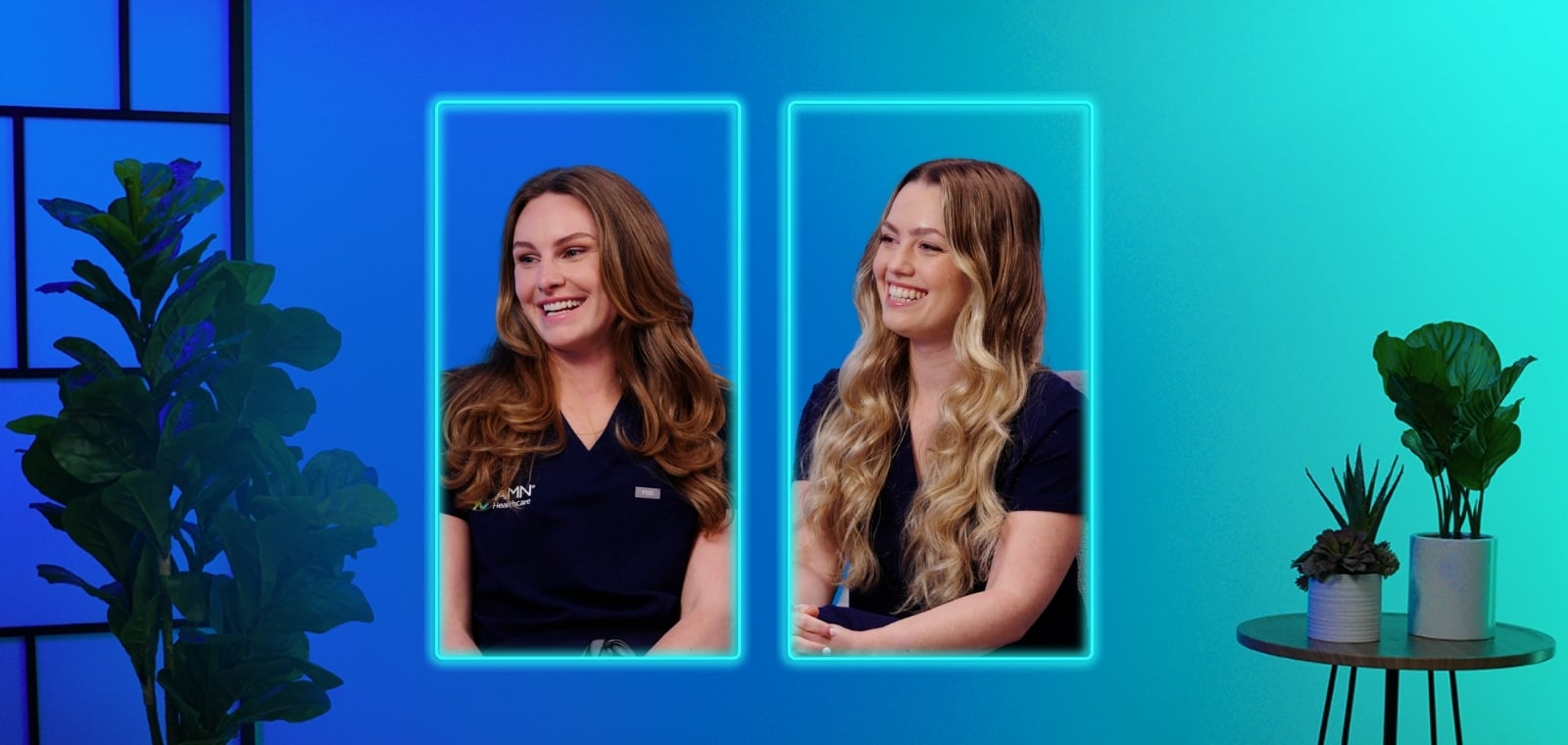
In this episode of Nursing Uncharted, Audrey Tate, Manager of Recruitment at AMN Healthcare, sits down with two AMN travel nurses, Ilana and Paige, who are still early in their journeys. They have an honest and unfiltered conversation about what really happens during those first assignment weeks. They cover the nervous first days, the surprising amount of prep work that happens before you even step foot on the unit, and the small habits that help a brand-new city start to feel like home. If you're considering your first contract or you're still finding your footing, this conversation offers the kind of practical advice you won't find anywhere else.
Subscribe to the Podcast!



Click here to become a Travel Nurse or Download the AMN Passport app.
Key Takeaways
- The first week is the hardest, and that's normal. Both nurses agree that stress peaks in the first 24 to 48 hours, then eases significantly once you learn the routine and meet your coworkers.
- Prep work happens long before day one. Credentialing, immunization records, license endorsements, and paperwork take real effort. Knowing this in advance helps you set realistic expectations.
- A supportive care team changes everything. Both nurses were surprised by how welcoming their facility staff were, which made adjusting to a new unit far smoother.
- Confidence in your core skills carries you through the unknowns. You already know how to nurse. The details, like charting systems or unit workflows, are what you're learning on the fly.
- Building a routine outside of work speeds up the adjustment. Whether it's finding a gym, a coffee shop, or a faith community, recreating small pieces of home helps a new place feel familiar faster.
- Traveling with a friend can be a game changer, but going solo and building community through shared interests works too.
- Self-compassion matters. Giving yourself grace during the learning curve, instead of expecting perfection, makes the transition far less stressful.
Chapters
- 00:00—Welcome and introduction to the episode's theme: the real story behind your first travel assignment
- 00:47—Meet Ilana and Paige: their nursing backgrounds and how they got into travel nursing
- 04:15—Traveling with a friend: how it shaped their early experience in San Diego
- 05:04—The first 24 to 48 hours on assignment: nerves, logistics, and finding your footing
- 06:57—The role recruiters and facility support play in a smooth start
- 08:14—Expectations versus reality: the surprising amount of prep work before your first shift
- 09:44—Feeling welcomed: how a supportive care team eases the transition
- 11:13—What felt harder in theory than in practice
- 13:16—When it finally clicked: the moment travel nursing started feeling normal
- 14:46—Building community: routines, faith groups, and finding your people in a new city
- 16:58—What they'd do differently next time
- 18:50—Self-discovery on the road: introversion, adaptability, and personal growth
- 21:03—Top advice for nurses considering their first travel assignment
- 23:08—Advice for new grads weighing travel nursing early in their careers
Guest Spotlight
Meet Our Guests: Audrey, Ilana, and Paige. Audrey is the Manager of Recruitment at AMN Healthcare, where she guides nurses through the excitement and the uncertainty of starting their first travel assignments. Audrey has a genuine passion for walking alongside nurses as they navigate the logistics, the emotions, and the milestones of building a travel career. In this episode, she steps into the host seat to bring listeners a candid look at the first-assignment experience, drawing on her own conversations with nurses taking that leap for the first time.
Ilana is a PACU nurse with about a year and a half of travel nursing experience. She made the decision to travel after feeling ready for a change from the city where she'd spent her whole life, and she hasn't looked back. Her practical approach—arriving early to explore a new city, building a local routine, and leaning into community—has shaped some of the most grounded advice in this episode.
Paige has been a nurse for four years, with a background in ER and PACU, and is about a month and a half into her very first travel assignment in San Diego. She took the leap after recognizing she was in a season of life that felt made for it with no ties holding her back and a trusted friend already out there showing her the ropes. Her perspective offers something rare: the honest, still-fresh experience of someone who just went through it.
Transcript
00:00:00.080 — 00:08:52.090
Hey guys. Welcome back to another episode of Nursing Uncharted. I'm Ann, your host, but today we're doing something a little different. I'm handing things over to someone who spends her days on the front lines of travel nursing, but in a very different way, working directly with the nurses as they take those first steps into this world and figure it out as they go.
Because let's be honest, that first assignment, it's not always what you expect it to be. So I thought this would be the perfect opportunity to bring in a fresh perspective and have a real conversation about what that experience actually looks like. So I'm going to let her take it from here. You may recognize Audrey because she was a guest of mine on a previous episode.
I know Audrey is going to get down and dirty and deep dive into what this really looks like. Thank you Ann. For those of you who don't know me, I'm Audrey Tate, manager of recruitment, and I spend most of my time talking to nurses about getting started in travel, especially that very first assignment. And I can tell you there's always this mix of excitement and wait.
What did I sign up for? Which is exactly what we're getting into today. Your first travel assignment and all the things no one really prepares you for. Because on paper it sounds amazing. New city, new experience, finally getting started. And then you get there and it's like, okay, this is a lot. There's a learning curve.
There are things you didn't expect, and honestly, there are moments where you're figuring it out in real time. So today we're going to talk about the real version of that experience. What catches you off guard, what feels harder than expected, and what actually helps you settle in faster. And I've got two incredible nurses here who are still early in their travel journeys.
So this is all very fresh. They've just been through it and have already learned a lot along the way. Welcome, Ilana and Paige. Thank you so much for having us. I'm so excited to have you guys on, and for us to have just a really real conversation about what your experience has been thus far, what your goals are long term, and any helpful advice or tips that you can share with those listeners out there.
So we'll start. Tell us a little bit about your background, how long you've been in nursing. I'll pass it to you, Ilana. Okay. My name is Ilana. I am a PACU nurse and I have been traveling for a year and a half. Amazing Paige. My name is Paige. I've been a nurse for four years, mostly E.R. and PACU, and I've been traveling for a month and a half.
So very fresh. Very fresh. Yeah. Where were you before you started on your travel assignment? Um, before my travel assignment, I was a staff nurse in Phoenix, Arizona. Gotcha. And you stayed with me? Exactly, exactly. So you guys came as buddies, and you're currently on assignment in San Diego, and things are going well, I hope.
Yes. Very well. Okay. Good, good. So let's kind of dive in here. Paige, I'll start with you. What made you decide to take the leap into travel nursing? What kind of started this whole journey for you? Yeah, when I became a nurse, travel nursing wasn't something that like I really had in mind. That was like a really big goal of mine necessarily.
I just kind of was out of place in life where I was like, you know, I'm single. I don't have any kids. Like, I don't own a home or anything like that. And I know that that window of time in life isn't very big. And Ilana was already out here telling me how amazing it was, and there was an opportunity at the facility that she's currently at.
And it just felt like it was too good to pass up. So it felt like the right time to just select the right time. Good. Good. And what about you, Ilana? What kind of prompted your journey here with AMN and travel in general? Yeah. So at the end of 2024, I was starting to feel pretty antsy, just still living in the same place I had grown up in my entire life, and I felt that it was time for a bit of a change.
And I thought, travel nursing is a great opportunity because you can go and explore while you're working, which is a beautiful opportunity that not a lot of people have. So I decided to apply for my license for California and I ended up starting out in Ventura. Yeah, I love it. What has been your most fun experience or memory since coming out to California for travel?
I'd have to say being able to work with my friend has been a wonderful experience. It was just such a whirlwind having the transition from, you know, doing the travel thing. I'm here with my partner and my dog, but it's just been very work oriented. So just transitioning from that to like being able to have my friend, my long time friend at work has been super fun.
So we have fun at work. We have fun outside of work. It's great. I love to hear that. Has that been valuable for you too? Paige, it's been a really big game changer. I think I would have had a really different experience on a first assignment if she wasn't there to, like, show me the ropes. And then also just to have somebody that I know here who knows me outside of, like, a work and travel capacity.
Yeah. And we were friends Way before we started travel nursing. So it's been sweet to, like, be in the same place again. Yes, absolutely. I'm so glad. And we're definitely going to dive into how you build and develop friendships on assignment and why establishing that community is important. But I'm going to ask you guys to kind of flash the past here.
Think about your first couple days on assignment. What do you remember most about that initial 24 to 48 hours on assignment? I was very stressed just because this is all brand new to me. I was like, I don't know what I'm doing. I'm in this new place. How do I even get to work? And that was like, are people going to be mean to me?
Is my badge going to work? Like, you know, all those kinds of things? So I was really stressed. And I feel like once I got a week of work under my belt and I met everybody and people knew my name and how to get there and everything, I relaxed significantly after I got those first couple of days under my belt. Good.
So the logistical piece is a big part of it, knowing where to go, what to do on the first day. Are you going to have computer access? All of that is really important to the experience. Yeah. What about you, Ilana? Pretty much the same deal. I'm showing up for my first contract. I was just so nervous, and I think I remember just being like, what if the job doesn't exist?
And I'm just. It's a figment of my imagination. So when I showed up on the first day, they had my name down for orientation and I was there. It was such a relief. But really just the first week, getting it under your belt. Meeting everybody and just kind of getting a feel for the environment and all the people around you really help.
So after week one, I felt like it was just like, all right, I'm here and I'm ready to work. Good, good. Were there any resources that either Kaiser had or that Ammon offered that made that initial week smoother and easier to kind of adapt and assimilate with the facility? Absolutely. I think that one of the best things is, of course, your recruiter, which Audrey's my recruiter.
Shout out. Shout out to all of you. So having your first day assignment information sent over in a prompt manner is super helpful. That way you can look through everything. Plan your day, especially if you have like at least 24 hours for that, which I did. So I can look up what's my route to work? Where am I parking?
Like, what floor can I park on? All these little details are just meeting to be served to you in a prompt manner so you can get to work. And Am was fantastic about having everything set up for me. And then for Kaiser, you know, they were able to connect me with my managers and the communication there was very seamless.
They gave me my first week's schedule and all I had to do was show up. Amazing. Paige, I think that's something that was really big for me as a new traveler is that I got four days of orientation, which, from what I understand from other assignments, is pretty unheard of. Yeah, not that much orientation time.
So they really wanted to make sure that I felt comfortable, to which I really appreciated because I've as a staff nurse, I've watched travel nurses and they're usually kind of just thrown in there. So it was nice that they took the time to make sure that I also was feeling good and like ready to take on patients.
Good. Having that support at the management level when you're on contract, I think, I mean, it could be night and day. The difference between your experience. So I love to hear that you have that support. You have people you can reach out to, not just from US and AMNs community, but from the facility too. So let's dive into a little bit about expectations versus the reality of being a traveler and being on assignment.
What was different than what you thought it was going to be going into this first contract? I think something that's different is as a staff nurse, I just had this perspective that travel nurses just roll up in a really expensive car,
00:08:53.170 — 00:11:12.770
show up and do their job and go home, and it is way more involved than that. I was really surprised by how much work it is on the front end before you even travel to your assignment, with all the credentialing and all of those kinds of things, like getting your physical immunization history, all your documents, your interviews, and your credentials endorsing your license, there's a million different things to do, which AMN was super helpful with, but I was really surprised on the front end how much I had to do, and I would call her and be like, did you have to do all of this?
She goes, yeah girl. For every assignment, you have to do all of this. And I was like, oh, wow. Like, I had no idea. Yeah. But yeah, it was worth it. Yeah, but it's good to hear it's the buy in of labor. You do a lot of work up front just to get there. People don't always realize for me, I would say agree with Paige completely.
Another thing that surprised me when I was thinking about my expectations of travel versus what it's really like, is I think I definitely expected that people would be a little bit more, I guess less friendly. I mean, I've seen so many travel nurses who have had bad experiences, and when I went into my first assignment, I was just so astounded by how kind everyone was, how welcoming everyone was, and they really made me feel like I was an asset to be there.
And it just set the scene for my first year of travel. It made me feel like I'm here to help you and you're happy to have me, and it made the workflow just so much easier. I love to hear that so much. That is something that we hear from travelers a lot is finding where they fit when they start on a new unit at a new hospital.
And our hope is always that this core staff that is there is is really welcoming and excited to have you guys on board because that's what you're showing up to do. You're showing up to help. You're showing up because they determined that there was a need that needed to be filled. And that's what you guys are going to do.
So your flexibility, your adaptability with that is so huge. And I love to hear when core staff, when management is really supportive of that journey and getting you guys on board. So that makes me happy to hear. Let's talk. Flip side, was there anything that you were really nervous about that ended up being easier or more exciting than you thought it would be?
00:11:13.930 — 00:18:32.140
I think that I was very nervous about just the job itself, because when I started as a traveler, it was only my second PACU position. So I had gone from the ICU as a new grad to my staff job, as in PACU. And then when I was transitioning, I thought, oh man. Like, how is this going to go? Because every place does things differently.
So it's just a little nervous, you know, how am I going to get acclimated and are my skills going to be a good fit for where I'm going? I also was new to pediatric PACU care as a traveler. So how am I going to handle taking care of kids for the first time and expecting to, like, roll with the punches. And it ended up being so much easier than I thought.
Primarily because of the support of the people around me, but also just because when. You're a nurse, sometimes the thing that you forget as a traveler is that I have the skills that I need to show up and do this job. All I need to do is get there and get acclimated to the small details. Nursing is the same, so as long as you know what you're doing, you're confident there in your skills, the fine points will work themselves out.
I love that, I love that you know what you're good at. You know what you excel at, and you do have the skills to be successful. Sometimes that initial orientation period is exactly like you mentioned. You're maybe learning a new charting system, or you're learning a process that's different because you haven't worked there before, but the care that you're delivering and kind of the baseline experience needed to do that successfully, you guys are well equipped with that.
Like you're excellent nurses. You're going to succeed no matter where you go. There's just that little adjustment of this is a new place. These are new people. Let's kind of find our flow working together. So I love to hear that we're going to talk about that adjustment period a little bit more. I know you guys mentioned I mean really by the end of week one that you were starting to feel more settled, but when did things really click where it was like, this is my job.
I show up every day. I feel really comfortable. What did that look like for you Paige. I actually was texting her about that like a week ago. I went home, my sister just got married, so I went home for a night, and when I came back, I was like, oh, like, I have to fly back to my job. That's not in Phoenix anymore. It felt kind of like a fever dream until I actually came back and I was like, oh no, like I live here right now.
I'm in San Diego, I work here, people are expecting me to show up. Like, this isn't just, like fun for a month. And then I'm going back to my staff job, you know? So it took probably about a month for me to really be like, oh, yeah, like, this is what I'm doing. Nice. What about you, Ilana? I felt like it clicked right away.
One of the things that I always recommend doing is when you show up. Show up a few days early so that you can enjoy the location that you're at before you get down to work. Like, even if you can show up a few days early and I went to the farmer's market, I went to the beach. I went on like long walks and went to some restaurants, and it felt like a vacation.
And I was like, oh yeah, this is a good fit. So whatever happens when I start work, it's gonna work. It's gonna work out. I love it. Was there anything personally, and maybe this is not necessarily work related, but was there anything you guys did to help you feel more comfortable in this place faster, apart from coming earlier and kind of exploring?
What have you guys done outside of work to establish San Diego as even if it's just temporary, as your community, as your home? I think jumping into community early and often is, for me at least, really the key. I'm a Christian, so church is really important to me. So I got connected with the church really quickly and joined a Bible study with other young professionals.
And I've actually met some other travel nurses in the UK, which has been really cool, so I've had chances to hang out with them outside of Bible study. I love that and make new friends. So yeah, that's really, really nice to hear. Ilana, what about you? Hobbies? Stuff you're doing outside of work? Well, my situation is a little bit different because I am traveling with a partner, so that always makes you feel like you have home wherever you're traveling and a little bit more of a seamless way, but it can still be very alienating when you go to a new location to be the stranger to everybody.
When you show up, you don't know what the route is. You're using Google Maps everywhere you go. You don't know what restaurants are good and which ones are going to give you food poisoning, and you just have to figure it out as you go. My favorite thing to do is to create a routine. I try to find places of community that I can feel recognized.
So, you know, I usually find a gym to. Plug in to because I do like to exercise and then a coffee shop usually. And I think there's something really special about when you become a regular somewhere and when you're on contract and you're a stranger the first time somebody recognizes you, like your barista says, oh, hey, good morning, how are you?
And maybe they remember your name. It makes you feel just a little bit more part of the community. And like Paige said, just trying to get connected in whichever way that you can is very helpful. I think that's such a good tip. If you have a routine at home, whether that's going to the gym, getting your morning coffee, reading outside on the afternoons, whatever it is, when you travel to a new place, reestablish that routine that's going to make it feel more like home quicker, right?
Yeah, I love that. I love that. Now, looking back on this adjustment period, is there anything that you guys think could have made the transition easier that when you're preparing for a new assignment down the line, you're going to make sure that you do or think about. Yeah, I think giving yourself grace.
I think especially if you're a new traveler and also a newer nurse, because I think we both started traveling around the three year mark ish. It can be difficult to feel comfortable at work and feel like you are meant to be there, and you're meant for the job. So just giving yourself grace and giving yourself time to get acclimated, especially on your first contract, it's not going to go perfectly.
There are going to be hiccups, but as long as you have the confidence in yourself that you can handle it, and just giving yourself a little bit of time to get adjusted and not being hard on yourself is, I think, what would have helped me if I had done that more when I started. So important. And I will remind you to give yourself grace over on your next assignment.
What about you? Paige? I would say the same. I don't think logistically there's a whole lot that I would change. I think it's more of, like the mental part of, like you're moving to a new place, something's going to go wrong. And like, that's okay. That's just part of the deal, you know, and just being flexible and willing to embrace change, which is not either of our natures.
And we're both. We're both more on the planner side. So like not knowing what's next isn't our favorite. So I feel like I could speak for both of us. All right. We're getting out of our comfort zone. Yes, I think this makes us a great partnership because I am also so type A, there we go. That the logistics you guys can't or don't have access to setup.
I got your back. We'll take care of it and we'll make sure that you're covered. Yes. And you do. You have and you do. You have and you will. Thank you.
00:18:33.460 — 00:25:09.390
All right. Let's keep going here. We're going to talk more about some of the things that people who are getting into travel that are new to this whole field may not know. So tell me, what did you learn about yourself during this initial assignment? Anything that kind of was revealed to you? I think I learned that I'm more of an introvert than I thought I was.
Oh, okay. Yeah, I would. I like being around other people, but I also find it sometimes a little bit tiring after the end of a long day. So I found myself on my days off being like, I just want to be holed up in my apartment and I don't want to talk to anybody. And having to, like, get through the mental block of that and be like, no, you need to put yourself out there.
You need to go to this event you got invited to, like you need to show up. And every time I've shown up, I'm so glad I did good. But I definitely was like, I really do appreciate my alone time. And I just that's something I've never really been overly tapped into because I didn't need to be. I mean, that's that's a huge part of it.
It's important to establish that community and have those relationships because you don't want to be isolated, but also you guys are in front of patients, in front of patients, family members, in front of management, in front of other nurses. There's a lot of demand on you to engage and interact. So taking those mental breaks and having time that's just for you is just as important.
So don't shy away from that. But I'm glad to hear that you're recognizing that in yourself and are kind of balancing what that looks like in terms of being involved, versus I need a mental day to just reset, pick up a book, chill at home, whatever it looks like. What about you? I think the same. It can be very taxing when, like I said earlier, everywhere you go you're just a stranger.
So finding solace in some alone time is so nice. I used to be such a social butterfly, and there's a little less of that, but I'm okay with it. I think I've also learned that, like, I can be so many different people. Like, we've, as of as friends, have had so many different versions of ourselves that we've been able to experience together.
You know, wherever you go, you can kind of like, assimilate yourself with where you are and become a part of the community, become a part of the culture, try new things. And I think I've been able to explore a lot of different people that I can be in ways that I can live, and that's like really beautiful. So I love to hear that.
And you guys have already dropped so many. I mean, golden nuggets of wisdom for first time travelers, new nurses here. But if you could sum up or put together your top tip for someone who is interested in getting into travel, who's curious about what the experience is, what would that be? Hmm. I think if someone's looking into traveling.
My top tip would be to be type A and prepared. I would say make sure you have all your ducks in a row with your agency. Um, make sure to have all of your credentialing ready. And that way when you see that job that you want, you're ready to submit for it. And you can get it because early bird gets a worm when it comes to travel nursing.
and that's something I definitely talked to Paige about when she was starting out. Very definitely. I think my advice would probably be more on the personal end. Just be brave, you know? And like, if you're going to go for it, like, really go for it. Like, if you're going to go travel nursing, go somewhere else.
Soak up everything you can in that place because you know that it's temporary. Do everything you can outside of work. Have all the experiences. And just like, don't be afraid to be bold because it's a travel nursing for most people is a season of life. It's not a decades long thing for a lot of people, so just a fun moment that you're probably is really unique and not going to happen again in your life.
So just soak up, soak up every moment and be brave. Yeah, get out of your comfort zone and maybe try going to a place that you don't know if you'll like it. You don't know if it's your style. You might surprise yourself too. Yeah, I love that. I love that if you guys could recommend to new grads. So these are people that maybe have not even started officially working as a nurse yet.
They're coming right out of school. And maybe travel is something that's on their radar. Maybe it's something that they're not sure about. They just want to get established. Think back to post-grad. How did you set yourself up for success? What was really impactful at that time? I think I can speak for both of us.
Critical care is a great way to set yourself up to be a good candidate for traveling. I started in the ICU Paige, started in emergency, and that experience really helped us to set our resume and our skill set up for being an ideal travel candidate. I would say for new grads, critical care is great, but just regardless of specialty, be confident in what you do now and be incredibly humble about what you don't know.
It is expected that you're going to be asking questions because reality is, nursing school teaches you how to pass the NCLEX, but the real life application is very, very different than the textbook. So there's the textbook way to do things. And then the real life application. And then as a new grad, you're going through all the skills, but the critical thinking is still clicking.
So ask all the questions you can. People are going to be expecting you to ask questions. The scariest nurse is a nurse who's overconfident and doesn't ask questions. So ask a lot of questions. Get them all out while you're a new grad, and it'll just put you in a lot better of a place moving forward, regardless of what you choose to do with your career.
I love it, I think that's great advice, and hopefully that encourages a few people out there who are nervous and not sure if this is the path they want to pursue. To jump on that train and give it a shot. You never know if it's going to be the right fit for you until you try. And if it's not, that's okay. But if this is the right fit for you, I mean, what what an adventure.
What a whole journey to go on, places to explore, people to meet. It can be really life changing. Thank you guys so much for joining us and talking about your experience. You shared some really helpful advice for people who may be thinking about jumping into travel and taking that leap. So I'm so happy we got a chance to chat today.
Thank you for having us. Audrey. Of course. Good to see you guys. Thank you so much for tuning into Nursing Uncharted and we will see you on the next episode.
00:25:15.350 — 00:25:38.110
Thank you for tuning in to Nursing Uncharted. You can learn more about this episode and our show on our website at AMN healthcare. If you enjoyed this episode, share it with a friend and subscribe to our show on your favorite podcast platform. You can also find show updates and nursing opportunities on our Instagram @AMNNurse.
Special thanks to AMN healthcare for making this show possible.


