

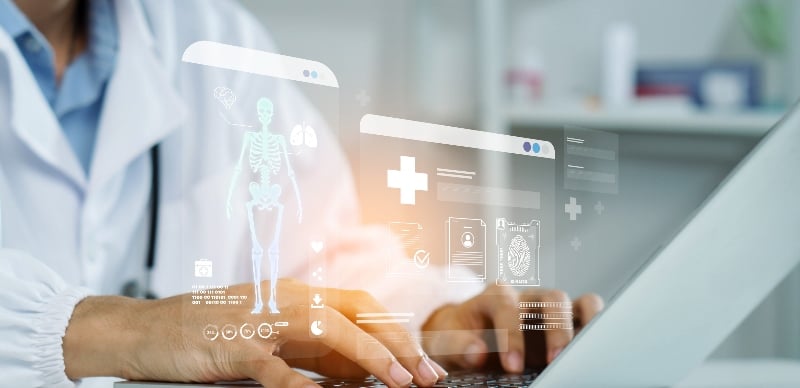
8 Medical Technology Trends to Watch in 2026
Keeping up with technological advancements is essential for professionals committed to delivering outstanding care. As 2026 unfolds, it's clear that the latest advancements in medical technology will continue to reshape how medical services are delivered and experienced. For physicians and healthcare leaders, staying informed about these changes is key to navigating the future of medicine.
This post will explore eight of the most significant medical technology trends set to define 2026. From the expanding role of AI in healthcare to innovations in wearable tech, we will cover the key developments that are improving patient outcomes and streamlining clinical workflows. Understanding these trends will help you prepare for the opportunities and challenges ahead.
Top Medical Technology Trends for 2026
1. Advanced Integration of AI in Healthcare
Artificial Intelligence (AI) is solidifying its position as an indispensable tool in modern medicine. By 2026, AI's role is expected to expand dramatically, particularly in diagnostics, personalized treatment, and operational efficiency.
The capacity of AI to analyze enormous datasets in moments helps physicians diagnose diseases with greater speed and accuracy. For example, AI algorithms analyzing medical images can spot early signs of cancer or diabetic retinopathy, leading to better patient outcomes.
AI in healthcare also continues to streamline administrative duties. It automates tasks like managing patient records, scheduling appointments, and handling billing. This frees up healthcare professionals to dedicate more time and energy to patient care. The implementation of AI reduces the potential for human error and boosts workflow efficiency, a significant benefit for physicians looking to optimize their practice.
2. Hyper-Personalized Medicine
The movement toward hyper-personalized medicine is gaining significant momentum. This approach tailors medical treatments to an individual’s genetic profile, lifestyle, and environment, moving away from a one-size-fits-all model.
Genetic testing allows doctors to predict how a patient will respond to certain medications, enabling personalized prescriptions that boost effectiveness and reduce side effects.
Gene-editing technologies like CRISPR are central to this new medical technology. They offer the potential to correct genetic mutations responsible for various disorders. As we move through 2026, we expect to see these technologies become more common in clinical practice, offering hope for previously incurable conditions.
3. Data-Driven Healthcare Transformation
Data has become one of the most valuable assets in healthcare. The industry generates a massive amount of data, and by 2026, the focus will be on refining systems to use this information for better decision-making.
Data analytics is revolutionizing hospital operations, from resource management to improving patient flow. By analyzing historical data, hospitals can predict admission rates, optimize staffing, and minimize wait times, all of which enhance the patient experience.
For healthcare professionals, this strategic use of data is critical for improving service delivery. Predictive healthcare is another key area, where analytics can identify health risks before they become serious, shifting the focus from reactive to preventative care.
4. Reimagined Blood Testing
Blood testing remains a cornerstone of diagnostics, but innovations are making it faster, less invasive, and more accessible. By 2026, new medical technology will allow for accurate tests that require only minimal blood samples.
Microfluidic technologies, for instance, can conduct multiple complex tests on a single drop of blood. This latest technology in medicine accelerates diagnosis, enabling quicker responses from healthcare providers.
Furthermore, the development of sophisticated point-of-care testing devices means tests can be performed outside of traditional labs, which is particularly vital for patients in remote or underserved areas.

5. AI-Powered Virtual Healthcare Assistants
Virtual healthcare assistants are changing how patients engage with the healthcare system. These AI-driven platforms offer round-the-clock support, answering patient questions, scheduling appointments, and sending medication reminders. By 2026, their capabilities will have grown to manage even more complex healthcare interactions.
These virtual assistants provide personalized health advice based on a patient's medical history, acting as a crucial link between appointments. They empower patients to manage their health more proactively, which is especially helpful for individuals with chronic diseases. For physicians, these tools streamline communication and reduce administrative tasks.
6. The Evolution of Telemedicine
Telemedicine has become a fundamental part of healthcare delivery, and its role will continue to expand in 2026. The convenience of virtual consultations has made it a preferred option for many patients, saving them time and travel expenses.
Telemedicine also broadens access to specialist care, connecting patients in rural or remote locations with experts from anywhere in the world. This is a crucial step toward achieving more equitable healthcare. The integration of telehealth platforms into routine care allows for continuous patient monitoring and better long-term management of health conditions.
7. Wearable Technology and the IoT
Wearable technology is transforming how we monitor health. Devices like smartwatches and fitness trackers gather real-time data on everything from heart rate to sleep quality. By 2026, these devices will offer even more advanced health insights.
The Internet of Things (IoT) connects these wearables, enabling the seamless flow of data between patients and their healthcare providers. This connectivity allows for continuous monitoring and immediate alerts for any health irregularities, facilitating quick interventions. This wealth of data helps physicians make more informed care decisions and create highly personalized treatment plans.
8. The Rise of 3D Printing in Medicine
3D printing is opening up new frontiers in medical innovation. Its applications are diverse, from creating custom-fit prosthetics to printing detailed organ models for surgical planning. In 2026, we can expect to see even more groundbreaking uses of this technology.
Patient-specific implants are one of the most exciting advancements. Using 3D printing, surgeons can create implants that are perfectly tailored to a patient's anatomy, improving compatibility and speeding up recovery. Additionally, 3D-printed models of organs allow surgeons to rehearse complex procedures, which enhances precision and patient safety.
Shape Your Future with AMN Healthcare
The latest advancements in medical technology are set to transform the healthcare landscape. From AI in healthcare to hyper-personalized medicine, these trends hold immense potential to improve patient care and streamline delivery. By embracing these changes, healthcare professionals can stay at the forefront of innovation.
Whether you are looking for permanent physician jobs or flexible locum tenens positions, AMN Healthcare offers a wide range of opportunities to match your career goals. Our dedicated recruiters are here to guide you every step of the way.