
Celebrating International Interpreter Appreciation Day
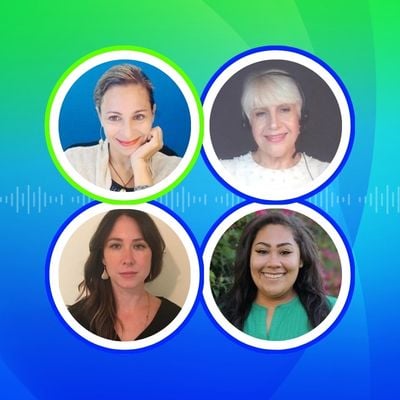
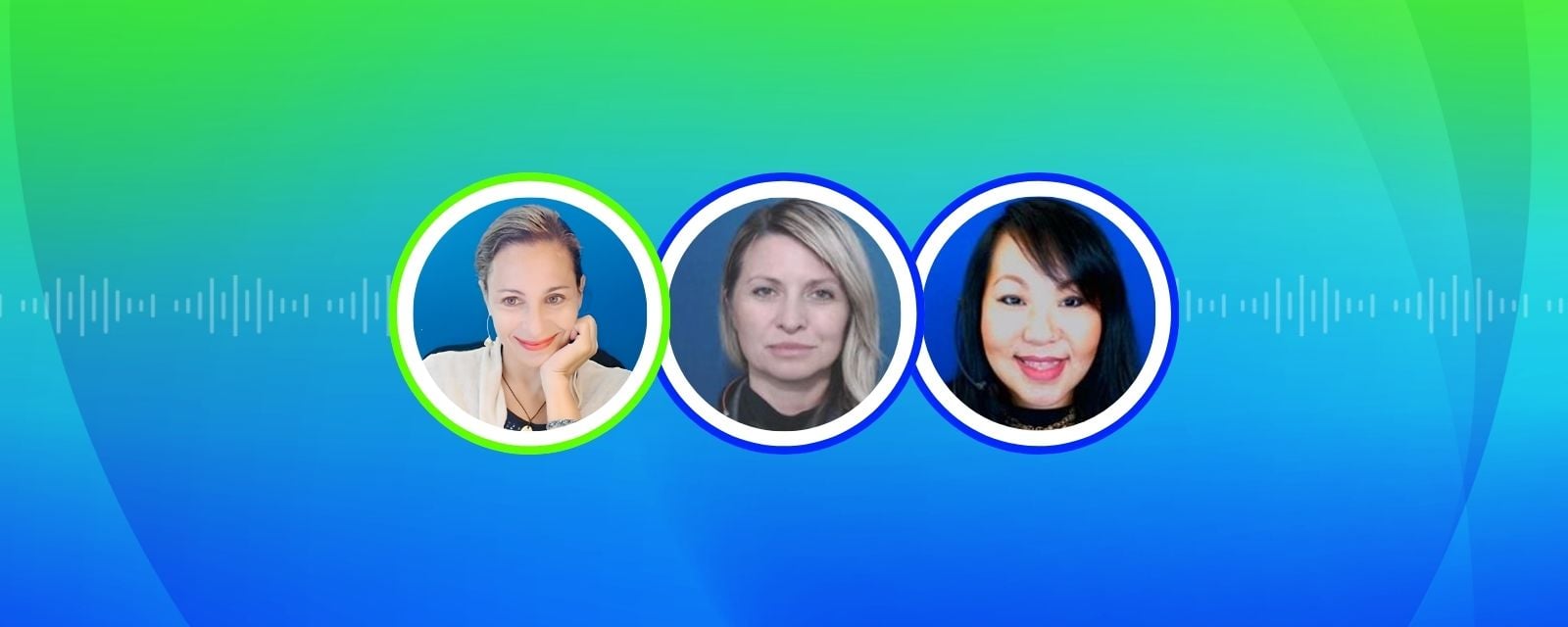
Every month, the Language Services team at AMN Healthcare hosts "Making Meaning," a live show dedicated to professionals who bridge communication gaps in healthcare. In this special episode, host Natalia Jiron kicks off the celebration for International Interpreter Appreciation Day on September 30 with a candid conversation featuring two medical interpreters, Joanna and Tia. Together, they share heartfelt stories from the field, discuss the emotional and cognitive demands of the profession, and explain why interpreters deserve recognition for the quiet, powerful work they do every day.
Key Takeaways
- Medical interpreters do far more than translating words. They facilitate emotional connection between patients and providers during some of the most vulnerable moments in a person's life.
- The cognitive load of interpreting has been compared to a fighter pilot, who simultaneously engages multiple areas of the brain while managing stress hormones in real time.
- Many interpreters discover their calling by accident, often stepping into the role to help family or community members before realizing it is a rewarding career path they grow to love.
- Continuous learning, cultural competence, and emotional resilience are essential traits for long-term success in the field.
- AMN Healthcare's interpreter community offers strong peer support, shared resources, and a culture of mutual recognition.
Chapters
00:00 – Welcome and introduction to the "Making Meaning" show
01:36 – Meet the panel: Joanna and Tia share their interpreter backgrounds
06:16 – What inspired each guest to become a medical interpreter
08:48 – The meaning behind International Interpreter Appreciation Day
11:55 – The cognitive and emotional demands of interpreting
15:43 – Stories from the field: moments that made a difference
21:37 – Recognitions from Stanford Children's Hospital's care team
23:12 – Shout-outs to fellow interpreters for professionalism and growth
26:52 – Final thoughts: the hardest and most rewarding parts of the job
31:44 – Closing remarks and how to apply with AMN Healthcare
About the Guests
Joanna B. is a medical interpreter (HubCMI) specializing in Polish. She has spent seven years with AMN Healthcare, following earlier work in legal interpretation and translation. Joanna is known for her deep commitment to continuous learning and her ability to bring emotional presence to even the most difficult medical encounters.
Tia A. brings a unique path to medical interpretation, transitioning from a 20-year career in human resources during the COVID-19 pandemic. Fluent in Hmong, Tia has spent six years with AMN Healthcare and is passionate about helping patients fully understand their diagnoses and options.
Subscribe to "Making Meaning" to hear new conversations every month from AMN Healthcare's Language Services team and visit amnhealthcare.com/interpreters to learn more about joining the team.
Transcript
Natalia: Good morning, everybody. Welcome to our show, "Making Meaning." This is a live show that the Language Services department of AMN hosts every month. My name is Natalia Jiron and I'm going to be your host today. I am a member of the Talent acquisition team and I'm also a CMI Spanish interpreter myself of many, many years.
Here with me on camera, you can see Jessie, who is assisting me today with her CDI interpretation. Off-screen, we have Cat, who is pairing with Jessie, and they are doing the ASL interpretation. So, ladies, thank you very much to you both.
To the folks at home, this is a live show, so we are here for you. We have a chat box here. Please tell us where you are watching us from. We want to hear your questions and comments. I am going to be reading them as we go along, and again, we are here to help in whichever way we can.
Today's show is actually a very important one, and one that is very close to my heart. We are kicking off the celebrations for the upcoming International Interpreter Appreciation Day, which is September 30. We are going to be going over a couple of things today, including introductions to our panel of guests, why we are celebrating, stories from the field, interpreter commendations, and final thoughts.
Remember, if you are looking to apply with AMN, this is a wonderful opportunity to get in touch with us and send us your application. Visit amnhealthcare.com/interpreters, send us your application, and a recruiter will contact you.
So, why don't we bring out the guests who are going to be assisting me today? Hello, Tia. Joanna, how are you?
Joanna: Hello. Good morning.
Tia: Good morning.
Natalia: Thank you, ladies, for joining me today. It is wonderful to have you here. Why don't you take a couple of minutes to introduce yourselves? I would love for everyone to get to know you better. Joanna, let's begin with you.
Joanna: Hello, nice to see everyone. I am excited to be kicking off the interpreter appreciation celebrations. I am Joanna Babrowska. I am a certified medical interpreter in Polish, CMI, and I have been with AMN for seven years now. Before that, I was already doing interpretation in other fields, including legal work for the court system, some translation, and medical interpretation as well. I was very grateful to be able to join this team of professionals at AMN when the opportunity came up for full-time medical interpretation. In my spare time, I love to travel, cycle, and talk back and forth with my cat, which is also a linguistic skill.
Natalia: Yes, that is true. Wow, seven years with us. That is wonderful. Thank you for joining us today.
Joanna: Thank you very much, Natalia.
Natalia: Let's hear from you, Tia.
Tia: My name is Tia Underbakke. I am on the Hmong team, and interpretation has always been part of my upbringing. Coming here to the United States, we did not speak English, so I feel like I grew up doing this, so it's very exciting. I was in the HR industry for about 20 years, and during that time, I was also doing medical interpretation. So, when COVID hit and I got the opportunity to do this on a full-time basis, I left HR and became an interpreter. I have been here six years, and I always remember that COVID was bad, but because of COVID, I am doing this on a full-time basis. I cannot believe it has been six years, and I love it.
Natalia: Wow, it is wonderful that you love it, and you made a whole career change. Thank you for sharing that with us. We also have Claudia Gonzalez watching us from Austin, Texas. Hello, Claudia, thank you for joining us. We would love to hear from you as we go along today.
So, let's get into the panel. Tia, why don't we begin with you? Tell us a little bit more about your language background. How did you learn to master more than one language?
Tia: It is interesting. Going back, I keep telling people English is actually more like my first language because I came to the United States very young. I was just starting to understand the Hmong language, and then I went to school, and the Hmong language kind of went out the window. So, growing up speaking English, I had to go back and learn to speak Hmong so I could communicate with my family. I did not have any real desire to be an interpreter. I tried it once when I was in college, thinking I could do this on the side while going to school. I had one session in person. I came home, and I cried all the way home, and I cried all night. The session was so stressful, and it was for a family, and at the time, I said I'm never going to do this again. But as I started working with my church, we'd go to conferences and meetings. A lot of the leadership I worked with did not speak English very well, so they kept telling me to interpret. Through that, I had to go back and learn how to read more, learn how to understand, and learn how to say the words correctly, because the language is so tonal that sometimes one word can sound like a completely different word. I had to really go back and learn the language more. Now, I can't believe that I'm doing this because a long time ago, I said I just want a job where everything is different every day, so I am always on my toes. And I thought that that was a teacher. This is the job.
Natalia: Wow, thank you for sharing that. Joanna, what inspired you to become a medical interpreter, and what keeps you in the role now?
Joanna: What initially inspired me to become a medical interpreter is actually doing the work of a medical interpreter. It sounds a little reversed, I know, but a lot of interpreters can relate to it because we tend to get thrown into the work, maybe doing the work to help someone, and then we find out that we love it. I was already doing general interpretation like I mentioned before. And every time I got an assignment to do medical, I would read up on the condition, I would study the different treatments, I would drill the terminology, and really, really prepare myself for the assignment. That is when I discovered I love it. I love learning about medicine. It is like a bottomless well of knowledge that I can apply to myself, my own health, and my family, and I was hooked. The other thing I learned once I started doing medical interpretation full-time, doing it eight hours a day, and meeting with a lot of patients and providers, was it's not just transferring the meaning or transferring the words that I gained satisfaction from. It's actually participating in every single medical encounter and being there and being able to help when the provider and the patient are making that emotional connection, or they're relaying their deepest experiences and deepest feelings. That is what still keeps me there, because it gives me a sense of fulfillment to help them make that connection. Without language, they would not have been able to do that. So, yeah, it's being able to assist in that sense of connection and also the bottomless well of knowledge, that medicine is the bottomless well of knowledge.
Natalia: This is not the first time I've heard that Interpreters in the end, like everything they learn, they apply to the families they apply to, to self-care. We become a little bit like doctors.
We have Ibad Urrahman watching us from Pakistan. Hello, Ibad, thank you for taking the time to join us today from all the way over there.
So, let's get into it. What exactly is it that we are celebrating today?
Natalia: So to share a quick summary of International Interpreter Appreciation Day, September 30th, which is very much coming soon, is the day of the feast where we celebrate Saint Jerome, who was the Bible translator. On that day, we are recognizing the impact that language professionals make in bridging understanding across cultural and linguistic divides. Whenever we have guests on the show, we always hear the same thing: how they facilitate a language, and we facilitate communication and humans need to communicate. I think interpreters do such a wonderful job assisting humans to communicate across every field. So, on September 30, we take the time to commend what you do and how you do it, and we are very grateful.
Tia, what does International Interpreter Appreciation Day mean to you specifically?
Tia: To me, it means an opportunity, like we mentioned before, to bridge that communication gap. When I go into a session, I see it as a new session every time. And it's really me becoming, when I'm interpreting, becoming the patient, becoming the provider, so that what I'm interpreting comes across so that they understand exactly what is being said. I want to make sure patients know their diagnosis and their options. There are just so many times where language just does not interpret over very well if we interpret it like that. So, really helping them understand this is your diagnosis, these are your options, you do have options. And then also vice versa, helping the provider, becoming that patient and interpreting what that patient is feeling correctly so that the provider can hear the anxiety, the fear, and can answer questions so that all of that unknown can be removed so they can make the best decision. To me, it is a day to appreciate the people who do fill the gap in communication. That's what it's all about. It is a reminder for us as interpreters that what we do matters, but also for others to be reminded that it helps. That we do recognize people who are sometimes very quiet and we're supposed to not be seen, but we are making a difference.
Natalia: Yes, we see them. We see every one of the interpreters we have, and I think AMN is so lucky because we have such a huge and vast team of interpreters and they do such a wonderful job. Thank you very much. Interpreter Appreciation Day is a chance to recognize the impact once again that we've been speaking about that interpreters have on patient care, which Tia did a great job describing that. So Joanna, from your perspective, why is it important to celebrate interpreters, and what do you wish more people understood about the role and what it is that you do every day?
Joanna: Interpreters should, of course, be celebrated. They are one of the altruistic professions. I have heard this phrase so many times throughout my career as an interpreter: "I love what I do because I love helping people," or, "I do what I do because I love helping patients." Over the years I have heard that from practically every interpreter that I've come across. Within the challenges that exist, interpreters still stay committed to help. We can have sessions that are long and exhausting, emotional sessions with a heavy emotional load of what's going on with the patient. There are linguistic challenges if it's a very high register session and very complex technical speech. Through all of that, interpreters stay. They are committed to helping. For people outside of language services, what I would want them to be aware of outside of the language services, is that interpreters are not just interpreting words, they're not just transferring words. Their brain is using complex processes during every interpretation encounter. There have actually been studies done that compare the cognitive processes of an interpreter and the cognitive load to that of a fighter pilot or that of someone doing extreme sports. So, there's many areas that deal with language that are involved in every speech and interpreting session. Just some of them are the bronchus area of the brain, the Wernicke's area of the brain, the premotor cortex and the caudate nucleus, which acts like a conductor to connect all those areas when an interpreter is engaged and working and interpreting. In addition, the interpreter's body gets flooded with the stress hormone cortisol during particularly demanding sessions, such as in the emergency room, the ICU, an end-of-life conversation, or a seriously sick child. Throughout all of this, the interpreter's response is still, "I love what I do because I love helping people." So, yes, I think interpreters should always be celebrated.
Natalia: Thank you for sharing all of that. You are so right. Not just because you speak two languages, right, It means that you can interpret. That is something I come across all the time as a recruiter. And that's one thing as a recruiter that I come across all the time and candidates say, yeah, yeah, yeah, I'm bilingual. I'm trilingual. That doesn't mean they can interpret because it does require additional skills.
We have Muhammad Idris saying hello from the audience. Hi, Muhammad, you always watch our show, so thank you for being here. Remember to everybody, to the folks at home, let us know where you're watching us from. Share your questions, comments. We're here to connect. So let's get into it.
What about the stories from the field? Tia, can you share a story of a time when your work as an interpreter really made a difference in a medical encounter?
Tia: There are so many stories that I will have to narrow it down. I remember when I first started during COVID, those sessions were hard because it was just me and the patient, and a lot of them were end-of-life and it was really hard. But when you ask me that question, the one that pops right into my head is this. I went into a session one day and I recognized the face, the patient's face. I said “Hi” to the patient, and she said “Hi” back, and she made a comment and said, “Oh, it's so good to see you sister.” I thought, "Okay, great, she remembers me." Then her spouse came into the room carrying a baby, and I did not recognize him, so I thought this has to be a new patient. He turned around and greeted me and he said, "Hello, sister, I want to show you our baby. This is the baby you have been interpreting for us from the very beginning, when we were trying to get pregnant. This is the result of that." He brought the baby up to the camera because they were so proud. I felt like, “Oh my goodness, I'm a distant auntie, and it's such a warm feeling.” I got off that call with my spirit so lifted and I was so happy, which only adds to all the other sessions that I go into.
Natalia: Wow, what a wonderful story. It's amazing. You were there for the whole process, that is wonderful. Joanna, tell us about a moment when you realized the work you are doing makes a positive impact also on the patient experience, like Tia said, and I can relate.
Joanna: We have those moments all the time, at least once a week if not more. But a session that I had pretty recently comes to mind because it was a session where even I was holding in tears. I was making sure I stayed professional, but I was emotionally affected. I’ve removed the protected health information and changed some details to protect the patient. The session took place at five in the morning their time. So it's a darkened hospital room and the patient is in bed. The patient was in bed, the nurse is beside her. The patient is complaining of rib pain and that she cannot sleep. The nurse says to the patient, “The reason your ribs hurt like this is because of the life saving measures that they performed, the CPR, cardio pulmonary resuscitation, that they did. So that's why you're feeling pain in your ribs.” And then she calls her our miracle patient. And that's when the patient starts to speak. She starts relaying a story of when she was with her children, sightseeing. And the next thing she knows, she's traveling in a car, and her daughter is telling her, “Mom, you fainted. Everybody came from every direction, bystanders, first responders. They worked on you for so long, and here you are.” And they were able to bring her back. The patient then goes on. She goes on to say, “You know, I was never sick. I worked a lot, and I provided for my children because I raised them on my own. So my children have never seen me like this.” And she becomes emotional. She gets teary as she's telling the story. And the nurse is supporting her the whole way through. At the end, the patient said, "I can sleep now. I think I am going to sleep now," and apologized to the nurse and to me for taking our time. Of course, we tell her right away this is what we're here for, but it just speaks to her mindset at the time. And the nurse says thank you. We all thank each other and we say our goodbyes. And this session was, it was very moving because it was a very moving, near death experience, but it was also very moving when I reflected on it. And I saw that without the language component, the nurse and the patient would not have been able to exchange that process, those emotions because we know healthcare is not just physical, but it has a huge emotional component. It made me really realize what an impact I make and what an impact we make in these encounters between staff. It's true, that human component that the interpreters bring along, it is so important for healthcare specifically because of what you are.
Natalia: You ladies both brought up the fact that healthcare encounters are usually very much surrounded with a lot of emotions and not everything is good, like everyone’s delivery. Sometimes we have complicated, complex moments like the one Joanna was mentioning. Thank you, ladies, for both of those examples of what interpreters can do, how they can help, and what important role they play.
Let's talk a little bit about interpreter recognitions and commendations. A couple of shows ago, we were lucky enough to have Alix Van Burkirk, the Assistant Manager of Interpreter Services at Stanford Children's Hospital. When she visited us, she was very kind and she showed us like some commendations and recognitions that the care team had for AMN interpreters. Keeping with the spirit of appreciation, why don't we play that clip again of recognitions that were shared across our organization that really illustrate the profound impact you can have.
Clip: “In one case, an iPad interpreter was present when a mother suddenly fainted in the exam room, and the interpreter told the child to get help and the staff were able to quickly respond to assist. In another encounter, an interpreter supported a conversation involving an adolescent at risk, and the recognition he received was, and I quote, ‘His support was meaningful and clear and accurate. Interpretation helped facilitate understanding between all parties in one of the most sensitive conversations a care team can have.’ So that is what the work is. You may be on a screen, but you're never just a voice. So, for families who don't speak English, you can be the most important presence in the room.”
Natalia: I could not have said it better myself, it's so good. As you can see, and to the people of the audience, what Joanna has mentioned, what Tia has said, Alix mentioned as well, it's just examples of what interpreters do every day. So with that, let's keep the appreciation going. So, the people in the audience, if you know an interpreter, if you are an interpreter yourself or you have fellow interpreters, why don't you tag them and recognize them on the chat? And we're going to be calling them out as we go along.
Tia, as interpreters, we are always committed to the code of ethics and standards of practice for medical interpreters because it's the level of professionalism that we use in the field. Is there anyone in particular you would like to recognize for adhering to these standards of professionalism?
Tia: There are so many. A couple come to mind. One was an ASL interpreter, I believe her name was Stephanie, who I was pulled into a session with. She was such a professional, she waited her turn. This is before I knew what I needed to do. I just knew I was going to be interpreting. But she really was so professional in the way that she handled herself and the way that she interpreted and waited her time and really helped me to get acclimated. And I can tell that there was just a really good understanding of the process with her and I so appreciate that.
Another is one is from my team, Kajuwa. She always does such a great job whenever I talk to her about different things that are happening and how I could have maybe improved myself or go above and beyond what I might have done through that. She always reminds me about our, you know, code of ethics and how we are following that. And as long as I'm doing that, you know, so I think it's a lot of the people that I have encountered through AMN. They all need to be recognized. But those are the two that come to mind at the moment.
Natalia: Yes, I agree. I would read everybody's list today, but we're not able to do that. Thank you for shouting out those two interpreters for AMN. Joanna, as interpreters, we're also committed to the ongoing education or continuous learning because you mentioned so yourself, right? It is a huge amount of information and knowledge and we need to keep updated. We need to be studying all the time. So is there an interpreter that comes to mind who is always like seeking to learn more and that you want to shout out to like your go-to-person when you have a question?
Joanna: Yes, I want to shout out Anna Kay. She is a Polish interpreter on our team, and she is always posting resources, for example, for ATA, for the American Translators Association links to continuing education opportunities, links on how to maintain our medical certification. She also posts cultural things, so cultural things that have to do with Polish, the Polish culture, Polish religion, days of celebration, feasts. I also had the pleasure of hearing Anna interpret. We were on iPads in the same room with different patients. I heard an interpreter who sounded so professional, perfect diction, perfect language, both Polish and English. Kudos to you, Anna, all around wonderful. I see you working hard. Way to go, girl.
Natalia: Congratulations, Anna, this shout-out is for you, too. We have a list of interpreters we would like to commend today, but we will do what we can with the time we have.
Let's move to our final thoughts. Tia, from your experience, what is the most challenging part of being a medical interpreter, and what is the most rewarding?
Tia: The most challenging part is keeping my emotions intact. I think that's the most challenging part because being an interpreter, you are walking into, you never know what situation you're walking into, but a lot of time you're walking into a very, very stressful situation where it is life changing. It could be end-of-life, it could be a cancer diagnosis, it could be something very serious that changes the person's life forever, or it could be that there's a cure. I think trying to keep my emotions in check is the hardest. There are many times I get off a session and just cry. I cry and I cry and I cry, and then I stretch, wipe my tears, and get on to the next session. There are also sessions where I get off and celebrate, I do a little happy dance and then I get back in. The most rewarding part is, unfortunately, or I should say fortunately, the same thing. It is the same thing because it is the contrast of the two that at the end of the day, I am emotionally exhausted, but I am so happy that I've been able to make a difference.
Natalia: It is a job that matters. It really matters what you do, my day mattered for somebody. It helps somebody out. Thank you. Joanna, what about you? Let's talk about what do you appreciate most about your fellow interpreters and the work that medical interpreters do.
Joanna: I appreciate my fellow interpreters at AMN so much, and what really stands out is that they put others first. So I really appreciate how you guys put others first. Whenever there is a serious session, you all reach out on Teams right away to follow up and ask if the patient is okay, what's going on for continuity of care? At the same token, if we have a glitch and maybe a session is not connecting, you're all reaching out to make sure that that session was serviced or it's going to be serviced. I really appreciate how you're always in the vocabulary channel posting terminology and like language nerds having these hour long discussion, discussions about what this term means or this condition or that condition. And I'm really grateful how you support each other when you have personal situations in your lives, and you're supporting the other team members, reaching out, making sure they're okay. At the same time, I see you celebrating each other, celebrating each other's milestones, checking on your children's milestones. I'm grateful that this team has such great rapport and all the interpreters really value the importance of rapport and teamwork comes down to even something as simple as interpreters always posting memes, posting songs, posting jokes. So we have that connection on the team and are always working together in a positive way. I appreciate every single one of you. I see the work that you do, and I see the intricacies of your work.
Natalia: Thank you. To close everything out, I think Tia, Joanna, and even Alix, who joined us previously, everybody from AMN does really want to take this opportunity to thank our wonderful interpreters. Everybody, every language. You guys do such a wonderful job. And this is very close to my heart because I am an interpreter myself, so I feel you. I know what you do, and everything you have mentioned is true, it is taxing and demanding, but so rewarding because you really do make a difference by being there with people and helping them. AMN really wants to take some time to say thank you, and congratulations.
To the folks at home, when September 30 rolls around, if you know an interpreter, please take some time to tell them they are doing a good job, and commend the work they do on a daily basis.
That brings us to the end of this show. Tia and Joanna, thank you for joining me. Ladies, it was wonderful having you here, and we want to have you back one day.
Tia: Thank you so much for having me.
Natalia: Of course. To Jessie and Cat, thank you again for the help you always provide. I am always very grateful for everything you do for us. Remember, this is a show we do every month, so the next one will be on the third Wednesday of October. We will be back. Thank you once again, and we will see you next month.