

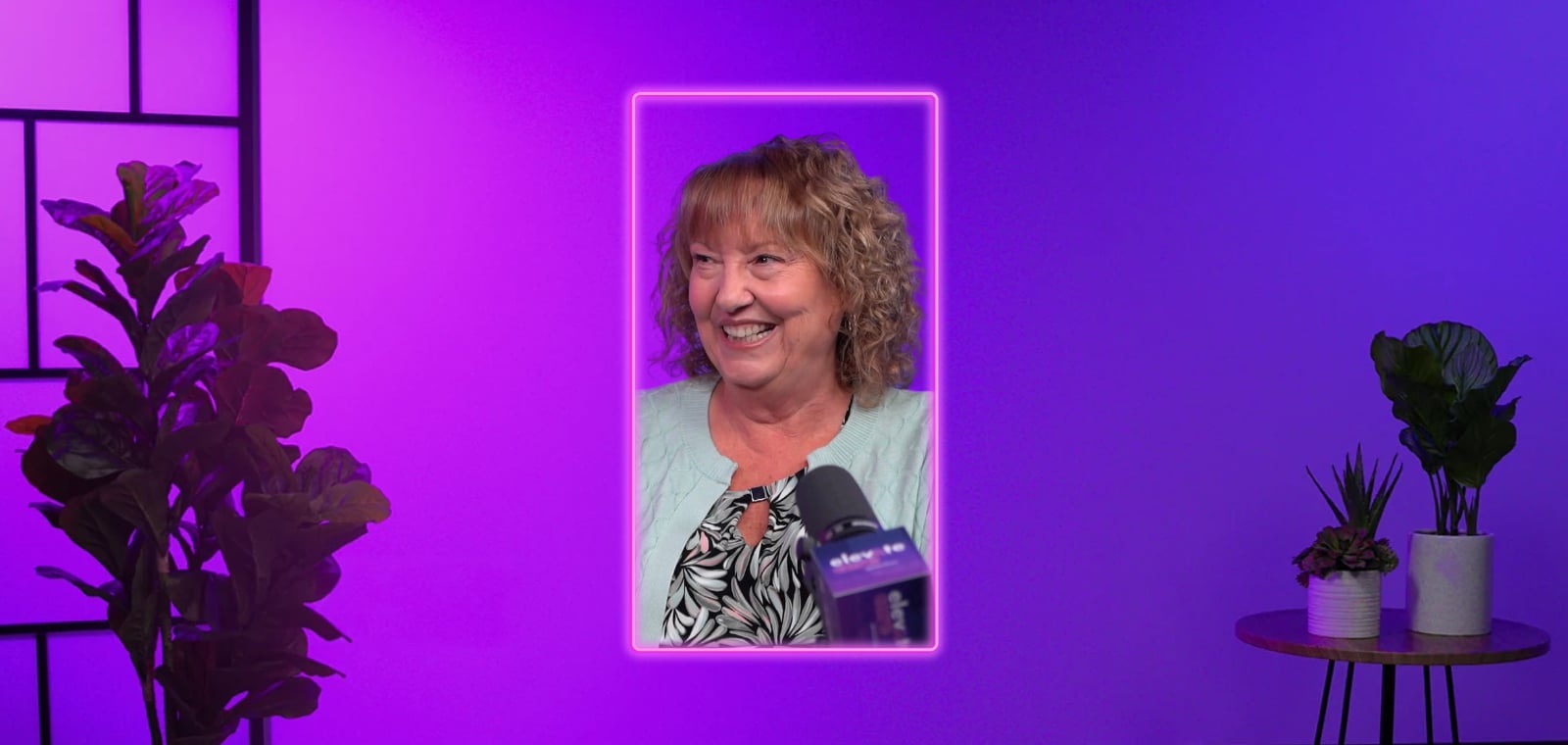
Ep. 68 | Why Nurse Leaders Need Financial Fluency, with Bonnie Jensen of Bryan Health
In this episode of the Elevate Care podcast, host Enderson Miranda sits down with Bonnie Jensen, DNP, RN, System Vice President and Chief Nursing Executive at Bryan Health, to explore why nursing leadership depends as much on financial fluency as it does on clinical expertise. Bonnie brings a distinctive lens to the conversation, having spent twenty years in engineering project management before becoming a nurse in 2012, and she draws a direct line between that background and her approach to running a unit like a business.
Bonnie and Enderson talk through the metrics nurse leaders cannot afford to ignore: balance sheets, value-based purchasing, span of control, and the true cost of a nurse once benefits and turnover are factored in. They also dig into the realities of rural health care in Nebraska, the role virtual nursing and AI play in supporting new graduates, and why mandating overtime creates risk for patients and staff alike. Bonnie closes with practical advice for early-career leaders: get close to your finance partner, understand what drives your staffing budget, and bring solutions, not just observations, to the table.
Key Takeaways
- Nurse leaders need to understand balance sheets, reimbursement models, and the true, fully burdened cost of a nurse, not just the hourly rate.
- A strong post-acute strategy is necessary for managing length of stay, especially in rural markets with limited home health and rehab resources.
- Virtual nursing and AI-enabled command centers help support new graduate nurses during nights, weekends, and high-acuity moments.
- Evaluating span of control, such as the number of units and direct reports assigned to one leader, correlates directly with turnover and new graduate retention.
- Mandated overtime and chronic overwork compromise critical thinking and patient safety, driving up turnover and care costs over time.
- Contingent labor still has a place in workforce strategy when used strategically for defined, time-limited needs rather than as a default fallback.
Chapters
00:00 – Introduction
01:15 – From Engineering to Nursing: Bonnie's Career Path
02:50 – The Biggest Pressures Facing Health Care Leaders Today
04:16 – How the Nurse Leader Role Has Evolved Over a Decade
05:28 – The Financial Acumen Nurse Leaders Need Now
07:55 – Choosing the Right KPIs for Quality and Cost
09:57 – Virtual Nursing, AI, and the Post-Acute Strategy Gap
12:10 – Supporting Nurses in Rural and Critical Access Settings
14:43 – Core Staff Versus Contingent Labor: Finding the Right Mix
19:57 – Advice for Early-Career Nurse Leaders
22:18 – The Value of Professional Networks and Outside Perspective
24:26 – Span of Control and Its Impact on Turnover
27:42 – Why Nursing Care Is the Reason Patients Are in the Hospital
Meet Bonnie Jensen, DNP, RN
Bonnie Jensen, DNP, RN, serves as the System Vice President and Chief Nursing Executive at Bryan Health in Lincoln, Nebraska. A second-career nurse, Bonnie spent twenty years as a vice president at an engineering firm, leading large-scale projects before returning to school in 2012 to become a nurse. She went on to earn her bachelor's, master's, and doctorate in nursing, building a leadership career that pairs clinical expertise with strong financial and operational acumen. At Bryan Health, Bonnie focuses on span of control, workforce stabilization, post-acute strategy, and equipping nurse leaders with the business skills needed to drive quality outcomes and organizational performance.
Transcript
00;00;00;00 - 00;00;05;14
Bonnie
And when I hear that, I've got core nurses that are working 5 or 6 days a week, that is a red flag
00;00;05;18 - 00;00;07;02
Bonnie
to me. I don't want
00;00;07;02 - 00;00;14;05
Bonnie
the nurses working that much because they start, you know, as every shift goes on there, they get tired.
00;00;14;10 - 00;00;29;03
Bonnie
Their critical thinking isn't where it needs to be. They are not performing at the same level as they did on that very first shift.
00;00;29;06 - 00;00;55;15
Enderson
welcome to elevate care show, where healthcare visionaries and professionals come together to explore the limitless possibilities in healthcare. I'm your host, Enderson Miranda. Today's healthcare leaders are balancing more than ever before. From workforce challenges in patient access to reimbursement pressures and financial sustainability. Joining me today is Bonnie Jensen, system vice president and chief executive at Bryan Health.
00;00;55;17 - 00;01;12;23
Enderson
In our conversation today, we're going to be discussing why nursing leadership is increasingly tied to operational and financial performance. And while understanding both the science of caring and the financial side of the business of healthcare has never been more important. So, Bonnie, welcome to Elevate Care.
00;01;12;26 - 00;01;15;11
Bonnie
Thank you Enderson. Good to be here.
00;01;15;12 - 00;01;32;12
Enderson
Thank you. And Bonnie, I always like asking our guests to first share a bit about their journey, what led them to where they are today. The professional journey. And you have a very interesting and very fascinating background. And could you share a little bit of that with the audience and the work you're doing a little at Bryan Health today?
00;01;32;18 - 00;01;51;28
Bonnie
Absolutely. So I am a second career nurse. I was a vice president of an engineering company for about 20 years. We did large scale projects like the San Diego Padres baseball stadium. We did a lot of development and redevelopment work in Southern California, Arizona and Nevada.
00;01;52;01 - 00;01;55;06
Bonnie
I enjoyed that career. It was exciting. But,
00;01;55;09 - 00;02;11;11
Bonnie
I had an instance where I had two different family members who had extended stays in the hospital, and I shot back and I kept watching and thinking, oh my gosh, there were so many opportunities where they could do things better or more efficiently.
00;02;11;13 - 00;02;19;03
Bonnie
And the more I thought about it, the more it wouldn't leave my mind. And I thought, you know, if not me, then who? So,
00;02;19;05 - 00;02;27;21
Bonnie
I resigned and went back to school to become a nurse, and I've now been a nurse for since 2012.
00;02;27;23 - 00;02;34;20
Bonnie
Went back to school, got my bachelor's, my master's and my doctorate. And now I am here at Bryan Health as their system.
00;02;34;21 - 00;02;35;05
Bonnie
Kenny.
00;02;35;12 - 00;02;50;01
Enderson
Wow. That's an impressive background. And that's going to tie very nicely to what we talk about today, right. Evolution of the nursing leadership role over the years and the pressures and how your background is able to bring some of that into.
00;02;50;06 - 00;02;51;02
Bonnie
Yes.
00;02;51;04 - 00;03;03;22
Enderson
That is so as you're looking into today's and the growing financial pressures, operational pressures that exist. So from your perspective, what are the biggest challenges the healthcare leaders are facing today?
00;03;03;24 - 00;03;41;04
Bonnie
There are so many challenges from, you know, with the big beautiful Bill, there's a lot of changes to how healthcare is being reimbursed and how we need to structure health care technology. Technology is a huge influence on our workforce, on our operations, on our investments, and then really understanding and operationalizing the workflows that go with the technology. Sometimes we design great tech, but we don't do a good job on the clinical side of of really operationally operationalizing the workflow that goes along with
00;03;41;11 - 00;03;57;10
Bonnie
So there's a lot of headwinds facing health care in general. Access to care is also huge. We have to provide more access. People want to be seen when they need to be seen, and it's not always possible.
00;03;57;16 - 00;04;16;09
Enderson
And so when you're looking into the changes of that over time, right. You mentioned, you know, when you joined nursing, you know, 2012. You know, three years, you know, after that, you were in nursing leadership over the last 12 years as a CNO. Now, Cindy. How have you seen the evolution of the nursing leaders roll over the last decade or so?
00;04;16;12 - 00;04;47;18
Bonnie
I think the evolution of the role has been extreme. We could, you know, most of our schedules at that time were on paper. Most of our financials were given to us by the CFO. But now we really have to understand our balance sheets. We have to understand the cost of doing business. We have to understand the the relationship between length of stay and, you know, the value based purchasing and how those bundled payments work.
00;04;47;18 - 00;05;10;10
Bonnie
And so what it means to care for a patient, not just in the walls of the hospital, but that continuity of care outside of that, that post-acute piece is so important. And so really understanding that whole continuum of health care is important for somebody who's in a higher leadership role. You have to be involved in strategy.
00;05;10;10 - 00;05;28;10
Enderson
So speaking to kind of expand a little bit on that for both for, you know, nursing leaders today and then as well as those that are aspiring to go into nursing leadership, you know, what what would you say are some of the those the financial acumen, the skills, some of the, you know, the competencies and, that they need to, to really work on their voice.
00;05;28;10 - 00;05;28;27
Enderson
Important.
00;05;29;00 - 00;05;48;26
Bonnie
Yeah. I don't think we've done a great job in nursing school, really preparing nurses to lead in this environment today. And and it's not because nursing schools haven't attempted to to provide that education, but because everything is evolving so quickly.
00;05;48;29 - 00;06;08;15
Bonnie
we used to have static schedules, but now we've got all kinds of enterprise solutions where people are looking at combining workforce and skill levels and all types of things that are a lot more intricate and really impact your productivity and your labor expense.
00;06;08;21 - 00;06;13;06
Bonnie
But we also have to understand how to read a balance sheet. Yes.
00;06;13;06 - 00;06;32;25
Bonnie
and that doesn't mean that every nurse leader has to go out and get an MBA, but they really have to focus on the key metrics understanding when they implement something. What are the key performance indicators? What are the outcomes you're trying to achieve. And ultimately what is that return on investment?
00;06;32;27 - 00;06;33;21
Speaker 1
Yes.
00;06;33;23 - 00;06;35;10
Speaker 4
And I think you need to understand.
00;06;35;10 - 00;06;39;00
Bonnie
What it is that you're looking for, that return on investment to be.
00;06;39;07 - 00;07;01;07
Bonnie
For an example, a lot of people have invested heavily in virtual nursing, and they're trying to show that that has really impacted our nursing care, and I think it has. But the reality of it is that instead of reducing the number of nurses we need, we're probably adding to that pool.
00;07;01;11 - 00;07;25;26
Bonnie
And so really understanding that how are we driving outcomes? What is the result of that investment? What are the workflows that we're anticipating those nurses to be in. And how are we going to leverage that to improve our overall care. And really what we want to see is driving outcomes in quality and safety, not so much in labor expense.
00;07;25;28 - 00;07;26;21
Enderson
Exactly.
00;07;26;22 - 00;07;33;21
Bonnie
So it's understanding all the nuances that come into play when you're leading an organization.
00;07;33;25 - 00;07;54;29
Enderson
Yeah. And so speaking of some of these KPIs and outcomes, you know, tying in, you know, patient care with, you know, obviously the some of the, the, the financial measures and the quality measures, what would be some of those, the specific APIs that you would that would say that the most important, you know, for a nurse leader to be always looking into it.
00;07;55;01 - 00;08;09;01
Bonnie
So you always want to be looking into the balance of, you know, your productivity, along with keeping your your nurses safe and making sure that those outcomes are that you're performing,
00;08;09;08 - 00;08;15;21
Bonnie
making sure that your harms your hacks are, you know, really that you're managing those.
00;08;15;29 - 00;08;18;11
Bonnie
But I think those key performance indicators
00;08;18;12 - 00;08;35;01
Bonnie
that you really need to be tracking are, you know what? What impact are you trying to make? What impact are you trying to achieve? What is the result that you want? And understanding that you have to follow that all the way through? Yeah. Right.
00;08;35;07 - 00;08;54;14
Enderson
Absolutely. Do you have any, ideas or examples of some approaches that health care leaders have implemented, you know, over time to be able to to really help with that, you know, patient experience and helping and overall the the patient quality, you know, while, you know, balancing right to your point, you know, some of the workforce challenges.
00;08;54;19 - 00;09;01;26
Bonnie
Yeah, I think we're leaning more heavily on tech these days to help us facilitate all of
00;09;02;04 - 00;09;20;16
Bonnie
that work and that work is critically important because if we aren't able to achieve certain metrics, you know, we all know we get fined. But if we can turn that around, we can actually achieve a higher payout. And really, that's the only way, you know, by achieving quality, quality outcomes.
00;09;20;23 - 00;09;47;09
Bonnie
That's the only way to, capture more revenue. And so will be focusing in on those things that are going to drive that I think is important to the success of an organization. You can't afford to be fine these days. Absolutely. And the patients can't afford for us to harm them. So we need to make sure that we're focused on the cordis, the collapses, you know, all the things that we've known for years.
00;09;47;14 - 00;09;57;04
Bonnie
But maybe the tech can help us enable our responses to focus in on those patients who are at risk, and make sure that we're achieving those outcomes.
00;09;57;09 - 00;10;03;01
Enderson
Yeah. As you mentioned, virtual nursing leveraging an AI tech and other enhancements.
00;10;03;04 - 00;10;13;15
Enderson
How would you say that that tied with, you know, some of the challenges or challenges? I wanted to work force shortages. How does that impact the length of stay? You know, patient care, overall quality?
00;10;13;18 - 00;10;27;21
Bonnie
Well, I think any system these days has to have a really strong post-acute strategy, because without that post-acute strategy, you can work within the walls of a hospital, but you aren't going to solve your long term issues.
00;10;27;23 - 00;10;29;04
Speaker 4
Length of stay really.
00;10;29;04 - 00;10;35;17
Bonnie
Is about how are we preparing people for discharge and to continue their health journey.
00;10;35;19 - 00;10;37;03
Speaker 4
So one of the problems that.
00;10;37;03 - 00;11;00;08
Bonnie
We run up against where I am is that it's a pretty rural area. I'm in Lincoln, Nebraska. Lincoln in that surrounding city, you know, has more resources. But when you look out into some other regions of Nebraska, they're very limited in health care services. And so having that post-acute strategy is incredibly important.
00;11;00;10 - 00;11;03;09
Bonnie
We don't have strong home health care,
00;11;03;12 - 00;11;05;07
Bonnie
follow up processes.
00;11;05;08 - 00;11;11;07
Bonnie
There's there's just not a lot of people who are providing that service. And then also having,
00;11;11;08 - 00;11;21;07
Bonnie
those relationships with skilled facilities and rehab facilities that are going to help you to make sure that you're not seeing readmissions, that you are,
00;11;21;10 - 00;11;31;09
Bonnie
facilitating, getting people well, that they're not just sitting in a bed for the length of time that insurance will pay for it, that we're really accelerating care and getting them home.
00;11;31;13 - 00;11;40;04
Bonnie
Otherwise, you're paying for these patients for 90 days. So you really want to focus on working with your partners to
00;11;40;06 - 00;11;46;21
Bonnie
establish that that patient and get them to where they're back to their healthy baseline.
00;11;46;22 - 00;12;10;12
Enderson
Yes. And you mentioned, you know, we have border in Lincoln, Nebraska, and we've had, you know, some guests coming in. You know, talk about some of the challenges around rural health care and differences. I'd love to hear your prescriptive, you know, between how do you balance, right, some of the unique challenges and different needs from a horrible you have, you know, your set in your community, set in rural setting and and you serve patients in all of those mixes?
00;12;10;15 - 00;12;36;18
Bonnie
I do it is one of the the challenges I love about this health care system is really understanding that each of those, those different settings have to be treated a little bit differently. Right. Our critical access hospitals are are crucial to the communities that they serve. And so. We really have to prepare our nurses and support them, especially when we have new nurses going out in those areas.
00;12;36;19 - 00;12;39;17
Bonnie
So that's where virtual nursing, I think, has really,
00;12;39;20 - 00;13;03;27
Bonnie
played an important role, because now we can have a virtual command center where we have, you know, nurses on standby to help support those new grads at night or on the weekends, or, you know, when they need an extra set of eyes or an extra critical thought or, you know, clinical thought pattern or something to help support them.
00;13;04;00 - 00;13;04;07
Speaker 4
I.
00;13;04;07 - 00;13;04;15
Bonnie
Think.
00;13;04;15 - 00;13;04;20
Speaker 4
That.
00;13;04;20 - 00;13;27;10
Bonnie
That is has been really impactful. And that's one of the, the good things about tech. But on the rural communities, you know, it's really about how do we stabilize patients, how do we work together to ensure that we're keeping patients as close to home as we can and keeping them in the correct setting, but then managing their care throughout?
00;13;27;10 - 00;13;41;18
Bonnie
And like I said, you know, they don't have the home health care out there. They don't have home PT they don't have those types of things. And so really making sure that we're maximizing their time in the hospital to prepare them for discharge.
00;13;41;18 - 00;13;47;19
Enderson
Absolutely. And that's, you know, the beauty again, leveraging technology in a way to be able to like close some of those gaps.
00;13;47;25 - 00;13;53;19
Bonnie
Yes. Because then we also have the opportunity for virtual visits and virtual check ins and
00;13;53;19 - 00;13;56;13
Bonnie
the tech is getting better. It's such
00;13;56;16 - 00;14;18;17
Bonnie
an incredible speed of change. And so as we adopt these things, we need to make sure that we on the clinical side are really impacting the not just the workflow, but that whole spectrum of care and making sure that we're including all the areas that that we need to include.
00;14;18;18 - 00;14;19;13
Speaker 1
Absolutely.
00;14;19;20 - 00;14;43;17
Enderson
And as you mentioned, you know, the dispute of change and some of the evolutions and how, you know, some, some a lot of things are quite unique. You know, today in our environment, as opposed to what it was pre-pandemic. And, you know, even during, one of the phenomena that we've been seeing that it's very a unique trend recently is that ever since the pandemic, we've seen a continued increase in, in corporate wages.
00;14;43;19 - 00;15;18;22
Enderson
Right. So a lot of competition and, and in adjustments there. And at the same time, we've seen a continued decline and in stabilization on agency bill rates for contract labor. And that has created for the first time, a gap that's so small that in some areas it's more financially beneficial to leverage agency and contingent labor. How do you balance that strategy right between, you know, your workforce, long term workforce strategy for your core team and the financial benefits or some of the attractiveness of the flexible contingent labor?
00;15;18;25 - 00;15;19;14
Bonnie
Yes.
00;15;19;16 - 00;15;22;08
Bonnie
That's a critical thing right now. And it's a real issue
00;15;22;08 - 00;15;43;02
Bonnie
in some of our rural hospitals. I am seeing that when we try to incentivize or get people to work extra ships, we are actually paying more now for our own people than we would be paying for contingent labor. And yet the push is always to get contingent labor out of the system.
00;15;43;03 - 00;15;44;27
Bonnie
Right. And there's reasons for that.
00;15;44;29 - 00;16;06;19
Bonnie
Part of that is because we want our own people who have their training, who are committed, who want to be there, who are part of the community because they're really caring for their friends, their neighbors, their family. And there's a different level of commitment there. However, sometimes adding the right contingent labor can make the most business sense.
00;16;06;23 - 00;16;15;22
Bonnie
And so you really have to be looking at your costs and understand what the cost of a nurse is, not just the hourly rate.
00;16;15;23 - 00;16;16;07
Speaker 1
Yes.
00;16;16;08 - 00;16;41;24
Bonnie
Yes. So a lot of times when we're looking at the hourly rate and then we burden it with benefits and everything else, it is less expensive to go with some contingent labor, and especially when you're looking at defined periods of time. So if you have somebody who's out on FMLA for maternity leave or you have somebody who's out for some kind of diagnosis or something, and it's a time limited,
00;16;41;27 - 00;16;48;01
Bonnie
one situation, it's absolutely makes sense for contingent labor in those, those places.
00;16;48;01 - 00;16;53;13
Bonnie
So I don't think contingent we're ever fully go away. I do think that,
00;16;53;15 - 00;17;05;06
Bonnie
we still need to focus on some of the higher need areas. You know, imaging respiratory these days, there aren't as many people going into those disciplines. And so
00;17;05;06 - 00;17;10;22
Bonnie
that is really taxing all of our systems. So I think it's continuing to develop people.
00;17;10;22 - 00;17;14;19
Bonnie
But I think that partnership is necessary and needed going forward.
00;17;14;20 - 00;17;38;14
Enderson
I completely agree, and I love what you said. Right. There's the combination, the balance between the culture and the development of of the core team and the staff and understanding that that that might come with a premium sometimes and that's, you know, a purposeful investment into that. And where in some areas, you know, that based on, you know, financial pressures, you know, look at a combination of of contingent, you know, where it makes sense, right.
00;17;38;17 - 00;18;02;23
Bonnie
And, you know, it's that that balance. There's a lot of places I know that, you know, are still mandated mandating over time or mandating and you risk the burnout of your nurses. And when I hear that I've got core nurses that are working 5 or 6 days a week, that is a red flag to me. I don't want the nurses working that much because they start, you know, as every shift goes on there, they get tired.
00;18;02;29 - 00;18;28;01
Bonnie
Their critical thinking isn't where it needs to be. They are not performing at the same level as they did on that very first shift. And so sometimes, like I said, bringing it in that that outside contingent labor to help minimize some of that, it really decreases burnout. And then it impacts your patient experience, your patient satisfaction, all of the things that again lead to.
00;18;28;07 - 00;18;32;07
Bonnie
Absolutely those value based purchasing these.
00;18;32;09 - 00;18;41;11
Enderson
Yeah I love how you tied. You know again the experience both of you know of the the you know the clinician and the patient to the financial outcomes.
00;18;41;14 - 00;18;54;11
Bonnie
It's both if you're not taking care of your team and if you're running so lean that they aren't able to really give that care for the patient. It's going to hit you
00;18;54;16 - 00;19;00;22
Bonnie
on the bottom line. You know, you're going to have to hire turnover rates. You're going to see that,
00;19;00;27 - 00;19;06;27
Bonnie
the care, the like I said, the patient experience scores is not as good as it should be.
00;19;06;29 - 00;19;07;05
Bonnie
Yeah.
00;19;07;11 - 00;19;21;18
Enderson
and it's you know, it's interesting if similar reason to buy you went into healthcare. Right. That that sense of purpose, you know, the clinicians that are there, you know, serving you know, they will work themselves to that point of burnout, right? Because they will burn, you know, of that purpose.
00;19;21;21 - 00;19;40;11
Bonnie
Yeah. And, you know, I don't think it's all financially driven. I don't think people are working the extra hours because they want to align their pockets. You know, the bonuses aren't the same as they used to be. All of that. I really think what it comes down to is they feel a responsibility to their team. They feel a responsibility to the patients.
00;19;40;12 - 00;19;55;08
Bonnie
Nurses are empathetic, healthcare workers are empathetic, and they don't want people to be suffering, whether it be the patients or the rest of their team. So they'll keep working those shifts, they'll keep coming in. But there's a cost to that.
00;19;55;13 - 00;19;55;26
Speaker 1
Yeah.
00;19;55;27 - 00;19;56;24
Enderson
100%.
00;19;57;00 - 00;20;16;23
Enderson
So what advice? I always like to ask our guests to give advice to, you know, early leaders coming in, you know, going into they're going to be managing teams, you know, with similar challenges. Right. And and you know, what advice would you give them to be able to to help find a balance to to understand what tools you know that they should invest on?
00;20;16;25 - 00;20;44;11
Bonnie
Yeah. So some of the most important things to do are get to know your finance person, really understand your unit finances. You own your unit, you manage your unit, you're running a business. And that business has all kinds of pieces to it. It has customer service, it has employee relations, it has HR, it has, you know, the medical side of things, which is the product that you're delivering.
00;20;44;16 - 00;21;24;05
Bonnie
So really understand your business, understand the impact of rounding not just on your patients but also on your employees. Understand the finances that are driving your staffing. Understand your staffing. Understand all of the things that make up, you know, that care unit, whether equipment supplies, understand how they impact your bottom line and the people who really start to understand supply chain expenses, how to manage people, they're the ones who are going to go far, and they're the ones who are going to have an easier time of it.
00;21;24;07 - 00;21;28;24
Enderson
Absolutely. And then being able to like, tie that to the overall broader organizational performance.
00;21;28;24 - 00;21;29;04
Speaker 1
As well.
00;21;29;05 - 00;21;47;02
Bonnie
100%. Yeah. So when I see managers who are taking initiative and who are coming to me with suggestions or coming to their scenes with suggestions and saying, hey, I was looking at this and I think we could do differently. Those are the ones I'm tapping saying, okay, give it to me, right? Like I want to hear from them.
00;21;47;07 - 00;22;04;06
Bonnie
And so when I'm rounding and people come up to me, I just got an email the other day from a nurse on the floor and she said, hey, I was thinking about what you asked, which was, you know, what could we improve? How could we be better? And she gave me a whole list of things, and some of them I had not seen before.
00;22;04;06 - 00;22;09;00
Bonnie
And I was really excited that we're engaging our leaders that way. And,
00;22;09;04 - 00;22;13;02
Bonnie
you know, hoping that we can elevate those staff. So,
00;22;13;06 - 00;22;13;16
Speaker 1
Yeah.
00;22;13;17 - 00;22;18;01
Enderson
And I know you're very active in professional organizations and getting the leaders to be part of that as
00;22;18;01 - 00;22;18;15
Enderson
as well.
00;22;18;15 - 00;22;38;26
Bonnie
And yeah, professional organizations are helpful having that network of people that you can call when you need to. I've got people all over the country that I tap into on a regular basis to say, hey, what are you doing with this? Or what have you seen here? And, you know, what do you think of this? And I think that that's important.
00;22;38;26 - 00;22;51;23
Bonnie
You have to build your network and you want to have those phone of friends that you that are out there that will say, hey, yeah, I've been through this or no, I haven't seen that before. What do you think? So?
00;22;51;27 - 00;22;54;08
Bonnie
I think that that's really important for people to.
00;22;54;10 - 00;22;54;16
Speaker 1
I.
00;22;54;16 - 00;23;06;26
Enderson
Agreed and then you mentioned in a kind of tie into, you know, the healthcare with the non healthcare piece, right, based on your background. So you know, we've had you know, gas talked about the importance of having, you know sounding board network outside of healthcare
00;23;06;26 - 00;23;07;17
Enderson
healthcare even.
00;23;07;18 - 00;23;32;24
Bonnie
You know hundred percent. Yeah I think my background really allowed me to move up into nursing to do the things that I wanted to do and to have the impact I wanted to have. Right. So I had strong project management skills. I think that's critical for any nurse leader because you're continuously trying to improve. I always tell people we're a 24 hour continuous improvement agency, right?
00;23;32;24 - 00;23;37;24
Bonnie
And we're going to take every opportunity we have to look at our gaps and make things better.
00;23;37;24 - 00;23;38;28
Speaker 5
And so if you go.
00;23;38;28 - 00;23;54;04
Bonnie
Into it with that focus, you have to be able to manage projects. You also have to be able to balance workload and say, hey, this is too much for right now. This is what we need to focus on. Let's get this in place and then go from there. And so I think a strong leader knows
00;23;54;10 - 00;23;56;18
Bonnie
what their team can manage.
00;23;56;20 - 00;24;15;14
Bonnie
And if you have 100 projects going in a hundred different ways, you're not going to be able to implement them all. You're not going to be successful. So really focusing in on those projects that are going to impact the overall quality of care and the overall, bottom line of the organization, that's where you need to be that sweet spot.
00;24;15;15 - 00;24;26;26
Enderson
And then when you take into nursing that has a unrealistically high, sometimes number of direct reports, you know, for each of the nurse managers and directors being able to really prioritize, it's going to be so key.
00;24;26;28 - 00;24;59;07
Bonnie
Yes. The organization I was out previously, we did a lot of work surrounding Span of Control and really took a look at where we needed to change. You know, we added some directors, we took away some assistant managers, but added more managers. So we had some leaders who had multiple units. And we found that with the leaders who had multiple units, they were not as successful in reducing turnover, in really getting their nurses prepared to care for the patients that they needed to care for.
00;24;59;08 - 00;25;03;23
Bonnie
They had much higher rates of turnover for first year new grad nurses.
00;25;03;25 - 00;25;04;24
Speaker 5
So really.
00;25;04;25 - 00;25;32;28
Bonnie
Taking a look at span of control, the impact, there's all kinds of tools out there. I think we use the Ottawa span of control to really take a look and evaluate where we were at, and then shuffled around kind of the positions and the priorities, and it made a huge impact. I think we went from over a 19.8% turnover rate and got it down to 9% before I left.
00;25;32;28 - 00;25;45;23
Bonnie
Now some of it was a stabilization of the workforce, but a lot of it was just making sure that, people were in the right place at the right time with the right number of reports.
00;25;45;24 - 00;25;50;07
Enderson
And timed at the the financial KPIs that you mentioned earlier. Right. Again, just huge.
00;25;50;13 - 00;26;09;18
Bonnie
That is huge. So we could quantify that. Right. And I know a lot of people like to use the turnover rates as you know. Well this was impacted by this and this was impacted by this. But I really do think that there was a strong correlation between matching leadership with the needs of the employees.
00;26;09;22 - 00;26;10;12
Enderson
Absolutely.
00;26;10;17 - 00;26;32;13
Bonnie
And encouraging that communication and giving them the ability to really spend time with their people. And so, you know, to really see that drive that down. When you look at the cost of care, that percentage was a couple hundred nurses times, you know, I think turnover rates now are around 62,000. So, you know, it adds up quickly.
00;26;32;14 - 00;26;33;06
Enderson
100%.
00;26;33;08 - 00;26;33;21
Speaker 1
Yes.
00;26;33;23 - 00;26;34;03
Enderson
Yeah.
00;26;34;03 - 00;26;50;00
Enderson
And to your point, it's literally right. Setting up the writing environment, giving them the right tools, not overburdening them with, you know, too many hours. Right. Giving them the support. You know, whether that is, you know, by, you know, more core staff or more contingent or, you know, whatever mix is.
00;26;50;02 - 00;27;08;27
Bonnie
Finding the right balance or, you know, if you're not bringing in contingent labor, then you're closing rooms. But what does that do to your revenue? And especially in an environment where we're seeing more and more observation patients, which, you know, as your arms go up, that's dollars that you're losing for every single patient bed and you're still the cost of care.
00;27;08;27 - 00;27;42;27
Bonnie
And an OBS patient is ridiculous because most places, unless some places have a really well run OBS unit. But if your OBS patients are sprinkled throughout your health system and your nurses are caring for those patients the same way they're caring for anybody else, right. And so that bed value has been cut by a third. So really understanding some of those metrics and what the value of a bed is and what the value of the nurse is and how you're operationalizing all of that is important to your, again, to your overall success.
00;27;42;29 - 00;27;46;20
Enderson
For, for so many years, right. There's been a conversation around, you know, nurses as you know
00;27;46;20 - 00;27;58;22
Enderson
know, money makers. Right. It's absolutely revenue generators. And oftentimes, you know, wrongly like some the balance sheets look at it as a cost center. And and that's definitely not the case.
00;27;58;23 - 00;28;20;25
Bonnie
No, I mean, one of my, my prior leaders always said, and it's so very true, a patient is in the hospital because they need nursing care, not because they need anything else. So they don't need to see a doctor in the hospital. They don't need to have testing in the hospital. They can do all of that in an outpatient center.
00;28;20;28 - 00;28;40;05
Bonnie
If a patient is in the hospital, it's because they require nursing care. And so if they require that nursing care, then there is a value placed on that care. But it's up to us to make sure that volume and that quality is where it needs to be. You know, patients come into the hospital, they want us to help them.
00;28;40;09 - 00;28;43;23
Bonnie
They don't want us to hurt them, and they want us to be nice to them.
00;28;43;28 - 00;28;44;27
Speaker 1
Yes.
00;28;44;29 - 00;28;47;15
Bonnie
It doesn't sound that hard, but it is.
00;28;47;16 - 00;28;48;20
Speaker 5
And so.
00;28;48;22 - 00;28;54;22
Bonnie
You know, making sure you have the right staff, they're supported correctly. You have the right leader and the right place,
00;28;54;23 - 00;28;58;21
Bonnie
is critical to the success of an organization.
00;28;58;23 - 00;29;02;17
Enderson
Absolutely. Well, thank you so much for joining us today. And,
00;29;02;19 - 00;29;19;18
Enderson
it's been absolutely a great conversation. And and again, it reinforces the fact that, you know, a successful leader today within healthcare, you got to have both the business acumen and, of course, you know, the healthcare knowledge and the clinical background as well.
00;29;19;25 - 00;29;20;19
Bonnie
Absolutely.
00;29;20;19 - 00;29;21;06
Enderson
Thank you.
00;29;21;09 - 00;29;22;21
Enderson
Yeah. Thank you.
00;29;22;23 - 00;29;33;21
Enderson
And to our audience, thank you for joining us for another episode of Elevate Care. Please subscribe and share this episode with your fellow healthcare leaders who are working to shape the future of care. Thank you. Until next time.