

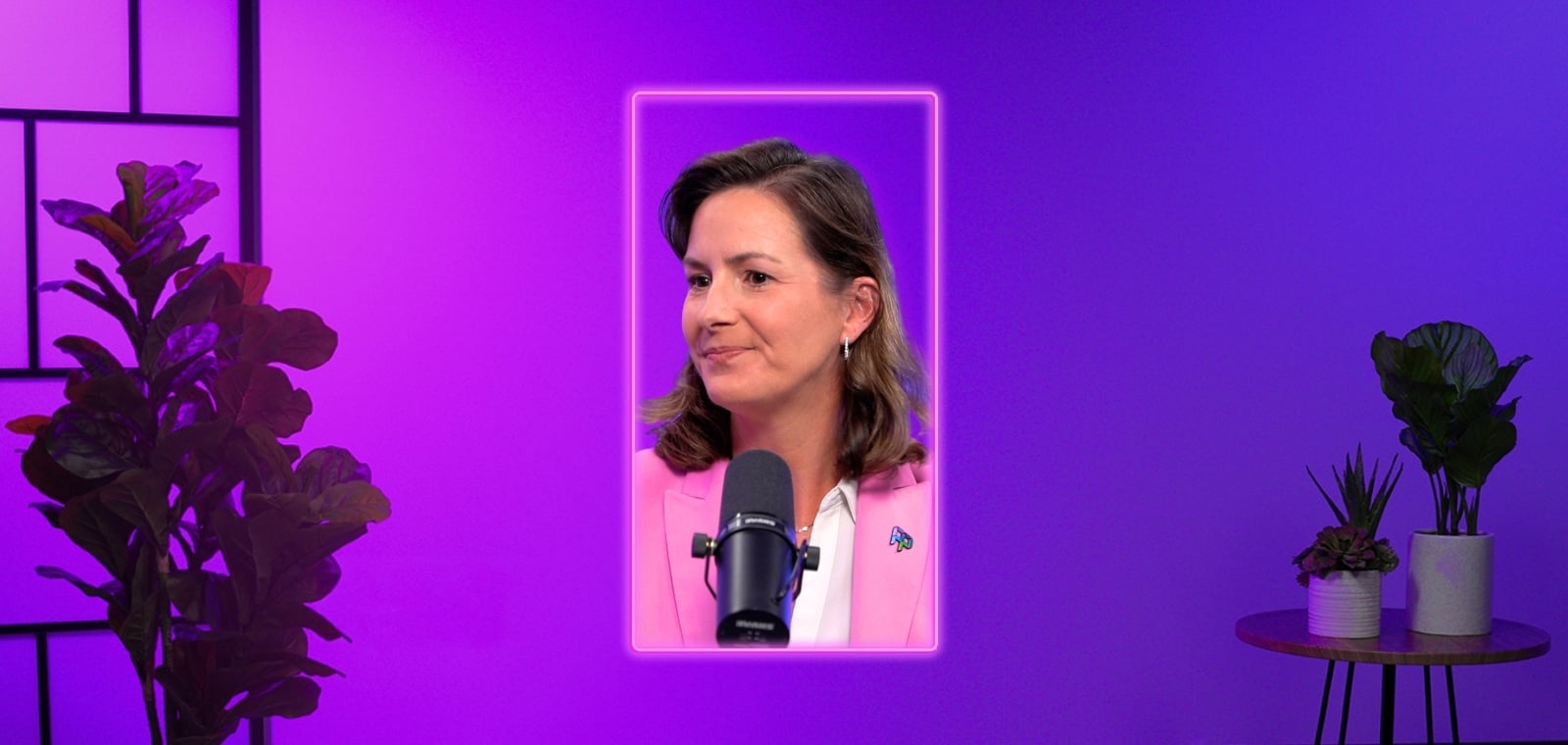
Ep. 62 | Closing the Gap: What AMN Healthcare's Workforce Outlook Survey Reveals About Leadership and Frontline Disconnect
A new survey of more than 4,000 healthcare professionals uncovered something more troubling than a staffing shortage: a widening gap between what leaders believe is happening in their organizations and what clinicians actually experience every day. In this episode of Elevate Care, host Kerry Perez talks with Tessa Misiaszek, President of Leadership and Advisory Solutions at AMN Healthcare, about the findings from AMN's 2026 Healthcare Workforce Outlook survey and the new Healthcare Workforce Outlook Index it introduces.
Tessa unpacks why the index landed at just 38%, with none of its five underlying components exceeding 50%, and what that tells leaders about the need for integrated, organization-wide thinking rather than isolated fixes. The conversation covers the disconnect between finance leaders' confidence in workforce data and the reality of fragmented reporting, why 84% of healthcare workers feel underappreciated despite most wanting to stay in the profession, and why burnout, staffing shortages, and compensation need to be addressed as one interconnected system instead of three separate problems.
Tessa and Kerry also discuss what future-ready healthcare leadership looks like as a generational shift reshapes the C-suite, how technology and AI should be evaluated through the lens of giving time back to clinicians, and why retention redesign may offer the greatest opportunity for healthcare organizations today. This episode offers healthcare executives a clear-eyed look at where the workforce truly stands, and a practical starting point for building a more resilient organization.
Key Takeaways
- The Healthcare Workforce Outlook Index scored 38%, with none of its five sub-indices above 50%, signaling that workforce challenges span the whole organization rather than one department.
- Sixty percent of finance leaders feel confident in their workforce reporting, yet only 48% have integrated workforce data, raising the risk of high-stakes decisions built on incomplete information.
- Eighty-four percent of healthcare workers feel underappreciated, and while roughly 80% of nurses want to remain in the profession, one in two plan to leave their current employer within the year.
- Burnout, staffing shortages, and compensation function as an interconnected cycle. Addressing one in isolation risks worsening the others.
- Only 38% of executives feel confident in their workforce forecasting, and about one-third have formal succession planning in place, underscoring workforce planning as an enterprise-level priority.
- Retention redesign, not just recruitment, offers healthcare organizations one of the greatest opportunities to strengthen culture and reduce turnover.
Timestamps
00:00 – Introduction to the healthcare workforce outlook survey
01:26 – Meet Tessa Misiaszek and first reactions to the data
02:01 – Understanding the 38% workforce outlook index
03:31 – Finance confidence versus workforce data reality
04:56 – The leadership and frontline disconnect
06:34 – Why 84% of healthcare workers feel underappreciated
07:53 – Burnout, staffing, and compensation as an interconnected cycle
09:39 – Workforce planning as an enterprise-wide priority
11:29 – Evaluating AI and technology through a clinician-first lens
14:14 – Retention redesign as the greatest opportunity
16:09 – Leadership capabilities for the next three to five years
19:08 – Final takeaways for healthcare leaders
Meet Tessa Misiaszek
Tessa Misiaszek is President of Leadership and Advisory Solutions at AMN Healthcare, where she works with health systems nationwide to strengthen leadership capabilities, workforce strategy, and organizational culture. With years of experience guiding healthcare organizations through workforce transformation, Tessa brings a practical, data-informed perspective to some of the sector's most pressing talent challenges, from retention design to succession planning to preparing leaders for the next generation of healthcare delivery.
Transcript
00;00;00;12 - 00;00;14;13
Kerry
Welcome to Elevate Care the podcast where we explore the ideas, innovations and leadership shaping the future of healthcare. I'm your host, Kerry Perez, Chief Marketing Officer, AMN Healthcare, and today we're diving into a topic that's top of mind for every healthcare organization.
00;00;14;16 - 00;00;21;11
Kerry
The future of the healthcare workforce at Aman healthcare. We recently launched our inaugural healthcare Workforce Outlook
00;00;21;11 - 00;00;42;15
Kerry
survey, capturing insights from more than 4000 healthcare professionals across nine workforce groups, including CEOs, finance and HR leaders, physicians, nurses, allied professionals and technology executives. Together, they offer one of the most comprehensive views we've seen of the healthcare workforce today.
00;00;42;17 - 00;01;13;03
Kerry
What makes this research especially compelling isn't just the size of the study, it's what the data reveals. While many organizations are focused on staffing shortages and retention, this report uncovers something deeper a growing disconnect between leadership perception and frontline experience. It also introduces the healthcare Workforce Outlook Index, a new framework that looks beyond traditional workforce metrics to better understand the overall health and future readiness of healthcare organizations.
00;01;13;05 - 00;01;19;22
Kerry
The findings aren't meant to be another collection of statistics. They're meant to challenge assumptions, spark meaningful conversations
00;01;19;25 - 00;01;25;24
Kerry
and help healthcare leaders think differently about how they build resilient organizations for the future.
00;01;25;27 - 00;01;40;26
Kerry
Joining me today is Tessa Misiaszek, President, Leadership Solutions, AMN Healthcare. Tessa, you spent years working with organizations across the country. Is there anything that was surprising to you about the outcomes of the survey?
00;01;40;29 - 00;02;01;07
Tessa
Yeah. And Kerri, thank you so much for inviting me to the podcast. I'm really excited to speak about this research because, well, nothing really surprised me. I think what was so interesting was the way that we were actually able to quantify certain metrics in a way that I haven't seen before, so I'm really excited to talk about that today.
00;02;01;11 - 00;02;20;28
Kerry
Excellent. I know it's going to be a really media conversation, so looking forward to it too. So let's jump right in. Let's start talking about some of these stats. So the Workforce Outlook index came in at just 38% with none of the five underlying indices exceeding 50%. That to me is a pretty striking results. What does that score really?
00;02;20;28 - 00;02;26;00
Kerry
Tell us about the current state of the healthcare workforce, and what do you really hope leaders take away with it?
00;02;26;02 - 00;03;04;28
Tessa
Yeah. So really, to take a step back when we are talking about this 38% composite index, what we're really saying is that that's the whole organization, though, that includes organizational staffing, leadership development, engagement, a future readiness of the organization and the confidence that leaders have in the future. And and so when you look at that 38 index versus the fact that all of those different, sub composites were not even at 50%, that there isn't one single thing that is really pulling the rest of the organization down, but that is the organization as a whole.
00;03;05;00 - 00;03;20;17
Tessa
And so when I talked about the fact that we're able to now quantify and look at, these particular indexes to to really have that metric that says it's not just one thing, but we have to really approach this with more integrative thinking to think about from a
00;03;20;21 - 00;03;24;02
Tessa
strategic perspective, how are we going to solve for some of these issues?
00;03;24;09 - 00;03;31;02
Tessa
By looking at the whole, not just one particular area. And so I think that's what's really exciting about this research.
00;03;31;05 - 00;03;55;06
Kerry
Yeah, definitely. You know, we were talking about all the different types of people that we are surveying, and that included a finance. The report shows that 60% of finance leaders are confident in their workforce reporting, yet only 48% report having integrated workforce data. Does this suggest that organizations might be making high stakes decisions with an incomplete set of information?
00;03;55;14 - 00;04;22;15
Tessa
Yes, that's actually very worrisome. Because if you're really confident, if two thirds of finance leaders are very confident, but only about half of them have the data looking at the workforce, which, by the way, people in the workforce is the largest line in the panel. And so if you're working off of incomplete data, where data is siloed and fragmented and you're not getting the whole picture, then you're really making strategic finance decisions.
00;04;22;15 - 00;04;45;22
Tessa
That's based on incomplete data. And so it's really important I think first of all, just to have the level of awareness that are we really capturing the data as it relates to our workforce in a complete way? And is that really telling us the the outcomes that we need to understand in order to make the right strategic, investments for, for our whole organization?
00;04;45;22 - 00;04;46;06
Tessa
So
00;04;46;13 - 00;04;56;13
Tessa
it's hard to make those, those decisions without data. And so I think just recognizing that that data might be fragmented is is a good first step for a lot of finance leaders.
00;04;56;14 - 00;05;14;14
Kerry
Yeah, definitely. You know, you mentioned, workforce being the largest line item on a panel. And what's so interesting about this survey is that we were able to have the perspective of leadership as well as frontline and in one survey. And that's one of the things that I think I recognize the most is that there is a disconnect.
00;05;14;14 - 00;05;18;26
Kerry
So one of those biggest takeaways is that leaders and frontline clinicians are
00;05;18;26 - 00;05;28;25
Kerry
often experiencing the same organization very differently. Why is that disconnect so important and what impact does that have on culture retention and patient care.
00;05;28;27 - 00;05;56;23
Tessa
Absolutely. So essentially what we're saying is that frontline clinicians and staff versus the leadership are experiencing the same organization and two very different ways. And so while a leader might think that things are stabilizing or even that the organization might be growing, but the experience of the frontline clinician is that there's burnout, that there's staffing shortages, that there's a lot of culture issues.
00;05;56;25 - 00;06;30;12
Tessa
Then you essentially have a complete disconnect in the decision making, which really comes downstream to the bedside. And so, again, what's really important is for leaders to essentially really be able to connect better with what is that experience on the frontlines? What is it like, truly, to be within the department at the bedside of the patients, and then to really understand what are the right investments to make in order to to ensure that the culture and the experience of the clinicians is good enough in order to really retain
00;06;30;15 - 00;06;34;18
Tessa
those very important people and talent within the organization.
00;06;34;20 - 00;06;36;10
Kerry
Definitely. You know, one of the stats
00;06;36;15 - 00;06;46;08
Kerry
stuck out for me there is that 84% of healthcare workers feel underappreciated by their employers. So any any commentary you think around on or around that stat in particular?
00;06;46;09 - 00;06;50;27
Tessa
Yeah. What was really interesting in the data was that 80%
00;06;51;00 - 00;07;12;14
Tessa
of clinicians and nurses in particular, they want to stay in the profession. So When you think about the fact that upwards of 150,000 to 200,000 nurses enter our workforce every single year, and upwards of 80% of them want to stay within the profession. But 1 in 2 planned to leave their employer in the next year.
00;07;12;21 - 00;07;53;17
Tessa
So what that tells me is that it's not as much of a top of the funnel issue, which is all we seem to hear about. And talk about is the the potential nursing shortages, but it's also a retention issue. And that is something that healthcare organizations and hospitals can actually effect an impact and control that. If you can really think about the design of your retention programs, and if you can think about how can we make the employee value proposition and the culture within the hospital better, then perhaps we won't be, you know, attracting so many nurses and we won't constantly be chasing, you know, having to fill the gap because of the nursing shortage?
00;07;53;18 - 00;07;53;26
Kerry
Yeah,
00;07;54;02 - 00;07;57;05
Kerry
you're mentioning, you know, burnout. That's just one element.
00;07;57;08 - 00;08;02;12
Kerry
there's other issues at hand, too, such as staffing shortages and compensation.
00;08;02;14 - 00;08;09;06
Kerry
And they're really looked at as an interconnected triad rather than three separate problems. Why does this distinction matter?
00;08;09;09 - 00;08;37;14
Tessa
really important because first of all, we hear a lot about nurse burnout and clinician burnout. And we see a lot of, well-intentioned programs that are focused on wellness and addressing burnout. But if we look at burnout in isolation from other types of issues, such as staffing shortages and increasing labor costs and so forth, then, what we're not doing is we're not really impacting the whole of the cycle.
00;08;37;14 - 00;08;56;12
Tessa
And we'll just worse be keep worsening the issues because one really does connect to the next. So it is important to really think about taking a more holistic approach, to really think about how are we mitigating our staffing shortages, how are we utilizing technology in order to really,
00;08;56;12 - 00;09;09;22
Tessa
take away some of the administrative burden of these roles and, and get our nurses and our clinicians back to the bedside where they can have more meaningful work, which really will help address the burnout because it brings more purpose to what they're doing.
00;09;09;25 - 00;09;35;27
Tessa
And then, of course, with, you know, being able to do that, we're able to retain our nurses. And then again, that doesn't perpetuate the staffing shortages. And increasing labor costs and so forth. So it really is a cycle. And it's important to again, like all of the different types of issues that this particular survey brought up, it's important to think about it in an integrative way and not really think about any of these issues in isolation.
00;09;35;27 - 00;09;39;13
Kerry
So whac-a-mole is not the way to go.
00;09;39;16 - 00;09;40;01
Tessa
Exactly.
00;09;40;01 - 00;09;40;23
Kerry
Okay.
00;09;40;23 - 00;09;59;14
Kerry
So the report suggests workforce planning has become an enterprise issue, not just an HR responsibility. Yet only 38% of executives are confident in their workforce forecasting, and only about one third have formal succession planning. What does integrated workforce strategy look like and what's the risk of not getting there?
00;09;59;19 - 00;10;29;28
Tessa
Yeah, this is really important. And we have seen a movement, I would say, in the last 15 to 20 years of HR being elevated into the C-suite and into the boardroom. And when we think about all of the the strategic decisions that the CEO and the CEO and the CFO need to make and the investments that they need to make in the context of healthcare, the CEO tomorrow is often the one that has to really implement that strategy through their people.
00;10;30;01 - 00;10;56;23
Tessa
And really, what we've seen in the last three years is this huge acceleration of with AI integration and technology integration and a lot of change management is that the CTO is really the one who's on the front lines of that transformation. And so you really need to think about in the context of any investment, any strategic decision, who are the people, what are the skills, what are the capabilities that we will need.
00;10;56;23 - 00;11;12;21
Tessa
And we really need the voice of of the talent strategy and the CRO to be at the table, really integrating their thoughts and their, ideas around those types of items into the strategic decision making.
00;11;12;24 - 00;11;17;12
Kerry
And hopefully we can get that 38%, number a little bit higher. So as,
00;11;17;12 - 00;11;29;22
Kerry
organizations think about technology and AI, the report frames these tools not as replacements for clinicians, but as ways to reduce burden and create capacity. How should leaders evaluate technology investments through that lens?
00;11;29;26 - 00;12;00;09
Tessa
the simple question to ask when it comes to any sort of technology integration, and especially in the context of AI, is will this give time back to the clinicians? And if we kind of take a step back and think about it from a historical perspective, 15 years ago, when the EHR was being implemented, this was the first kind of well, there's been a number of tech transformations, but this was the the one that seemed to make the biggest impact, and it really became more of an administrative burden than it did.
00;12;00;12 - 00;12;32;27
Tessa
Taking away that burden, from, from clinicians. And so it really had a pretty profound impact on clinicians who were spending less time with patients who had to do more paperwork at home and had extended days. And it really did erode the patient experience or actually the the provider patient relationship. And so when we think about this particular, time with AI integration, we actually have an opportunity to leverage this technology to give the time back to clinicians.
00;12;32;27 - 00;13;01;27
Tessa
So it really is not about headcount or the technology replacing headcount. It's really about the technology being able to allow our clinicians to do the job, that they they've always wanted to do. It's the reason they likely went into medicine or into nursing or whatnot, into healthcare. It's because they wanted to be helpful to patients. They wanted to be, able to connect with them to, to really provide that healing, which can really only be done between that provider and that patient.
00;13;01;27 - 00;13;04;22
Tessa
And and not necessarily through the technology.
00;13;04;25 - 00;13;09;25
Tessa
The technology certainly can also be helpful in the context of being able to alert clinicians,
00;13;10;00 - 00;13;23;05
Tessa
as it relates to surveillance technology, when you have a patient that's about to go septic or something along those lines, it certainly can also help address some of that burden, which, you know, when there is a staffing shortage, it can be incredibly helpful.
00;13;23;11 - 00;13;31;05
Tessa
But from the for the most part, the purpose of what we're seeing with the AI integration is that it's a real opportunity for providers,
00;13;31;05 - 00;13;38;00
Tessa
and nurses to get back to doing what, what they love to do, which is really, being with the patient.
00;13;38;03 - 00;13;48;20
Kerry
That's so important. I love that you said we, you know, we really want them to be able to work at top of license, and the technology should not get in the way of that relationship. It should clear the path to enable it to be deeper.
00;13;48;25 - 00;13;49;23
Tessa
Very well said.
00;13;49;26 - 00;13;51;18
Kerry
Yeah, that's.
00;13;51;20 - 00;13;52;19
Tessa
Exactly.
00;13;52;22 - 00;14;14;16
Kerry
So transitioning into a little bit more about future ready organizations. The report identifies several opportunities that can improve workforce outcomes across nurses, physicians and allied professionals from recognition and retention. Redesign to improving the work environment. Which of these do you believe offers the greatest opportunity for organizations today and why?
00;14;14;21 - 00;14;35;04
Tessa
my vote would definitely be retention redesign. So when you think about kind of everything that you can really focus on, again, going back to that statistic that our survey revealed, which is 80% of nurses are not wanting to leave the profession, they're not leaving work, they're leaving the workplace. They're leaving their employer. One and two are leaving their employer.
00;14;35;04 - 00;14;58;13
Tessa
So as a result, when you really start to focus on what are the innovative care design models, what are the ways in which we can start to really address the staffing shortages and burnout in a more integrated way? How can we think about the opportunities that our clinicians and nurses have when they come into our organization? Is the culture, is the purpose.
00;14;58;13 - 00;15;21;03
Tessa
The mission of what we do is that operationalize in the way that we not just care for our patients, but that we care for each other as employees and as that felt, seen and heard. And so that really translates to the employee value proposition, which we talk a lot about as far as being able to really operationalize those values of the hospital throughout the employee experience.
00;15;21;03 - 00;15;43;21
Tessa
And when you do that, when you're able to focus on culture, when you can give, opportunities around learning and development and skills building and really offer opportunities around career pathways to, to especially early careers coming into the system, you can do a much better job of retaining them versus losing them to to a competitor.
00;15;43;24 - 00;15;48;05
Kerry
Just something that stuck out to me, which resonated was how important is to,
00;15;48;05 - 00;15;58;28
Kerry
think about the why behind it and really to imbue that into into the culture. So thank you for bringing that. I know even at Amen, that's been a big thing for us, is kind of getting back to the mission of what we do and why
00;15;58;29 - 00;15;59;19
Kerry
we do it.
00;15;59;22 - 00;16;09;04
Kerry
So looking ahead 3 to 5 years, what do you believe will separate healthcare organizations that successfully navigate workforce challenges from those that continue to struggle?
00;16;09;07 - 00;16;29;02
Tessa
there's a new set of leadership capabilities that are required for the future, and we are seeing a generational shift and happening within the leaders. We are seeing a record number of CEOs and C-suite executives now retiring, mostly baby boomers and even older Gen X, and we're seeing, millennials.
00;16;29;02 - 00;17;01;07
Tessa
And honestly, Gen Z, who's moving into middle management. There are upwards of 32 to 34 years old now. And so with that kind of generational shift, as well as with the changes we're seeing with technology, we really need to have leaders who are incredibly adaptive and who are willing to connect with their employee organizations on the front lines, that they can't just sit up in a corporate office, but that they really have to understand what is the experience for that clinician, for that healthcare provider on the front lines, working with patients every day.
00;17;01;10 - 00;17;25;13
Tessa
And so when we think about those skill sets as an adaptive skill sets for leaders that really do include integrative thinking, right, where you're looking at the whole system and not just thinking about certain parts of it, when you're really taking into consideration the purpose of the organization, but not just words on a wall or on a website, but how is that operationalized in the way we care for patients as well as for our employees?
00;17;25;15 - 00;17;55;07
Tessa
And when we realize for those leaders that the workforce and your talent is your most important asset within a hospital, and that you really need to think about what is the culture in which they work every single day, then you will be more successful moving forward. So I think that the study reveals, and I think what we're seeing and a lot in the literature is around this new set of leadership capabilities that are really, important in order for hospitals to be successful moving forward.
00;17;55;10 - 00;17;59;21
Kerry
But how would you say these leaders should be gaining these skills?
00;17;59;23 - 00;18;02;07
Tessa
Oh, gosh, that's a great question.
00;18;02;10 - 00;18;18;23
Tessa
Because that's I mean, that's a lot of the work that we do. Right? So when we think about, first of all, a lot of leaders move up through the organization and they're never really there's never a time for them to kind of take a step back to be assessed for, okay, what are the skills I have today?
00;18;18;28 - 00;18;42;00
Tessa
What are the skills I need in order for our hospital to be able to reach its strategic priorities, whether that's financial sustainability, whether that's tech transformation, whether that's growth, whatever the case may be. And so really, to be able to look at your leadership team and honestly look a couple layers down to your middle management layer, who are your future leaders of the hospital tomorrow?
00;18;42;03 - 00;18;52;19
Tessa
Assessing them for really understanding. Where do they sit today with their skill sets? And then what are the skill sets they need to develop in the next 3 to 5 years to become those those adaptive leaders of the future?
00;18;52;22 - 00;19;08;01
Tessa
that's a lot of the work we do is working with organizations and leadership teams to really assess kind of current state and then develop a map for how they can get the skills that are required, the capabilities, competencies, in order to really be successful in those future roles.
00;19;08;02 - 00;19;08;20
Kerry
Excellent.
00;19;08;24 - 00;19;16;25
Kerry
If listeners are to remember just one thing from today's conversation and one action they should take after reading this report, what would you want it to be?
00;19;17;01 - 00;19;20;23
Tessa
Yes. I really think that going back to,
00;19;20;26 - 00;19;59;20
Tessa
thinking about the retention redesign, really understanding that there's a lot within an organization's control when it comes to the staffing problem and that it's not just about trying to fill in the gap or fill in shortages, but that there's an opportunity to take a step back and say, how can we transform our organization to have a better culture, to really attract top talent, but then keep them, develop them, give them new skills for the future, and really give them an opportunity and what we call an employee value proposition that will entice them to to stay loyal to our organization versus losing them to the competition.
00;19;59;20 - 00;20;08;08
Tessa
So I think that there's a lot that's within the control of hospitals. They just really need a strategy to help them kind of to help them get there.
00;20;08;13 - 00;20;15;11
Kerry
Excellent. Well, a very robust information. I'm super excited for this report to drop. I know it's, a lot of,
00;20;15;11 - 00;20;25;24
Kerry
great insight that I think can serve so many different people, clinicians as well as leaders. So looking forward to it. Tessa, thank you so much for your expertise in coming and talking about this with us today.
00;20;25;24 - 00;20;27;22
Tessa
So thank you for having me. That's great.
00;20;27;23 - 00;20;28;21
Kerry
Thank you.
00;20;28;24 - 00;20;49;04
Kerry
Today's conversation reminds us that this report isn't simply a snapshot of where healthcare is today. It's a roadmap for where it needs to go. The organizations that will thrive won't be those that react the fastest, but those that listen more closely, plan more strategically, and build workplaces where clinicians can succeed. Tessa, thank you again for joining us and sharing your perspective.
00;20;49;07 - 00;21;03;17
Kerry
And to our listeners, if you'd like to explore the Complete healthcare Workforce Outlook survey, including the Workforce Outlook Index, benchmark data and strategic recommendations, you can download the full report through the link in today's show notes.
00;21;03;20 - 00;21;19;08
Kerry
For an even deeper dive into the findings, be sure to join us for our upcoming webinar with Becker's healthcare, where we'll explore the survey results in greater detail, discuss what they mean for the healthcare leaders, and answer questions from attendees. We hope you'll join us for the conversation.