

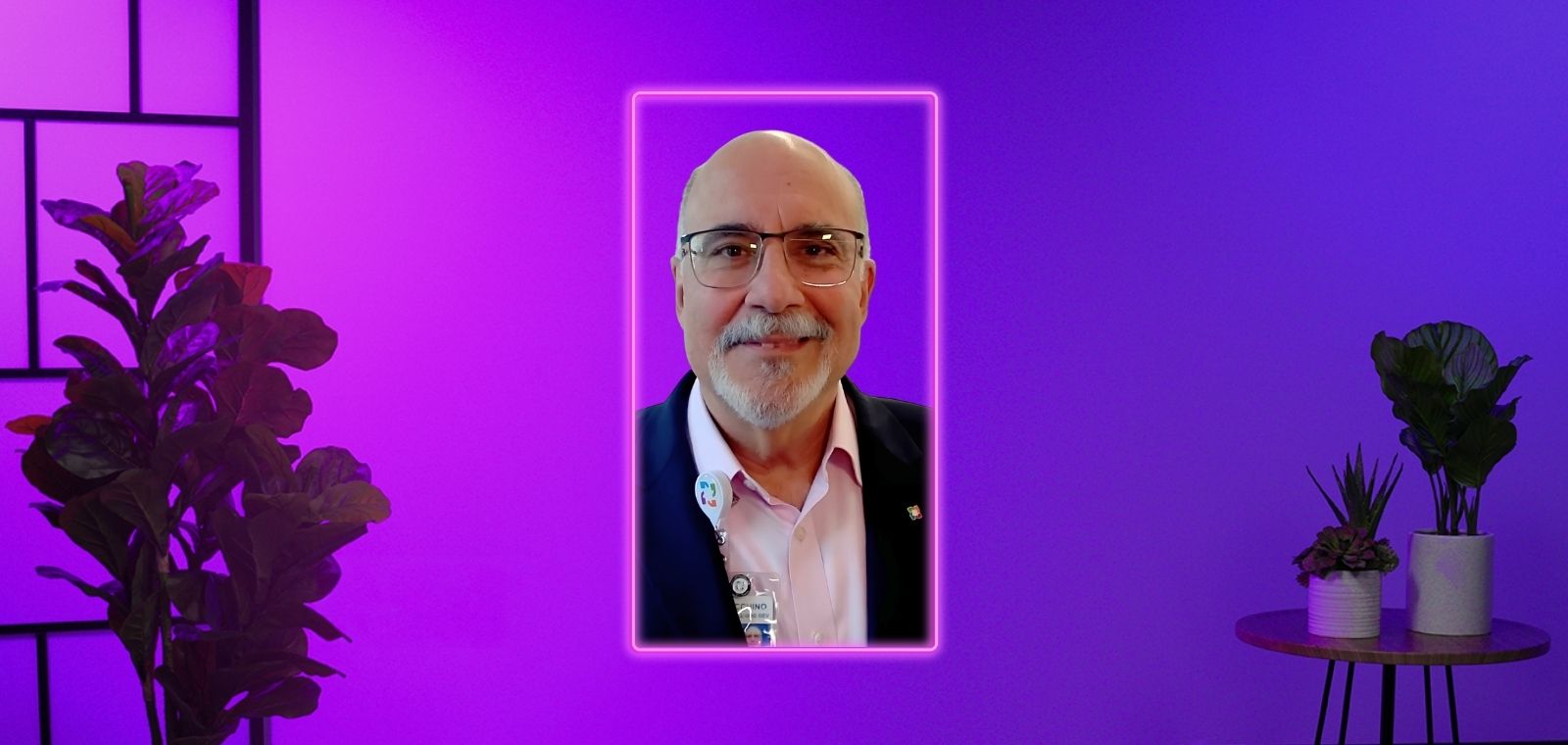
Ep. 60 | How Hartford HealthCare Is Balancing AI and Human Connection with Gerry Lupacchino
Every health system is racing to adopt AI scribes, ambient listening, and predictive staffing tools, promising safer, more efficient care. But what about the people on the receiving end of all that innovation? On this episode of Elevate Care, host Tessa Misiaszek talks with Gerry Lupacchino, Senior Vice President of Human Experience at Hartford HealthCare, about what it really takes to keep technology adoption grounded in human connection.
Gerry shares how Hartford HealthCare built its ambitious goal of becoming the most consumer-centric health system in the country on a foundation laid back in 2015: the belief that a strong colleague experience drives a strong patient experience. He explains why physicians, not administrators, are leading the organization's AI governance councils, and how tools like ambient listening are giving clinicians back the human connection that electronic health records once crowded out.
The conversation takes an unexpected turn when Gerry describes a pattern few healthcare leaders talk about: it's often younger patients, not older ones, who are more hesitant about health technology and data sharing. He and Tessa dig into what that means for access, trust, and the responsibility health systems carry in meeting patients, and colleagues, exactly where they are.
Key Takeaways
- Colleague experience drives patient experience. Hartford HealthCare's consumer-centricity strategy began with a commitment to how colleagues are listened to, communicated with, and treated, long before it became a patient-facing initiative.
- Physician-led AI governance builds trust. Hartford HealthCare's AI and innovation councils are led by physicians, ensuring new technology serves clinical judgment rather than replacing it.
- Younger patients aren't always the early adopters. Contrary to assumption, some of the strongest resistance to health technology and data sharing comes from younger consumers, not older ones.
- Ambient listening restores human connection. By removing the burden of manual documentation, ambient technology allows physicians to make eye contact, sit with patients, and focus on the conversation instead of the screen.
- Access meets people where they are. From a 24/7 virtual primary care app to an in-airport health kiosk, Hartford HealthCare is redesigning access points around how people already live, not how healthcare has traditionally been delivered.
- Leadership development matters as much as patient-facing technology. An AI coaching tool built on Hartford HealthCare's own leadership framework is helping managers build confidence and consistency across a newly hired workforce.
Timestamps
00:00 – Introduction to Human Experience in Healthcare
01:39 – Defining the Role of SVP of Human Experience and Culture
05:27 – What Consumer-Centric Care Really Means
07:44 – Physician-Led AI Governance and Adoption
12:26 – Restoring Human Connection through Ambient Technology
15:27 – Why Younger Patients Resist Health Technology
19:38 – The Health System's Role in Patient Education
23:15 – Technology for Colleague Engagement and Retention
30:27 – Advice for Leaders Starting Their AI Journey
Meet Gerry Lupacchino
Gerry Lupacchino serves as Senior Vice President of Human Experience at Hartford HealthCare, where he leads teams spanning physicians, nurses, advanced practitioners, and licensed clinical social workers on the patient experience side, alongside organizational development professionals focused on the colleague experience. Over his ten years with Hartford HealthCare, the organization has grown from three hospitals and roughly 10,000 employees to ten hospitals, 600 locations, and 48,000 employees. Gerry's work centers on a guiding belief: healthcare organizations that want the best patient experience need to start with the best colleague experience. Learn more about Hartford HealthCare's approach to human experience at hartfordhealthcare.org.
Transcript
00:00:00.040 — 00:01:11.590 · Speaker 1
Welcome back to Elevate Care. I'm your host, Tessa Misiaszek. Every health system I talk to right now is investing heavily in technology, AI scribes, ambient listening, digital front doors, predictive staffing, virtual nursing. The pitch is consistent. Better care, safer care, more efficient care, a better experience for people delivering it and for the people receiving it.
And the clinicians, by and large, are getting up and learning the learning curve quite fast. But there's a question that doesn't get asked often enough. What about the patient on the other end of the technology? Are they ready? Do they want it? And here's the part that surprised me. Which patients are resistant?
My guest today has been sitting with exactly these questions. Gerry Lupacchino is the senior vice president of human experience and culture at Hartford Healthcare, one of the most ambitious integrated health systems in the northeast. Hartford has set a North Star to become the most consumer centric healthcare organization in the country, and Gerry is one of the people responsible for making sure the human experience for patients, for clinicians, and for the workforce doesn't get lost in the rush to digitize.
Gerry, welcome to Elevate Care.
00:01:11.630 — 00:01:18.630 · Speaker 2
Thanks, Tessa. It's good to see you. Thanks for having me on. And thanks for letting us talk a little bit about what we're doing here at Hartford Healthcare.
00:01:18.670 — 00:01:39.350 · Speaker 1
Absolutely. Thank you so much. First of all, for our listeners who don't maybe are not quite familiar with Hartford Healthcare or your role. Can you tell us what the SVP of Human Experience and Culture actually means day to day, and how that scope might be different from a CRO or a traditional experience officer?
00:01:39.390 — 00:04:51.080 · Speaker 2
Sure. So first of all, just so that you know this size and scale of the organization and why we have a title that sounds like this. And when I came here ten years ago, we were a small organization, relatively small. We had about three hospitals, maybe 115 locations at about 8 or 10,000 employees. And in the last ten years we've grown to have around 600 locations.
We have 48,000 employees, ten hospitals, just having recently acquired the last two. The our organization, just generally speaking, has grown through acquisitions. Hartford Healthcare originally was you could call it a startup. We had one hospital that was struggling. We brought in a CEO at that point who said, you can't really do what you want to do without scale.
So we then created Hartford Healthcare from Hartford Hospital and and then sort of the rest is history. We doubled in size just before and at the beginning of Covid, and we continued to grow through Covid. We are one of the few health care systems on the planet that, thank God we didn't have to lay people off.
And we continued, as I said, to acquire physician practices as well as healthcare. Other health care locations and sites grew from about 2 billion to 36 billion, 8 billion right now. So, you know, we'd pretty much be a fortune 500 if we weren't a nonprofit. What happened was in 2015, we decided, uh, for our patient experience initiatives, we would think about the relationship between those providing experience in those coming to us for care.
And at the time, there was a body of research which which still stands today. That said that the top three reasons why patients say they've had a great experience is that they've been listened to, communicated to in a way that they understand and treated with courtesy and respect. Top three today it's still the same with number 3 or 4 now being understanding the pricing model and the value.
We decided back in 2015 that if we were going to have the number one patient experience that we needed to have the number one colleague experience, that in fact our colleagues would be listened to, they would be communicated to in a way that they understood and that they would be treated with courtesy and respect.
And so if we do for our colleagues what we expect for them to do for our patients, the sort of equation should work. And it has. Leading into Covid, we were in the top quartile and decile depending on the metric for patient experience, etc. so we were well underway to creating that foundation and all the work that goes into creating a strong workforce in a workplace that was safe and high quality.
ET Cetera. Really lent itself to creating a care experience that was the same. So my title is the Senior Vice president of Human Experience. Because whether you're coming here to work or receive care, you are somehow impacted by the work that my really great team does. On the patient experience side, I lead a team of physicians and nurses and APS and social workers, licensed clinical social workers, and on the colleagues side of it, I lead a team of really smart led professionals that are committed to that work.
00:04:51.520 — 00:05:27.790 · Speaker 1
That's amazing. I mean, from my experience working in marketing and branding. Certainly what is true for the customer needs to be true for the employee. And when you have high employee satisfaction, you're going to have high customer satisfaction. And certainly that's true in healthcare as well. If you have good employee satisfaction and engagement, you are likely going to see those results with patient experience as well.
We've seen that has set a really aggressive and ambitious goal of being the number one consumer centric health organization by 2035. So, you know, what does consumer centric mean to you?
00:05:27.830 — 00:07:23.650 · Speaker 2
It's I'm laughing and smiling because what it means to me is irrelevant. Honestly. It's what it means to the individual consumer. And it took us a while to sort of understand that we could come out with a statement about this is how we define consumer centered care, but then we wouldn't be consumer centered.
We would be Hartford Health Care Center. So the consumer defines the experience every day and the choices that they make in how to access care, how to work through the care continuum, how to evaluate that care, what expectations they set for care for, for pricing, for transparency, for the food that they pick in their hospital rooms to they, you know, places where they get their cars dropped off.
You know, I mean, it there's there are probably, you know, at one point someone said that there are 22,000 moments per day per patient that we impact and the choices we make at Hartford Healthcare, whether to have, you know, wayfinding signage over a door, the overhead paging system. When we were doing a quiet initiative in one of our units, we realized the most annoying sound in the unit was the squeaky wheel on the cleaning cart, you know?
So one of the easy sort of just do it was to replace the wheels on our carts with rubber wheels that didn't squeak. So we define consumer centered as listening to and responding to quickly and efficiently and safely those things that create friction in the patient or customer's experience with us. And so once we eliminate that, then they say, well, geez, this is really a good, safe, quality place for me to receive care.
Now I can elevate my expectations about what that's going to look like. If we didn't fix sort of and spent the last however many years with our lean functions and with our quality and safety partners fixing all those things, first, we wouldn't be able to then set that aspirational goal of being number one in consumer centeredness.
00:07:24.290 — 00:07:44.050 · Speaker 1
Excellent. So in the age of AI and the adoption of technology at the top of the the podcast, I went through kind of a myriad of different ways in which AI and technology is transforming the clinician's experience. How well are you seeing clinicians in particular adopt technology?
00:07:44.090 — 00:07:49.690 · Speaker 2
Well, it's funny, it's a you ask the question similar, and I would answer this similarly as I would ask the answer the
00:07:50.840 — 00:12:26.070 · Speaker 2
Consumer centeredness. The the physician. Let me let me just back up for a second, because it'll help you understand the way that we're presenting this. We're partnering this work with our physicians. And probably the latter is more true. They are deeply involved with and in fact, our AI council, our governance council, our innovation council is all led by physicians so that, you know, it's not we've gone away and created something or bought something and, you know, sort of drop it in the lap like the electronic health records were back in the day.
This is a very different process for the reason that you've sort of alluded to our focus. We have like every other healthcare system, there's a million acronyms, but the one that is consistent in that we train all of our colleagues on on day one. And I'll talk about the concept of colleagues in a minute. Is is A2, A2 and it stands for access, affordability, health, equity and excellence.
Those are the four things. So if you come through Connecticut, you're going to see Hartford Healthcare logos everywhere. We're within ten minutes of every resident in the state of Connecticut, just so that, you know, and there are some people that come to work for us that when they've told their loved ones or friends, they're coming to work for Hartford Health Care, the response of those people is like, oh my God, they're everywhere.
You know, you're going to work for this huge organization. Why? And the answer is access, affordability, health, equity and excellence. So from an access perspective, can you access the care you need when you need it in a way that is equitable, that all people can access the care that they need, the way they need to receive it?
Is that care excellent across the system? Is it is it evaluated by external agencies and organizations that bestow upon us the awards that we've gotten? You know, we're number one. The American Hospital Association gave us the quest for quality prize. We're the number one quality hospital in the United States.
So our health care system. So if that excellence is recognized, then it needs to be available to everyone at a cost that they can afford. 42% of our surgeries happen outside of our hospitals in order for us to be able to do that. So if you think about those four things and you think about AI, the first thing that is going to be impacted by the use of AI is this equitable access to our care system.
And what's in our system. Not only does the consumer is the consumer able to have access to his or her medical records, or transparency about their results or access to all of that. But perhaps most importantly, especially from the physician's perspective, is does this improve the safety and quality of the experience for the patients that that physician or clinician serves?
You know, that's it's probably the biggest I don't I don't want to say fear, but it's a concern. And I just was on an event the other evening and someone came up to me and said, I don't want my medical record available to the global internet. And I said, well, that's not going to be because there are other rules and regulations that make sure that that doesn't happen.
But what is your biggest concern? Other than that, and they said that I would be known by what the AI agent has described me as, like some machine has defined me. And and so, you know, part of what we're focusing on is can the physician have a better human experience with the patient when AI is managing the technology that would distract them?
And if we can, if we can balance that so that the physician can make eye contact, that he or she can sit at the bedside, that they can speak in the patient's language using simultaneous translation and interpretation, and have the patient speak back and have the medical record accurately reflect that information so that care can continue in the moment without worrying about trying to find an interpreter, etc..
I mean, when physicians realize that they can actually go back to practicing medicine, human to human, without the computers and the the wows or cows or whatever you want to call them, especially in the acute care. It makes a difference, not only in the physician's confidence that he or she is doing the best that they can to provide that care, but they're working in an environment that values that experience on the part of the patient.
So it's not only a physical and sort of credentialing kind of conversation. It's also a why, you know, getting back to the reasons why I got into healthcare to begin with. So our physicians are cautious and very holding us to a high level of accountability around the quality of what we do and how we do it and how we roll it out, and that they want to be deeply engaged in that process.
And we're lucky that we have physicians that are that committed.
00:12:26.910 — 00:12:50.860 · Speaker 1
That's wonderful. When you think about that continuum of the physicians being able to really have more of that human connection as a result of the technology. How far along do you think you are on that journey to fully realize that kind of vision for getting back to the core of what medicine should be, which is that human to human connection.
00:12:50.860 — 00:12:57.860 · Speaker 2
So we're as fat. Let's see, how do I say this? We are as far along as the consumer is going to let us be right now.
00:12:57.940 — 00:12:58.700 · Speaker 1
Interesting.
00:12:58.820 — 00:13:44.610 · Speaker 2
I think we have to keep that in mind. Right. This is about being consumer centered, not hard for health care centered. And so we are every every time a new technology emerges. So for example I mentioned ambient listening. So if you go into one of our primary care offices or specialty care offices and you're interacting with one of our physicians, our physician may say something that sounds like, I'm going to be able to focus on you today because I have an assistant that's going to help me capture what we say.
Are you okay with that? And the patient says yes or no. And if the answer is yes, that would be fine. My primary care physician said to me that he's now at a level of enjoyment dealing with dealing with, interacting with his patients more so today than ever before, because you're not dealing with the impact of the medical record.
So we are moving things along.
00:13:45.730 — 00:15:27.600 · Speaker 2
Around the same pace that the consumer is saying. Yeah, I think I'm okay with that as it relates. As it relates to what's possible. We are very far ahead of the curve. And I know that's going to sound like me bragging about Hartford Healthcare, but we already have 4 or 5 relationships with key startups globally that are providing us with the technology that I just described.
Next week, we will be within the next three weeks, we'll be rolling out in Hartford Hospital. We're building several new towers and facilities over at Hartford. The rooms that we are putting in place will be smart rooms, so that the minute someone walks in the room begins talking, the room will actually come to life and begin the process of simultaneous interpretation, medical record capture, etc. again, I would probably say in a year that's going to be the expectation that we have it.
And doesn't everybody else have it kind of thing. Like that's really what we're looking for, how images are read, how imaging is read using AI. Again, with oversight by those individuals who are expert at not only looking at those images and making recommendations around treatment, but also looking at the whole patient.
And can that imaging technology be used to diagnose it? Other opportunities in that patient that were originally only captured through a typical MRI or Cat scan. So so again, we're moving as quickly as we can because as you know, what was relevant yesterday is obsolete tomorrow as it relates to AI in that sort of supported technology, but also the the consumer has to be ready for it.
And we lead with safety and know that our consumers also have to have trust in us. And it's an easy thing to lose if we're not careful.
00:15:27.640 — 00:15:45.510 · Speaker 1
Absolutely. So you shared something with me in the prep, um, that I haven't heard anyone else say before, which is the resistance to healthcare technology is coming from some of your younger patients, not your older ones. Can you describe this pattern that you've seen?
00:15:45.550 — 00:16:19.230 · Speaker 2
Yeah. And let me just preface it by saying it's entirely anecdotal but probably okay. So there's a belief that our parents and my mom died a year ago January. She was 97. And the night before she passed away, she read the New York Times of the Wall Street Journal on her iPad and asked for me to make sure that the most recent visit with her cardiologist was in my chart, which is the medical record that we use here in Harford Health Care.
What we're finding is that the belief that the by age generation of individuals are going to be it's cherry.
00:16:19.270 — 00:16:20.110 · Speaker 1
All right.
00:16:20.710 — 00:18:52.960 · Speaker 2
Thanks I appreciate that. Um, and somehow it's so unfair somehow that they're going to be less open for that. Remember, we have to remember that people of a certain age trusted physicians implicitly, right? That you had an MD after your name. You earned the right to practice. And to a certain extent, that is true.
And in fact, at Hartford Healthcare, the use of the term physician and AP and clinician, etc. is very thoughtful because we want to continue to elevate the extraordinary expertise we have in the individuals that come to provide care here and do clinical work. That implies that if the physician said to do something, you just did it.
And so what we're finding is that the technology allows for the physician to be able to say that in a way that's accessible, understandable, trustworthy in more ways than he or she used to in the past. Now let's look at consumers that are younger in that order. They're Starbucks on the way in. It's waiting for them.
They have told Starbucks how Starbucks should make their coffee. Starbucks has listened and done so. But that's the consumer relationship. I was talking to a couple of young folks and I said, you know, do you have a primary care physician know? Well, what do you do for health care? Well, I get it when I need it.
And what's been your experience? Well, it's been okay, but the physician didn't do what I wanted them to do, which was this. And how did you determine that? They said, well, I looked it up. Very different dynamic. And so the individuals that are shaping what we believe is what the consumer wants versus what the consumer would benefit most from that difference between the two is really what we're trying to fill in by using AI, by being able to determine where that dynamic tension is between what I think I want and what we actually believe is best for the patient in using all of the information at our disposal in order to be able to convey that message.
So I think if you ask people, as we walked into some of the rooms that we were rounding with in one of our locations and we said, are you okay if we record this information? The individual said, a younger individual said, no, I'm really not sure that I am because they know and live in that sort of social network world where it all becomes public, whereas individuals who are my age and perhaps older trust that the organization is going to protect that information because it always has.
And so it's a much more it's sort of like multi-level chess. You know, we make a move, but then we have to see where that move is going to impact on a lower level and an upper level as it relates to the consumer, their age or generation.
00:18:53.120 — 00:19:38.310 · Speaker 1
I love that metaphor, multi-level chess. And do you think that there's some responsibility of a large health system like Hartford Health Care to help educate a younger population, a younger generation, about how to be an accountable patient? Right. I similar to your your story. You know, I have a 22 year old son and I was trying to express to him that he has to go find a primary care physician in New York City.
And he was kind of like the same exact thing. Why? Why aren't I done getting physicals? Wasn't that a pediatric thing? And so what? What is that responsibility that you think that maybe Hartford Health care System or other large health systems have to that younger generation to really educate them on what it is to be a patient and accountable patient.
00:19:38.350 — 00:21:37.690 · Speaker 2
Yeah, it's a really good question because, you know, my definition of what it takes and yours is very different, right? We have something that we launch called HHC 24 over seven. You could go to the App Store and download it. It's there. It allows for what your son wants to be available at any time. Primary care at 2:00 in the morning to be able to say, I got home from the bar, I'm feeling really crappy for the last 24 hours.
I don't know if it's that or whatever, but I feel kind of nauseous. I don't know what to do, and you could get on with a primary care physician somewhere. It's going to be able to say, well, tell me about your symptoms. What is it that you need? I can, you know, maybe you ate too many wings. I have no idea. But let's sort of monitor it.
And, you know, I could get you a prescription for whatever it is that the diagnosis is. And you could be waiting for you at the pharmacy at 10 a.m. where we can have it delivered to your workplace or whatever. So, so the first thing is, is not to train them on how they should be, but understand where they want to be and then provide ease of access, a transparent sustainability, all of that stuff so that individuals feel more comfortable, more compelled, more confident in using the services that we provide and then listen to their responses.
I don't know if you've traveled through Bradley Airport, which is our local airport, but Harvard Healthcare has a health booth there that literally you walk in and a microphone comes down and the screen opens up and the glass goes gray, and you have a you can have a care meeting with one of our physicians in the moment in order to understand, like, get on a plane or I just got off the plane or I don't know what I should be doing.
And, you know, they could take your blood pressure and everything. So it's it's trying to be where people find the access most, um, um, a most comfortable, most accessible, um, in a in a myriad of ways, whether it's in the airport, um, health center or on HHC 24/7, and then listening to what people say and then continue to evolve that work that way.
I hope that answered your question.
00:21:37.730 — 00:22:02.450 · Speaker 1
That it does. And that's actually really incredible. Um, so it really isn't about educating a next generation to say, hey, you need to think about health care the way we thought about health care, but it's really about bringing health care to them wherever they may be. I actually haven't heard of that in an airport before.
That kind of health clinic. Automated system. Brilliant. It's really it's fascinating.
00:22:02.490 — 00:22:32.650 · Speaker 2
To your point, they then educate us and then we start to bring it back and say, okay, this is what our patients and our consumers are looking for. How do we do that next? How do we do that safely? How do we do it efficiently? How do we do it most cost effectively? You know, especially in the environment that we're working in now where everything is so expensive.
You know, every step we take, every kind of product we try to innovate, every kind of service we tried to provide is all looked at very, very closely for ROI, for risk, etc..
00:22:32.650 — 00:23:15.320 · Speaker 1
So that that really does get to my next question, which is really around when you think about the evaluation of any new technology, whether it is for the patient or whether it's for the colleagues, and I'd love to kind of pivot now back to the workforce and your colleagues and thinking about what are what are the technologies that are helping them do their jobs better, that are helping them feel more connected?
You mentioned some of the technology that helps with that physician patient experience. What about from colleague to colleague within the health system that helps for that better communication? What are some technologies or solutions that you're you're focused on right now to help with that engagement of your workforce?
00:23:15.600 — 00:23:41.830 · Speaker 2
Yeah. So I'm smiling because the Becker's article came out this weekend that I thought was really great. And it talked about this journey of leadership and individual development. And just like you mentioned, when we were talking about the difference in generations from young to older, for as it relates to what the patient is experiencing.
The colleague is has a similar range of expectations. There's a book out called The Anxious Generation. I don't know if you or your listeners have read it.
00:23:41.870 — 00:23:48.470 · Speaker 1
Actually, my son graduated from NYU and that was the commencement speaker was the author. So he's an NYU professor? Yeah.
00:23:48.510 — 00:30:24.870 · Speaker 2
Yeah, yeah. Wonderful. So. So for those that may not be aware of it, they talk about the generation that we're hiring now, the office generation, having come through one of the most unique times in our history, which is being raised in a way that we sort of use the term stranger danger can't go outside and play because you're going to be kidnaped kind of thing.
Stay in the house and use, you know, play in the house where it's safe. Oh, and then, by the way, we're going to have Covid, which means you don't even get to go to school. And then you graduate and you have to go to work and compete for your job. You know, you have to be better than somebody else. You have to be able to take feedback about things that you're not doing right.
And and most importantly, have the confidence to be able to fix those things and continue to do the work that you really want to do. None of those things were trained to that generation in the way that they were trained two generations before where you had, you know, I don't know, football, Little League games and other things that you could play in the playground or fall off, whatever you're going to fall off of and, and then understand you got back up and you sort of did what you need to do.
That resilience, really the generation didn't have the benefit. It didn't have the opportunity. Whether it was benefit or not, didn't have the opportunity to experience those scenarios. And now they're coming into a workplace that's populated by people who have all had those experiences. So how do you accelerate?
How do you advance the individual's capability to take advantage of opportunities in the workplace that prevent for that are provided for them? I already mentioned that we've grown extraordinarily fast when we interview for fellows and interns here, and we just graduated our most recent class of ten remarkable fellows.
We say to each individual, if you don't want to come to work for an organization where every day there's going to be something new for you to work. You will not be making copies. You will not be getting coffee unless you want coffee. You can get me one while you're at it. But this is not where we're. We are about you finding better, quicker, faster ways in order for us to get the work done.
Whether it's Ada compliance and installing new scales and chairs and all of our practices, which is what one of our fellows is working on, I mean, this is this is really powerful, powerful work. So how do we how do we continue to engage people to sort of feel that passion and more most importantly, have the confidence to be able to take risk, make some decisions, learn from what decisions that they made, etc..
So our job on a leadership and organizational development side is twofold. We have something called intentional leadership, which is designed for our leaders to understand that everybody we hire comes to the job with a capacity to deliver extraordinary work, and either they don't believe they can, or the boss doesn't believe that they can.
Potentially or both. And so what are the things that get in the way of that leader? Really, I don't want to use the term leveraging, but really using job assignments and not just making them. Like if I use a job assignment and I'm making the assignment based on the data that I see so far around your capability and my intention to continue to move you up within your career.
If I make job assignments, then I'm just going to get stuff done. Either way, the boss, the supervisor is going to get the work done, but if they are intentional and use job assignments, then that individual has that development relationship with his or supervisor. What's what we're working on now is how do we continue that process of development for the manager so that as the manager grows his or her team to the capacity that that manager is comfortable with, that they're not only as good as that level, but that that manager continues to get better as well.
And we just implemented a really wonderful AI coach for all of our leaders across the system. The product is remarkable. It is a project that we it's a product that we have embedded the intelligence of HHC in, including our leadership behaviors, the cultural sort of frameworks that we work within, the intentional leadership mindset.
I just talked about other things that are unique to Hartford Healthcare. It's a closed system, so it stays within our organization. It is populated by somewhere around 50 or 60 of the world's best coaching models. And I can literally go in tomorrow morning. And I've done this to say I have to have a conversation with a colleague that works for me who is afraid of everything.
And I know that if I give that colleague an assignment, she's going or he's going to be hesitant. And my nervousness is that I just need to know how to give them the confidence they need and not even come back and say, well, let's talk about the leadership behaviors. The first thing is, is are you being clear and direct?
Are our accountabilities clear for that employee. Is the risk readiness ratio appropriate for that employee before you give them any kind of assignment. And so that system wide. So the two things that we've employed for the leadership level is a mindset and a framework. But now also the at the elbow technology, the feedback we're getting is that people are saying that Nadia is my new best friend.
Um, you know, I was afraid of her. And now I realized I can't get through the day with that kind of thing. So just so you know, that's what's going on. And on the colleague side, half the reason why I'm so energized is that I spent the morning, uh, at new colleague orientation. Every two weeks, we welcome between 300 and 500 colleagues to a venue here in the state of the state of Connecticut.
And everybody comes in for a day, and that day is spent. This is the language of Hartford health care. These are our values. This is our vision. This is our mission. This is what we expect from you. This is what you can expect from us. And so right from day one, they are crystal clear about what they can expect as a colleague.
They are called colleagues and not staff or employees or team members. They are called colleagues because we learn from each other. So regardless of your position in the company, you are called a colleague because we believe that people coming into our organization from outside, coming into our organization for the first time, all bring things that we can all learn from each other.
So just like we create frameworks where we can learn from our patients and use that to drive improvement on our care side, we use that same level of feedback. You know, one of our leadership behaviors is to be able to say what needs to be said that no one else is saying. Imagine getting that permission on day one of your new job.
So if we can't gather that information from them, we can't also continuously evolve and innovate in ways that continue to attract and retain those colleagues. So the two sort of machines are operating at the same wavelength. How do we continuously get better based on the feedback we're getting from the populations that we're serving, whether you're coming here for care or to give care
00:30:25.910 — 00:30:27.270 · Speaker 2
is amazing.
00:30:27.630 — 00:31:19.590 · Speaker 1
You know, when you think about employee value proposition and the way that you operationalize those values and the day one that your colleagues will hear that and see that and feel that. I mean, certainly that must help not only with recruitment but with retention of, you know, people really saying, oh, this isn't just words on a billboard or on a website.
I guess my last question for you is that when you think about a piece of advice you could give to colleagues who are kind of starting that AI, you know, technology integration journey, you know, what is what is that one nugget of advice that you would give, whether it's to a CMO or a CMO who's really thinking, gosh, is it worth that leap into really integrating AI into the clinical experience?
What would you suggest that they where they start or what they think about?00:31:19.630 — 00:31:21.070 · Speaker 2
Can I give you two answers?
00:31:21.110 — 00:31:21.750 · Speaker 1
Sure.
00:31:22.700 — 00:32:47.130 · Speaker 2
One of them is if you are just starting your you're too far behind. So I, I would just say, you know, we were at a conference, a national conference about 4 or 5 months ago and one of the CEOs of another health care system said, well, you know, we were talking about AI, and we're really curious about what the next 2 to 3 years is going to bring.
And I turned to the person next to me and I said, we asked that question 2 to 3 years ago, like, what is it going to bring today? I mean, we're already talking about it today. People already have points of view about it. I mean, how many people have mentioned the word AI at commencement speeches and gotten booed, right?
I mentioned the AI at a fundraiser last week at a theater where I'm involved with a nonprofit, and I got booed because I mentioned AI. And what I was saying is that, in fact, the future of theater is going to be generated plays. It's going to be plays that are lived in a place that are that you see next to somebody else in the room kind of thing.
So the two pieces of advice I would say is get on it if you haven't already, and stay true to the mission of the organization. Our mission is to provide safe care to as many people as possible in an equitable and affordable way. If the AI work we're doing doesn't provide our colleagues with the ability and confidence to do that, and the patients with the confidence that they need to receive that care.
Then we're going off track and we we sort of keep that as our true north every day and with every initiative. I hope that's it.00:32:47.170 — 00:33:58.440 · Speaker 1
I know. Well, that makes sense, because if you're operationalizing your values, you're having your values really drive the business decision making. You're making around the integration of technology. And so that that makes perfect sense based on the conversation that we've had. So Gerry, thank you so much.
This has been one of those conversations that I think is going to stay with our listeners for quite some time, not because it's tied to everything up so neatly, but because it's left some more questions for us to think about. So the work of integrating technology into healthcare without losing humanity is an experience that's unfinished.
But as you've shared today, there's a lot more work to do, and there's a lot of lessons that our listeners can can learn from this conversation. So for our listeners, you can learn more about Hartford Healthcare's approach to human experience at Hartford Healthcare. Org. And if today's conversation resonated, please subscribe to Elevate Care on Apple Podcasts, Spotify, or wherever you listen and share this episode with a colleague who's wrestling with the same questions.
Follow us on LinkedIn for our episode releases and show updates. This is Elevate Care. I am Tessa and thanks so much for joining us today. Thank you Gerry.
00:33:58.480 — 00:34:19.440 · Speaker 3
Thank you for joining us today on Elevate Care. If you found this episode valuable, please consider sharing it with a colleague and subscribing to our show on your favorite podcast platform. You can learn more about this episode in our show on our website at AMN healthcare, and follow us on social media to stay updated on new episodes and the ever changing world of health care.