

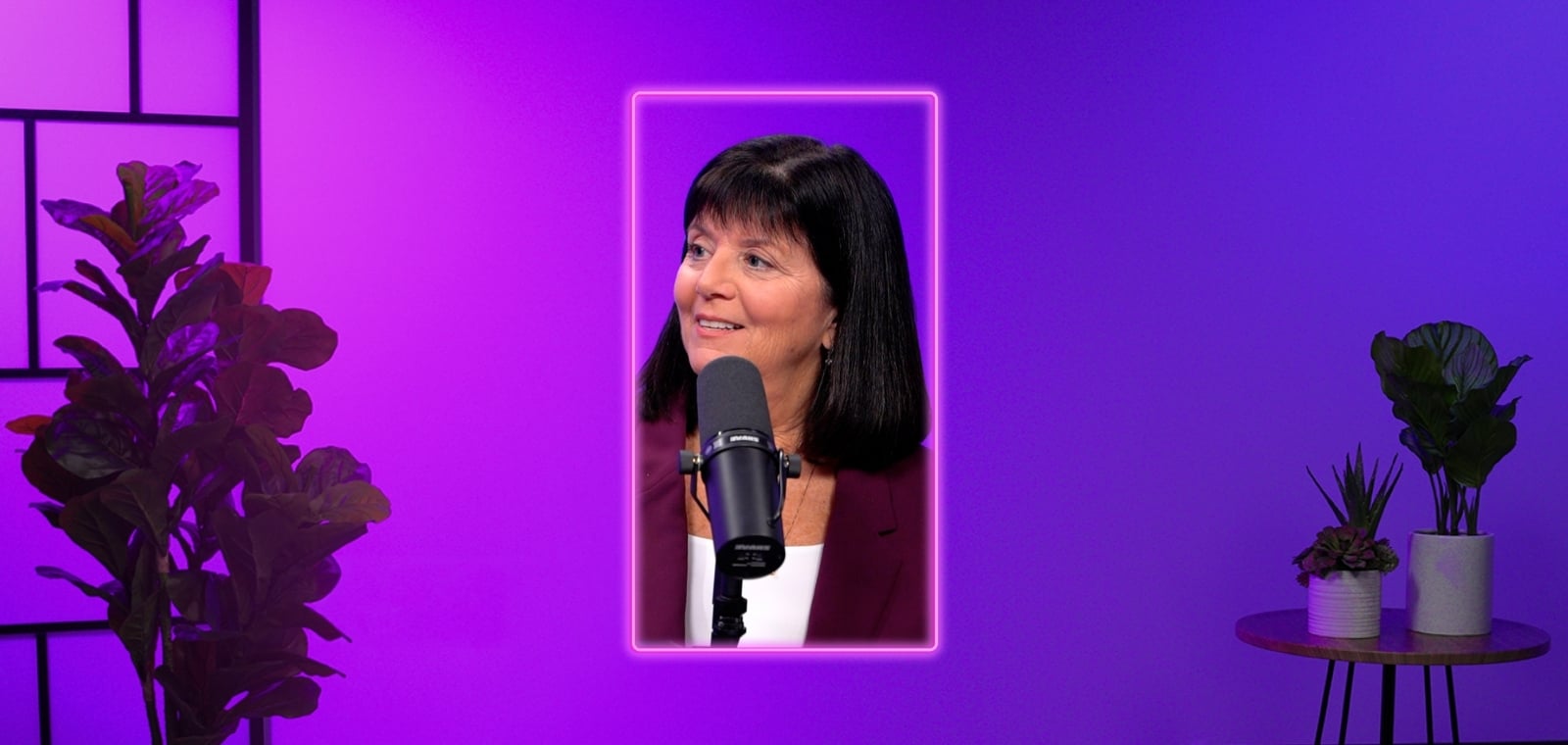
Ep. 57 | Beyond Compliance: How Main Line Health Is Transforming Care Through Language Access
What happens when language access moves from a compliance checkbox to a strategic priority? In part one of this two-part Elevate Care series, host Christin Stanford talks with Suzanne (Sue) Smith, System Director of Patient Experience at Main Line Health, about the evolving role of language services across a five-hospital system outside Philadelphia.
Sue walks through how her team reframed language access from a cost center function into an essential clinical tool, one that belongs alongside staff, medicine, and equipment as a core part of care delivery. She shares how Main Line Health doubled its device deployment, the operational and financial ripple effects that followed, and why quality, safety, and patient experience function as a three-legged stool that only stands when every leg holds.
The conversation also covers the human side of the equation: reduced staff burnout, stronger trust with patients who use American Sign Language, and fewer patients leaving without being seen. Sue makes the case that language access is not a cost center. It is a bridge for building relationships, supporting staff, and driving the kind of connected care that keeps patients coming back.
Timestamps
00:00 – Introduction to Language Access as a Strategic Priority
01:50 – Sue's Role Leading Patient Experience at Main Line Health
03:00 – From Compliance Checkbox to Shared Commitment
05:24 – Language Services as an Essential Care Tool
08:33 – Balancing Cost Conversations with Care Excellence
12:08 – How the Right Tools Reduce Staff Burnout
15:11 – Trust, Validation, and the Risk of Informal Interpreters
17:20 – Doubling Devices: A Main Line Health Deployment Story
21:07 – Connecting Language Access to Operational Metrics
24:58 – Language Access Beyond the Clinical Encounter
27:02 – A Final Word for Leaders Still on the Fence
About Suzanne Smith
Suzanne "Sue" Smith serves as System Director of Patient Experience at Main Line Health, where she oversees connected care across five hospitals and more than 150 physician practices outside Philadelphia. With over 25 years in healthcare, Sue leads a team spanning patient navigators, EDI ambassadors, spiritual care, and volunteers, all focused on making sure every patient feels seen and understood. Her work centers on building bridges between data and humanity, using language access as one of the clearest expressions of patient-centered care.
Transcript
00:00:00.000 — 00:01:51.880 · Speaker 1
Welcome to the Elevate Care podcast. The show where health care professionals, visionaries and thought leaders come together to explore the limitless possibilities of health care innovation. I'm Kristen Stanford. Your host for today's episode. This is part one of a special two part Elevate Care series, where we're joined by leaders from Mainline Health to talk about the evolving role of language access in health care.
In this conversation, Suzanne Smith, System Director of Patient Experience, shares how their team is thinking about language services, from strategy to operations to the financial impact behind it all. This series is jam packed with practical insights, real world examples, and honest conversations about what it takes to improve both patient experience and system performance through better language access.
As Mainline Health's system director of patient experience, Sue oversees a five hospital health system outside of Philadelphia. As Main Line Health's system director of patient experience, Sue oversees a five hospital health system outside of Philadelphia. Sue is a seasoned leader with over 25 years in health care, blending sharp communication, compassionate leadership, and a laser focus on equity.
From elevating facts to empowering volunteers, Sue makes sure every voice is heard in a way they are understood. At work, she builds bridges between data and humanity. So, Sue, tell us about your role there at Mainline Health. Absolutely. As the system.
00:01:51.880 — 00:02:57.630 · Speaker 2
Director of patient experience, my role is to support connected care across the system So that includes shaping how people feel when they choose mainline health. And in doing that, this experience begins with the first phone call and goes all the way through the last interaction of their health care journey or episode of care.
Our team consists of our patient, our navigators, our patient experience navigators, our Ed ambassadors, our spiritual care team members, and our volunteers. And they work collaboratively to support the patient experience across the continuum. And and I go back to what I have always said to the teams.
Although our job is not necessarily providing care, we are supporting those that do and that is providing safe, high quality care to the communities we serve in any fashion in which they need. So really, my job is is the heart of the shared commitment to provide quality care for those that come into our doors.
00:02:58.110 — 00:02:59.230 · Speaker 3
Love that.
00:02:59.270 — 00:03:18.110 · Speaker 1
Absolutely. So I'm curious then. Uh, many organizations started with language access. More for compliance. And when did you start to see that shift to become more of a strategic solution and a conscious decision by the organization?
00:03:18.110 — 00:03:50.550 · Speaker 2
So I'm not sure there was any one point in that decision to really move forward. But our work is a shared commitment, making every interaction feel a little more personal and a little more connected. So I think at the heart of all of this was the fact that we needed to move forward with the best tools that we could to ensure meaningful communication with our patients, our visitors and our staff.
So there was no one moment, aha moment. It was really something that we saw the need and we addressed the need.
00:03:50.590 — 00:03:59.940 · Speaker 1
Do you think that most organizations Still underestimate the power of a strong language access program.
00:03:59.980 — 00:04:33.860 · Speaker 2
Absolutely. I think that organizations look at language services, a cost center, and it really should be looked at as an essential tool, one that you would use as as any resource to providing care. So language services is as important as your staff, your medicine, your tools, your or all of that matters to the patient.
And when they feel that there is a connection across the the across the continuum of care, they see that as a as this is the place I want to receive care.
00:04:33.900 — 00:04:54.340 · Speaker 1
Mhm. Yes. And I would imagine some of those communities also being very tight knit in your local area. So there's an opportunity for the outstanding care delivery, but also to increase the folks that come in your doors. Right, because of word of mouth or things like that?
00:04:54.380 — 00:05:31.220 · Speaker 2
Absolutely. Um, over the last few years, there's been a number of of initiatives focused on expanding language service. Um, we found that, um, by having those language service resources available, our care was more efficient. Our staff were more satisfied in the fact that they could communicate with their patients.
They weren't running from floor to floor or building to building to to get a device or waiting for an ASL interpreter to come. Um, they were there, the tools were there, and it helped us improve how we worked with our patients and how we worked with each other.
00:05:31.260 — 00:05:56.890 · Speaker 1
I think that's such a powerful call out, Sue, because we think about language access, kind of starting with that compliance moment and certainly being there for patients, which is so important. But what you're speaking to illuminates the, um, improvements that can happen. Operational Efficiency.
Return on investment. Revenue generating for? For the health system. Right?
00:05:56.930 — 00:07:03.890 · Speaker 2
Absolutely. Um, language is not just a regulatory compliance. It really should be something that we are all focused on every day. So patients receive satisfaction surveys. And in those surveys there's a number of questions that talk about communication. Um, did I receive communication in a way I understood.
Did I? Was I listened to and heard. All of that is impacted by the ability to be able to understand what someone is saying to you if you, um, have a hearing deficit, if English is not your primary language, if you have a family member in the room that wants to be part of your care team in English is not their primary language.
Those are all things that we have to take into consideration when we're looking at what are the best tools for us and language is the. Is the number one thing. From the moment somebody calls to the moment they leave. You're using language as a source of communication as a tool. We need to make sure we have it available.
00:07:03.930 — 00:07:24.530 · Speaker 1
Mhm. So Sue, I'm curious as you looked to expand your language access program, really make it meaningful and robust. What kind of internal conversations needed to happen there at Mainline Health to get others on board with this strategic priority?
00:07:24.570 — 00:08:32.760 · Speaker 2
That isn't a great question. So in the five hospital, 150 plus physician practices within mainline, we saw that our community continued to grow more diversity, and we needed to remain centered on meeting the patient and family where they are in that moment. And if that meant that we needed to change tracks to ensure that we had at each of our locations what our patients and families needed, then that's what we needed to do.
So we needed to make sure that communication was never a barrier. It was just part of the care we delivered. And so that was the behind the scenes of how do we do it better? How do we do it safer? How do we do it with better quality. So quality, safety and experience remain the three legged stool. We want to make sure that all of those are available to our patients.
And when any one of those legs of the stool falls, it all falls. So again, the conversations really were around how do we keep the patients the center of what we do?
00:08:32.800 — 00:08:59.000 · Speaker 1
Hmm. And so I'm curious, how were you able to balance that wonderful call to action and the deep desire to deliver care to that excellence with what, I'm sure, our internal conversations of cost savings measures and maybe other equally important priorities. But, you know, bringing those two things to a unified path forward.
00:08:59.320 — 00:10:16.190 · Speaker 2
Absolutely. You're going to have people in the room that say, oh my gosh, language service is a huge cost. How are we going to budget for this? Where is it going to come from? How are we going to do this for to sustain this through the future? Those should not be the first things we talk about. The first thing we talk about behind the scenes should be how do we do it better?
And who is our best partner? So there's a lot of people out there that do this, that provide this service, and they all are wonderful. I would encourage each organization to choose like we did, find the best partner that's going to work with you and really understand what your community layout is, who's part of the community.
How can we address that need? Do we have the tools that you that your community needs? Language services very individualized in each hospital, regardless if they're only three miles apart. They have their own need. Yes. And making sure that you address their individual needs instead of saying, this is what we're going to do as a system.
That's what matters. So it should never be about a cost center. It should really be about the care.
00:10:16.230 — 00:11:01.910 · Speaker 1
Mhm. I love that you say that. Um I think that's something that we also see from our seat as well. Just this push pull sometimes with our, our customers, the, the folks that are delivering the care a you know, passionate call to action for it to be the best care, high quality care, care that meets the needs of the patients paired with what is understandably some, you know, budgetary constraints or funding or other things like that.
And, you know, I couldn't agree more. Language access is so important, so valuable. And we're really trying to help folks understand, you know, these are not two exclusive statements. It's not either or. There can be an and in that.
00:11:01.950 — 00:12:12.300 · Speaker 2
I would agree with hospitals becoming busier and busier because let's face it, our communities are changing and health systems are struggling. So we have higher volumes. And a tool that we need is being able to communicate. It improves efficiency. Like you were saying, how do we become more efficient?
We become more efficient when the tools that we need are at our fingertips. We become more satisfied. When our providers, clinicians are our essential support teams can walk into a room and know that they can communicate with the person that they're there to serve. Um, it decreases burnout. When someone says, gosh, I did not do my best work today because I couldn't communicate efficiently with my patient.
I couldn't communicate with meaning. I couldn't comfort them at a time because I didn't have the right words. All of that is is part of what we do. And I always say, at the end of the day, I need to lay my head on my pillow and say, I made a difference somewhere today. And being able to communicate is a big thing.
00:12:12.420 — 00:12:55.780 · Speaker 1
Absolutely. Absolutely. Bring up a great point of the caregiver's journey. And certainly, again, their their own personal call to action to deliver amazing care within what I would imagine to be a very over packed. Not enough bandwidth. Absolutely patience. Not enough time. Uh, other reporting engines.
I need to log this. This patient encounter. I've got a lot of paperwork and documentation, and so maybe talk to us about how you know, the right language access structure helps achieve all of those different things for an incredibly busy physician or nurse on the floor.
00:12:55.820 — 00:14:24.970 · Speaker 2
So I'm going to share my own personal story. So 20 years ago, language service was something that it was like, ah, do we have does somebody have a translator? Can we get a phone to come in here? Do we have speaker phones that we can? It was this process. It was this whole how do we get this? And a lot of time was invested in that for a tool that was just.
Okay. Now, um, the devices we use at Mainline Health, there Am devices, and it is literally you turn on the device and the very first icon is your language service. So you as a nurse, as a doctor, as a therapist, as an essential support person. You hit that one button and it just says. What language do you need when you hit that?
It is a matter of five seconds or less, not 25 minutes to see if we have an iPad or a quote unquote speakerphone that we could use and, and forbid it if we start going back to. Does anyone speak Spanish? Can we find Mary, the nurse on for West to come and talk to the patient? We need to show the patient that we're providing coordinated care.
And in order to do that, we need to make sure that we have the tools that are efficient and available all at the same time.
00:14:25.010 — 00:14:39.890 · Speaker 1
Yes, yes. And to your point on that example, there's likely some maybe risk or unintended negative impact if you just pulled a staff member to correct. To translate. Right?
00:14:39.930 — 00:15:35.610 · Speaker 2
Absolutely. Again, this goes back to quality and safety. Quality and safety are key. We know that patient marries sister June is speaks the same language. But unless I speak that language as well and I'm in the room trying to provide care, do I know that June is providing the the absolute accurate information?
No. Our job is to ensure that people understand the care that they're receiving, and that they can make educated decisions about where to go from there. If we can't validate it, we need to make sure we can't trust it. And it's not that we don't trust a family member, another staff member, but our job is to ensure that patients have a complete understanding of the care they're receiving.
And we continue to be and we continue to be a trusted partner.
00:15:35.650 — 00:16:00.010 · Speaker 1
Mhm. Mhm. Absolutely. The trust part for these patients who are in these communities who maybe they are. You know to your point English is not their first language. Maybe already some barriers to trust perhaps because we aren't communicating immediately off the bat. And so how important this interpretation service is to building that trust.
00:16:00.050 — 00:16:18.050 · Speaker 2
Think about years ago when ASL was not part of what you could get on a device, on an iPad or a computer or a laptop. Um, a patient would come in and we would have to say, uh, we have called our ASL company. They should be here within 2 to 3 hours.
00:16:18.090 — 00:16:18.530 · Speaker 1
Mhm.
00:16:18.570 — 00:16:23.410 · Speaker 2
What does that say to the patient. You aren't ready to care for me.
00:16:23.450 — 00:16:24.530 · Speaker 1
Mhm. Right.
00:16:24.570 — 00:17:14.800 · Speaker 2
Is this the place that I want to partner with for my care. Now when patients come in and sign language is their primary form of communication. We will again ask, are you okay with the device? Can we show you the device? And if you still choose to have an in-person interpreter, we will manage that for you. But I will say nine times out of ten you see this?
Their face light up because there's somebody on the screen that is signing to them that they are safe and they are well cared for. And then the session begins and we can see that the patient has a complete understanding, just that, just the look when somebody says, you hear me? Yeah. And you're listening to me and I trust you.
00:17:14.839 — 00:17:19.520 · Speaker 1
Yes. And I can see it in your face the way that you talk about it, too.
00:17:19.560 — 00:18:15.320 · Speaker 2
It's exciting. We recently had our AMM deployment within the last year, and we joke about this, but we decided to go from one number of devices and we doubled that. And in doing that, we increase the amount of units we used or minutes we used for language service not but and on the back end we also doubled the amount of clear, concise communications that we had with our patients, our staff members.
When our AMN partners came in, our team came in and they said, no, no, this is your device for just your half of the unit. Oh my gosh. One of our nurses was like, can I hug you? Because this is like Christmas. I'm not sure our partners knew how to take that.
00:18:15.320 — 00:18:15.840 · Speaker 1
But.
00:18:15.840 — 00:18:18.000 · Speaker 2
They kind of rolled with it and they're like.
00:18:18.240 — 00:18:18.880 · Speaker 1
Wow.
00:18:18.960 — 00:18:43.550 · Speaker 2
We see these devices every day. So if this is Christmas to you, let me show you what else we can bring you. Yeah. So it it really has not just built the trust from our patients, but from our staff. Our staff are now saying that this is one less thing I have to worry about. In the course of a day when my responsibilities continue to grow.
00:18:43.590 — 00:18:54.270 · Speaker 1
Yes, yes. And especially if you think about the shortage of staff in some of those key areas. Nursing shortage, physician shortage, therapy shortage.
00:18:54.310 — 00:19:06.870 · Speaker 2
You got it. You name it. We are all feeling the pinch, and we are committed to continuing to close the the pinch gap. We want to make sure that what people need we are going to provide.
00:19:06.910 — 00:19:38.270 · Speaker 1
Mhm mhm. I love the example that you shared about the ASL patient and that story going back to the financial benefits, the the return on investment, the ROI for a health system. I would imagine the using that example, the ASL community very tight knit community. absolutely in your area so that one patient has a positive experience.
They're at Mainline Health. They're probably going to tell everyone else to go to Mainline Health, right?
00:19:38.310 — 00:19:55.350 · Speaker 2
Not probably. It is a must. It is a oh my gosh, I got there. They were ready for me. I had my interpreter. I was in and out as if I was somebody that did not have a language need. So that's a win.
00:19:55.350 — 00:19:55.910 · Speaker 1
Mhm.
00:19:56.310 — 00:20:14.710 · Speaker 2
That shouldn't be a an angst when somebody walks in the door. That should be an expectation. Being able to communicate in a way that works for you should not be a let's cross our fingers and hope it happens. It should be a gosh I know this is going to happen because I'm at Mainline Health.
00:20:14.710 — 00:20:31.380 · Speaker 1
Mhm mhm. And because those patients are coming to see you for that high quality care. Uh you're, you're drawing some of the, the population to your organization different than them going to a competitor? Absolutely right.
00:20:31.420 — 00:21:09.500 · Speaker 2
Absolutely. And I will be honest. Yes, we are competitors. Healthcare is a business, but we share best practices. We are only as good as what we are willing to share with those in our in our health care communities. So if I'm at a conference, if I'm at a meeting and someone says, what are you using? I am more than happy to share that information because great products sometimes are hard to find.
And knowing that we have improved our communication on our satisfaction surveys or our employee engagement surveys, why not share it?
00:21:09.540 — 00:21:10.460 · Speaker 1
Absolutely.
00:21:10.500 — 00:21:15.900 · Speaker 2
We are all partners in the same thing, which is making sure our communities are healthy and safe.
00:21:15.940 — 00:21:36.940 · Speaker 1
Mhm. And so Sue, I'm curious, have you seen language access influence more operational metrics through mainline health. Um, things like, uh, ed visits, readmissions, uh h cap scores, just other positive outcomes from language access.
00:21:36.940 — 00:21:37.980 · Speaker 3
I think so.
00:21:38.020 — 00:22:35.570 · Speaker 2
I mean, at the heart of our work is a shared commitment to make every interaction feel a little more human. So in those areas in which you said readmissions left without being seen or left without being treated. Um, efficiencies, it all starts with the ability to communicate. So we're committed to sending out surveys.
And in those surveys we really focus on things like, uh, communication with nurses, communication with doctors, staff worked together to care for me. Um, did I understand what was being said? Was I communicated with in a way that I understood. So all of that becomes more efficient when you have the tools to be able to provide for the patients that come through our doors and the people that support them.
It it is. We say it's patient centered, but we also have to remember at the heart of those efficiencies, as you as you've said, comes the people that support them.
00:22:35.610 — 00:23:27.330 · Speaker 1
Yes. Yes, absolutely. See what you're referencing on, for example, the Ed and sharing with us earlier how you've scoped out Main Line Health, brought in more equipment, really made sure it was more efficient all the way across. Another health system that we partner with had shared recently that from doing a similar exercise in ensuring that every Ed Bay had its own machine, they have drastically reduced the patients who leave without being seen.
So they're able to not only give the care that they intended to care for initially, but these patients aren't leaving frustrated because of a long wait time, because a lack of communication they're actually being seen in the health systems able to execute very similar to what you're sharing.
00:23:27.330 — 00:24:56.680 · Speaker 2
I would agree. Our communities continue to grow more diverse, and our commitment has to remain centered on meeting the patients and families where they are. We need to make sure that we have a commitment to having them seen and heard, and people don't feel that they leave. Um, they may be mid treatment and because they don't understand or they think that their uh, their encounter is complete, they walk out.
So our commitment is to remove that barrier. And the devices really have helped us do that. So we have devices at what we call the front of the house. So our registrars have devices. Our security officers, officers have access to devices. Our emergency department ambassadors have access to devices. And then in the back of the house where we are providing care.
They also have devices at their fingertips to provide that care. We want to remove any barrier that will give a patient the they don't care about me, so I'm going to leave. Yeah. Let's remove that one barrier to say to the patient if you choose to leave without being seen, which again, we discourage, please don't do it because we can't communicate with you.
Um, so we have had a lot in the last year, a lot of positive reinforcement that these devices have made a difference in so many aspects of the care we provide.
00:24:56.720 — 00:25:03.640 · Speaker 1
Um, and a really strategic and purposeful deployment from first moment of walking in.
00:25:03.640 — 00:25:04.160 · Speaker 2
Correct.
00:25:04.160 — 00:25:18.240 · Speaker 1
To discharge not only the clinical encounter, which I think many folks think, you know, that is where language access happens, which it does, but there's all these other ancillary front and back parts of that too. Right.
00:25:18.280 — 00:25:30.680 · Speaker 2
Agreed. So think about it. When you walk into a hospital. The first person you see is the person at the desk to say, hi, I'm Sue Smith, and I'm going up to visit my daughter on four West.
00:25:30.720 — 00:25:31.280 · Speaker 1
Mhm.
00:25:31.840 — 00:26:36.510 · Speaker 2
I need to be able to communicate that in order to get a visitor pass or. Hi, I'm Sue Smith and I'm here for my lab work. Where do I go? Our front desk team members need to be able to communicate efficiently. And then as I'm as I'm walking down the hall, I need to ensure that the signage is in a way that I understand that the staff members that are walking me to my destination are able to communicate where we're going and why.
So although we've focused a lot on the Am devices, we've also used em to help us with some of our translation of signage that we need, or documents that are important to patients, discharge documents or patient bill of rights. Those types of things are equally as important to have available to our patients in a language they understand.
So again, it's communicating in a way that I understand. And that's not just having a device that's making sure that it's all of those ancillary pieces as well.
00:26:36.550 — 00:27:03.630 · Speaker 1
So Sue, it's been so great to chat with you today, and I'm so proud of all the good work that you've done there with Main Line Health and our partnership together. What would you say to leaders who are still seeing language access as just a cost center and not all the operational efficiencies, revenue generation, patient draw, all the other things that we've talked about today?
00:27:03.630 — 00:27:42.030 · Speaker 2
I would say, please take a moment and think about your family. Think about your friends. Think about your neighbors. Think about your old high school teacher. If you could not have the meaningful communications that you've had over the years with them, what would your opinion be? Yeah, so I don't view it as a cost center.
View it as a bridge for how I build a relationship with you. See it as a way to not just provide support to our patients, see it as a way to support, to provide support to your staff and to you.
00:27:42.070 — 00:27:44.190 · Speaker 1
Yes. Yes. Right.
00:27:44.270 — 00:27:55.830 · Speaker 2
As an executive leader, I would say the best thing you could give someone is the ability to be able to be seen and heard. And in doing that it's all about communication.
00:27:55.870 — 00:28:16.500 · Speaker 1
Mhm mhm. That's fantastic. And so wrapping up, if you could leave our listeners with one operational shift, one way to think about maximizing their impact on language access in their communities. What? What? One thing could you recommend?
00:28:16.780 — 00:28:18.980 · Speaker 2
Don't be afraid to use it.
00:28:20.180 — 00:28:40.220 · Speaker 2
So many people see it as a oh my gosh, I've got to roll this in and turn this on. And what if I get it wrong? What if I knock it against a window? What if I jump in? The water is fine. So what I would just say is don't be afraid to use every tool in your toolbox.
00:28:40.260 — 00:28:40.860 · Speaker 1
Mhm.
00:28:40.980 — 00:28:48.940 · Speaker 2
They're there for you to be more successful. And in that in your success is our patient satisfaction.
00:28:48.980 — 00:28:51.260 · Speaker 1
Yes, yes. Well said.