

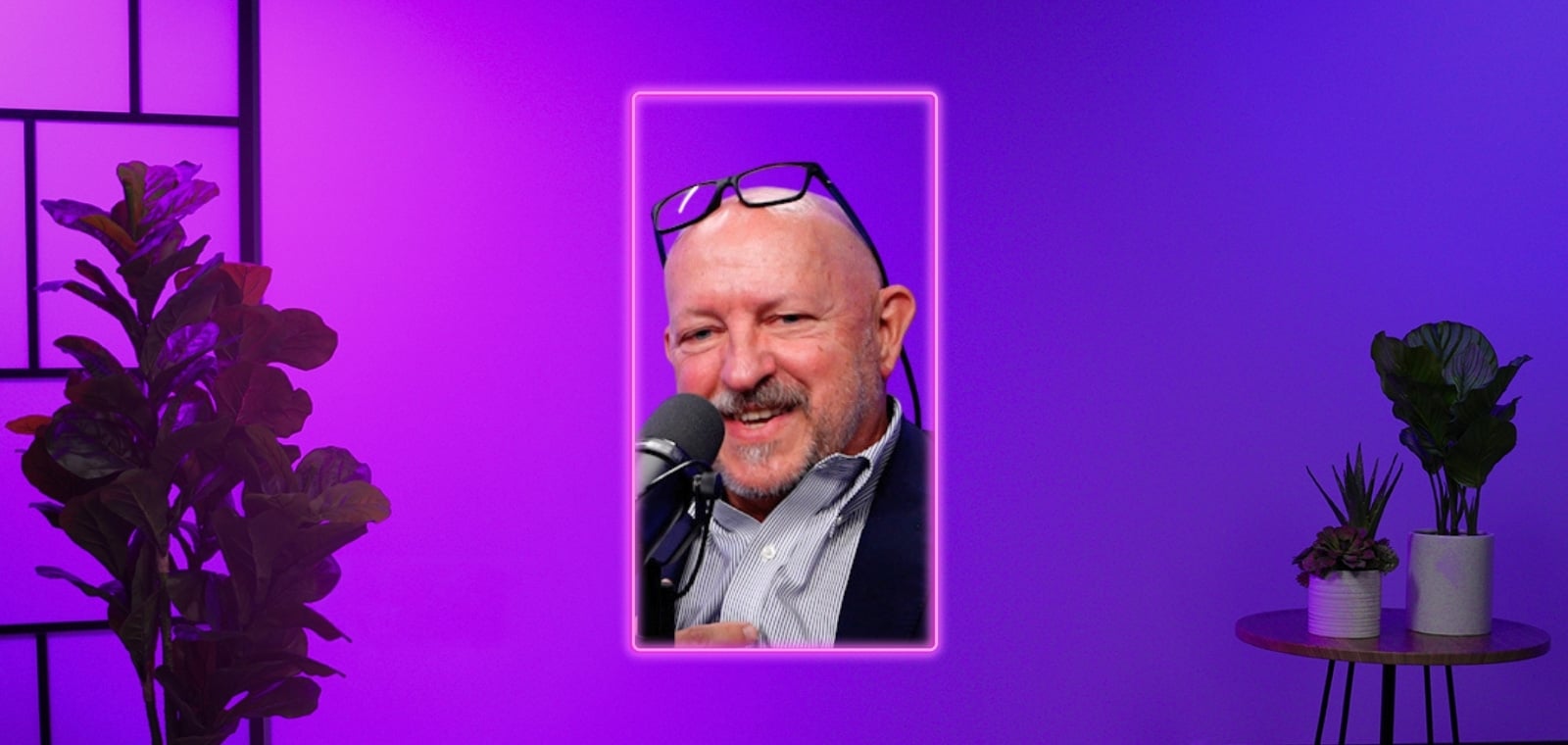
Ep. 56 | How SJRMC Is Developing Tomorrow’s Nurse Leaders with Alan Vierling
Nursing leadership has never carried more weight, or more complexity. In this episode of Elevate Care, host Steven Endsley sits down with Alan Vierling, Chief Nurse Executive at San Juan Regional Medical Center, to talk about what it actually takes to build a sustainable pipeline of nurse leaders in an environment defined by workforce shortages, generational shifts, and rising expectations for both quality and financial performance.
Alan brings a career's worth of perspective to the conversation, from his start as an operating room technician to leadership roles across Ohio, Texas, Michigan, and Alaska before landing at San Juan Regional. He shares candid insights on identifying leadership potential, the role of emotional intelligence in a text-driven generation, and why San Juan Regional has built structured programs like book clubs, skip-level meetings, and simulation-based coaching to develop leaders earlier in their careers.
The discussion also covers practical retention strategies, including sabbaticals for veteran managers, dedicated overnight support to reduce burnout, and New Mexico's unique childcare and tuition benefits designed to remove barriers for nursing staff. Alan closes with a grounded take on artificial intelligence in healthcare: a tool for sharper decision-making, not a replacement for the human connection that defines nursing.
Timestamps
00:00 – Introduction to Nursing Leadership Challenges
01:07 – Inside San Juan Regional Medical Center's Rural Trauma Network
05:26 – Alan Vierling's Path from OR Technician to Chief Nurse Executive
10:50 – Structured and Informal Leadership Development Tactics
13:55 – Identifying Leadership Potential and Emotional Intelligence
16:20 – Coaching the Next Generation Through Technology and Communication
20:18 – Barriers Facing Nurse Managers Today
25:07 – New Mexico's Childcare and Tuition Benefits for Nursing Staff
28:09 – Retention Strategies: Sabbaticals and Overnight Support
33:09 – Leading Through Crisis: Lessons from Covid-19
37:13 – Artificial Intelligence, Data, and the Future of Nursing
42:12 – Final Advice for Emerging Healthcare Leaders
About Alan Vierling
Alan Vierling is the Chief Nurse Executive at San Juan Regional Medical Center, a 200-bed, level three trauma facility serving the Four Corners region of New Mexico. With over 45 years in healthcare, Alan's career spans operational leadership roles in Ohio, Texas, Michigan, and Alaska, including serving as a hospital president and chief operating officer. His experience includes leading a hospital through a high-stakes Joint Commission survey, running a system-wide operational transformation initiative, and overseeing the Alaska Native Medical Center's trauma, clinic, and travel operations across the state. Alan holds a doctorate and is known for building leadership development programs centered on coaching, emotional intelligence, and workforce retention.
Transcript
00:00:00:00 - 00:00:19:21
Welcome to Elevate Care. I'm your host, Steven Endsley. Today we're joined by Alan Vierling, Chief Nurse Executive at San Juan Regional Medical Center, for our conversation about why developing nursing leaders has become a strategic imperative for health care organizations as health systems navigate workforce transitions, growing operational complexity, evolving technologies, and increasing demands for quality and financial performance.
00:00:20:03 - 00:00:51:02
The role of nursing leadership continues to expand. Yet many organizations are facing leadership pipeline challenges, succession concerns, and increasing pressure on frontline leaders. In this episode, we'll explore how healthcare organizations can build leadership depth, strengthen readiness at every level or at every level, and develop future nurse leaders and create the conditions for long term organizational resilience. We'll also discuss the growing importance of data fluency, leadership, agility, and how CNAs can physician leadership development as a key driver of workforce stability and patient outcomes.
00:00:51:04 - 00:01:07:14
Alan, thanks for joining us here today. Thank you sir. Appreciate it. Yeah. You came from the sunny state of New Mexico. Correct? I did 300 days of Blue sky. Oh, and I got a chance to view the facility there that you have, wanted to see if you might be able to talk a little bit more about the facility that you work at.
00:01:07:16 - 00:01:29:00
And also a little bit about your role there. San Juan Regional Medical Center is over 100 years old. Founded by the community. It is a roughly 200 bed facility, a level three trauma serving the Four Corners region. So while the city of Farmington, where it's located, is relatively small, it's got about a 500,000 person service area that extends over several thousand miles.
00:01:29:04 - 00:01:57:21
And, we serve a lot of the Navajo reservation, the Utes, a lot of rural Four Corners region. So, but, we provide, you know, neurosurgery and we provide, interventional cardiology, you know, a great trauma program and a number of other things really focused on pediatrics. So it's the referral center, you know, for location. And we have probably one of the more robust aeromedical services with two fixed wing aircraft and a rotor.
00:01:58:00 - 00:02:11:03
And these guys can be, you know, anywhere from 5 to 12 flights a day. Yeah. They are really busy. Yeah, I know you shared that with us when we were there. That was really interesting. You actually even have a business I think in that. Correct. Where you actually help support other health systems with that. We do. That's right.
00:02:11:04 - 00:02:13:10
We support a lot of the hospitals,
00:02:13:10 - 00:02:34:17
throughout the region with, you know, flights into us for some, but also from other hospitals to, Albuquerque, Santa Fe, Phoenix, Denver, we fly all over the southwest. And, it's it's a robust, business. It's a robust industry. But the the nature of it is so rural that that fixed wing aircraft is really important.
00:02:34:17 - 00:02:49:15
And of course, with 300 days of blue skies a year, you get a lot of opportunity to fly. Yeah, well, not only just to serve your community and those around you, but also just an opportunity as a rural health system looking for that revenue to try to generate. As you talk about the complexities, that's a big thing. Well, you know, rural health is struggling across the country.
00:02:49:15 - 00:03:08:19
So any opportunity we have to run a revenue generating business on a positive a positive margin, you know, we need to take that opportunity because that money always translates back into care. Yeah. And so it's important for us to optimize as much as we can. Yeah. Well that's the big thing is people again when you think about what we do, we're in the business of health care, which is the business of caring for people.
00:03:08:21 - 00:03:26:04
It's not necessarily a business like every other business. So there's a lot of unique nuances we have to work through, to make sure that we're balancing the business and that care model. So, yeah. Yeah, it's it's absolutely an imperative. It's one of the things that we have to talk a lot about nurse leaders with. We have to make sure they understand this is a business.
00:03:26:06 - 00:03:40:14
And, you know, we're not high tech but high touch. But it's a business at the end of the day. And you have to be able to who, you know, turn enough of a margin so that you can continue to invest in the community and invest in the things that you need, you know, to move forward with in a positive way.
00:03:40:17 - 00:03:47:07
Yeah. Well, I urge anyone to go to Farmington, New Mexico. It's a wonderful city. Had a great chance to see it, see it and join you all there.
00:03:47:07 - 00:03:54:14
Let's talk a little bit by roll that San Juan. So you're the chief nurse executive. So we talk about the business of caring, right? Your job is to manage the business of caring.
00:03:54:14 - 00:03:58:22
Talk to me more about what you do there. So the chief nurse executive probably is,
00:03:58:22 - 00:04:10:15
one of the most fun jobs I think anybody could ever have. It's. I mean, I really, you know, I love nursing was the second, second best job, second best thing I've ever done in my life. Besides being a dad and husband, a nursing is extraordinary.
00:04:10:15 - 00:04:22:10
So it's the CNAS role. San Juan Regional is really about safety and quality and care delivery and creating the strategic plan and the care paradigm. And,
00:04:22:10 - 00:04:34:12
what are we going to do to really enhance nursing and lead nursing in a different way? And in fact, what we're at now, our strategic vision is to lead New Mexico as the preeminent nursing organization in the state.
00:04:34:12 - 00:04:53:03
And we are on track to do that. We feel very positive about the path we're taking. But the Connie's role really is to to set that vision and then help develop and create great leadership pathways that allow us to make that vision become reality, you know, because it's always a vision until you do the work. Yeah. Right. Yeah.
00:04:53:03 - 00:05:08:19
And so we want to do the work and make it a reality when we go from vision reality. So that's the chief nurse's job. And I'm very fortunate to be there and work in a dynamic environment that has lots of opportunity, for success. Yeah. And I've got a chance to know you for some time now. And you have a very unique journey.
00:05:08:19 - 00:05:26:07
Your journey has been incredible to see you get to where you're at today and I think that's a big passion. You you're a natural leader. You can sense it and feel it when you're in your presence. And your willingness and wanting is to help support the future. Talk about your journey. How did you get to where you're at today and some of the things you've you've accomplished and been able to kind of work through?
00:05:26:12 - 00:05:43:06
Yeah, so it has been a journey for sure. So I started off as an operating room technician, trained on the job right out of high school. My first summer out of high school, I was actually planning azaylia's for a surgeon, and he asked me if I'd ever been to a doctor's office and I said, no, you know? And so that's how it started.
00:05:43:06 - 00:05:57:07
And then ultimately, I went back to nursing school, and from there, it's just been a progression of taking on opportunities. Yeah. You know, people would say, hey, do you want to do this or do you want to run that? Do you want to be the manager or do you want to be the director? And I kept saying yes.
00:05:57:07 - 00:06:22:02
And so I, I was an emergency room manager and or manager or director in pediatrics in psych inpatient now and eventually I landed about 11 years after I graduated from school. I landed as a vice president of surgical services at Carillion and had really some great mentors there that to this day are still important in my life. And then from there I became a, a manager of 40 rehab facilities, okay.
00:06:22:05 - 00:06:41:08
Which was different because it took me to spread me across a couple of states and multiple sites. And then I became a chief operating officer of a health care system in Ohio. And I went from there, decided I wanted to get a doctorate degree and really focus on some personal development. So I went and became a consultant and did it work for three years.
00:06:41:08 - 00:06:57:02
And then I ended up back at a hospital in Houston, Texas, as a consultant. Then they hired me to be the senior vice president of operational transformation. Yeah. Which gave me an opportunity to really look at a system wide approach to making things different and then doing some things. And we had great success there with,
00:06:57:02 - 00:07:11:13
some really novel things that change culture and, and change the dynamic of the hospital and turned it around and, and went from being, you know, a single digit patient satisfaction place to a, a place that was over 90 percentile patient satisfaction ratings for a magnet facility and whatnot.
00:07:11:15 - 00:07:26:03
Then from there, I got recruited to be a president. And so I was a president ultimately in Texas and then became a president of, a hospital and a 700 bed level one trauma center in Michigan. And went through Covid and went through a very, very difficult,
00:07:26:03 - 00:07:30:00
joint Commission survey. Ten immediate threat to life, 250 citations.
00:07:30:02 - 00:07:49:10
You know, about six weeks after I arrived. And so we had had to kind of come out of that not only operational struggle, but that reputational challenge that that created. And then I got my opportunity to work with unions for the first time, which was really a great learning experience for me, and worked with some great people and then went from there to the Alaska Native.
00:07:49:12 - 00:08:13:17
Health Consortium. And I ran the level two trauma center for the Alaska Native Medical Center, the 400 physicians clinic, the travel office. When you say we ran a travel office for hospital, what was that like? Well, we did 46,000 flights a year days. And so half of your patients come in from the rest of Alaska. Yeah. And I ran five hotels, which was new because when people come in from the bush, they come in from the rural areas.
00:08:13:17 - 00:08:27:07
You got to put em up in a hotel. Yeah. So it was my first time to have hotel experience. Interesting. So you got some hospitality, I really did. I mean, it was a very different thing to all of a sudden go from hospitals to hotels. It's like, oh my God, what do you do there? Well, you know, checking ins.
00:08:27:07 - 00:08:41:17
Big deal. Yeah. Right. So you fix those kind of things. And then we did the insurance product and 700 plus fuel clinics, which took me all over the state of Alaska from, you know, dead horse all the way up on the Arctic Ocean, all the way out to the Aleutian Islands, to Accutane and,
00:08:41:17 - 00:08:44:06
Adak and then all the places in between.
00:08:44:06 - 00:08:57:09
So I spent a lot of time in small planes landing and little clinics on gravel, gravel runways, and then taking a snow machine to get to the clinic, or taking a four Wheeler to get to the clinic to see the five people that work that day.
00:08:57:09 - 00:09:02:05
then, quite honestly, I was really I was at home, I'd finished my wife would only work three years in Alaska, right?
00:09:02:10 - 00:09:05:02
Two far away, 3000 miles from home.
00:09:05:02 - 00:09:18:03
So I was I was sitting home on a tractor and a good friend of mine who's the human resource officer at San Juan called me and said, hey, we've got this issue with about nursing and nursing needs transformation. Yeah. And,
00:09:18:03 - 00:09:20:01
I don't know anybody else that would take this on.
00:09:20:01 - 00:09:21:23
Would you do it? And so
00:09:21:23 - 00:09:36:20
got off my tractor and went and talked to my wife and said, Neal called and we had a talk about it. You know, it's where I am. Yeah. No, that's great. I mean, I think what I'm hearing is it's not a straight line. It is. Nothing is a straight line when it comes to leadership.
00:09:36:22 - 00:09:54:07
No, and it never will be. And that's one of the things that you have to really get the young leaders to figure out. Yeah. There's not this sequence of events. It's going to occur on your time frame. Yeah. It's very much like raising a child. Yeah. You know, your growth as a leader is really it's really going to be different.
00:09:54:07 - 00:10:15:03
There's going to be some moments of exceptional performance and exceptional outcomes that humble you and make you really proud to be standing amongst this crowd of people. And then there's going to be some moments where you're scratching your head thinking, what did I do? Yeah, and it's not always a straight line. Well, and relating to the from the parent mentality, no one gives you a book.
00:10:15:03 - 00:10:31:12
You never know. You know, you're you're just figuring it out and everything's a little bit different. So you have to figure out same, same concept. And that's the big thing about leadership I think as you alluded to, is being relatable and making sure that you have that ability to get to someone into their everyday life and finding a way to connect there.
00:10:31:14 - 00:10:50:04
Elaborating a little bit more on the not a straight line. What's your like? Are one of the things I know you're passionate about is setting young leaders up for success. And how do you see that happening today? And you know, how are you working with your young leaders to help support them into understanding that journey that they're going to be calling on?
00:10:50:08 - 00:11:10:11
Yeah. You know, as I've gotten older, I've understood more about the things I maybe should have done, could have done wish had happened with me. Yeah. And so try not to make those mistakes again. Yeah. So One of the things that I really am passionate about with young leaders in particular, is their growth and development, both in a structured and in a not structured way.
00:11:10:13 - 00:11:36:06
So let me give you a tactic that we use about three different tactics that are really important to us. One, we do a group book club. And the expectation is we all read the books. They're usually small, short, get them done in a month. But we meet together in a very protected space where we get to have an open ranging conversation about the key concepts, whether it's about hospitality or crucial conversations or it's about leadership, characteristics, you know, those kind of things.
00:11:36:06 - 00:11:54:12
And so the book clubs give us a sort of guided path. And then on the not so guided path, we do skip meetings. So a skip meeting is where the executive drops below their level of report, so I go past the vice president and I meet one on one, or in a group setting with all of the directors of nursing.
00:11:54:12 - 00:12:12:04
And then I skip further and I do a meeting with all of the managers or the managers one on one. Yeah. And I try and do this monthly so that they get lots of access to somebody who's probably made every mistake that you can imagine. Yeah. And, you know, every mistake we try and fail forward. Yeah. We don't want to do the same thing again.
00:12:12:09 - 00:12:27:00
So we do those sorts of things more and more today than we did. It was almost unheard of when I was growing up. I never saw the chief nurse. I didn't know who the chief. I mean, I knew who it was, but I didn't have a dialog. And I always called her Mrs.. Yeah. And we didn't really have a relationship.
00:12:27:00 - 00:12:53:19
And I think because of the generations that were with today, it's a much more collegial, much more authentic relationship where I am invested in their growth and development today in a way that just didn't happen until I became a vice president. Then I sort of all of a sudden I got access to all this great learning, and I got access to the coaches and and so one of the things we're changing relative to that is we're saying to people what if I got you a coach now very early on, what have I got you a coach early on.
00:12:53:19 - 00:13:22:12
That's right. So I get to optimize this experience. And so your impact is broadened earlier in your career. Yeah. Waiting until the very end when you're having fewer direct conversations, now you're talking to frontline staff, right. So how do we help you create that emotional intelligence and how do we help you work through the crucial conversations in a way that everybody feels respected and valued so that, you know, it's feedback that's honest and how do we help coach you through those moments?
00:13:22:12 - 00:13:46:18
Because that's really where it's scary from in the beginning, right, or doing those hard things. And so we've changed how we look at coaching. We've changed how we look at one on one skip meetings. We've changed how we look at, you know, learning and development and growth and putting people in real time, real time experiences. And then we also look differently today at how do we figure out who the young leaders are that that might be coming up.
00:13:46:18 - 00:13:48:01
Yeah. And how do we tap them.
00:13:48:01 - 00:13:55:02
I don't think there's a secret sauce, but how do you how do you think is the right way to figure something like that? When you find those people, like, how do you know if someone has it?
00:13:55:04 - 00:14:13:12
That is a real the way I the way I figure, we sort of look at leadership and say, who's got the potential to lead. Yeah. Is first off and be honest with you, it's desire. If somebody tells me I never want to do this, then I'm not going to waste my time because they've got something in their mind that says can't do it.
00:14:13:13 - 00:14:25:02
But if somebody says, you know, I'm curious, I want to be a unit champion. I want to be a preceptor. I want to be a charge nurse. I want to be an X, y, z. Yeah, that's the first step. The second step is
00:14:25:02 - 00:14:34:19
how calm are you? Yeah. Are you that person that has a sense of I'm just not going to let this get out of control, right.
00:14:34:21 - 00:14:49:13
We talk a lot about people diving off the deep end. Well, sometimes you dive off the deep end, but the pool has to have water in it. Yeah, right. Yeah. Gotta be able to swim in something. Yeah, you gotta be able to swim in it. And so we're looking for that person who's not diving off the deep end into an empty pool.
00:14:49:13 - 00:15:17:12
Yeah. You know, they're really raising the right questions. They're really asking the right sort of things. And we're really looking for the beginnings of high emotional intelligence. Yeah. You know, one of my, one of my former mentors told me frequently, you know, IQ gets you hired and EQ gets you fired. Yeah. And so we're looking for people who have that sort of innate ability to be respectful and kind and give feedback and in a, you know, constructive way.
00:15:17:14 - 00:15:38:21
That's helpful. Right. And so we see that amongst our preceptors, we see that amongst our unit managers, we see that amongst people. And we say really we need to we need to invest in them, help them grow. So it's sort of a there's not a checkbox like you said, there's certainly not one. But we do look for a the desire to do it and be the willingness to learn really humble, hungry and smart.
00:15:38:21 - 00:15:52:22
Right. Yeah. I want you to be hungry enough to want to do the job. I want you to be humble enough that you realize your could be better. And I want you to be smart enough to understand how to make a difference. Yeah, and I would I would you've touched on a couple times when I would double down on that emotional intelligence.
00:15:52:22 - 00:16:20:22
I think that's one of the things that it's hard to tell, especially nowadays if you have young leaders, because there's a lot of technology that allows people to communicate in a very different way. I'm curious if you look at the generations of some, you know, we've worked, you've worked through many generations of leadership. What do you see as the unique things in the upcoming generation of leadership, and some of the things that other health care leaders like yourself need to think about when they're trying to create those pipelines of the young leaders coming up,
00:16:20:22 - 00:16:28:00
the nursing staff, which is where we draw all of our leaders from, are trained on simulation.
00:16:28:00 - 00:16:46:05
They are trained, with their technology and their devices, and they've grown up in a world where face to face contact, making eye contact. Yeah, is not always comfortable. Yeah. And they're trained in a way. And they've grown up in a world where they can send a text message and walk away. Right. They don't have to sit and have that hard conversation power behind the keyboard.
00:16:46:05 - 00:17:05:07
Right? Right. Keyboard warriors. Yeah. Right. And that's who they are. And that's how they've been trained. So we have to think now about how do you put that away and teach them the softer skills. Yeah. And get them to grow in that fashion. So one of the things we do a lot, especially early on now, is we do simulations.
00:17:05:09 - 00:17:23:03
I had this conversation really frequently to say, okay, we have to have our conversation with the employee, why don't you come to my office and let's practice? Yeah, I'll be the employee and you do it, and then we'll talk about it. Or you go and you practice with the vice president or the director, whoever, and I'm going to watch or one of our, one of our H.R.
00:17:23:03 - 00:17:40:04
Coaches is going to watch. Yeah. And we'll give you feedback on how to do this differently, because being able to make eye contact keeps your voice in a nice level. Connect and be authentic. And that connections where we miss a bunch. Yeah. It also impacts patient care and patient satisfaction if we don't connect with our patients. So you got to be real.
00:17:40:06 - 00:17:57:16
And so we're working on that because that doesn't involve technology. But yet at the same time we have to use technology as a way to teach because that's how this current generation has grown up. I mean, one thing I would note is that the baby boomers and the millennials, and they've all adapted to technology. Yeah, it's not like we're not capable.
00:17:57:17 - 00:18:01:08
Right? It's that I think there's a balance
00:18:01:08 - 00:18:15:18
later on in your career understanding, okay, I'm going to use this technology for its benefits. But that's not as good as having a face to face conversation. Right. And we also, by the way, put some pretty strict rules around when are you going to text, when are you going to email and when are you going to call.
00:18:15:20 - 00:18:33:01
And for instance, if if you're doing your third email, we stop. Yeah, I make you pick up a phone. I won't answer it. We're now we're going to have a dialog. Yeah, right. First email I should back now. Your answer no no no no. It's time for us to talk. It'll be faster. In the same way we have expectations around texting.
00:18:33:03 - 00:18:47:22
If I want you to respond immediately, I'm going to call you on the phone. If I want you to respond eventually, then I'm going to text you. If I don't care when you respond to that's an email. Yeah. But we actually write that down, set it as a parameter and give that to all of our leaders and say, we're going to live by this.
00:18:47:22 - 00:19:06:07
Yeah. That way we're all clear about the importance of the phone call, and we're clear about the importance of the text. And we're clear about the importance of the email. So there's no miscommunication about expectations. And so that's another way we've kind of have tried to get technology to our benefit, but yet set standards and expectations for everybody.
00:19:06:07 - 00:19:23:18
Yeah. Well one of the things I think I heard in there too, when you just talk about that feature leader or just leaders in general, is you got to be uncomfortable. You're going to get put in a lot of uncomfortable positions when you're a leader. And if you don't go into that level of discomfort and actually take it head on and just think you can avoid it with a text or something,
00:19:23:18 - 00:19:25:20
it's going to definitely stunt your growth as a leader.
00:19:25:22 - 00:19:45:00
You know, you, you have to sit down and have to have a conversation. Yeah. And there's a point in time in every relationship. It doesn't matter if it's at home or at work when you have to have a hard dialog. Yeah. And it's a lot easier to do that when it's based off of trust. Yeah, but I'm never going to trust you until you and I sit and have a lot of conversations face to face.
00:19:45:02 - 00:20:00:17
Yeah, I don't trust anybody on the other end of the line. On the other hand, no text messages because I haven't met him yet. Right, right. And so that's a large part of what we do. And it's one of our leadership tendencies. We're going to be trustworthy and we're going to be trustworthy all the time. But that requires we invest in the relationship.
00:20:00:19 - 00:20:18:12
And that's a dialog face to face. Yeah. Well, when we look at so we've talked a little bit about setting our future leaders up for success. What are the barriers you see right now? What are the things that are holding us in not just necessarily in your organization, but in health care in whole? What are the barriers you see right now that hold us, that kind of hold it back?
00:20:18:12 - 00:20:38:03
And what recommendations do you think we can make to be better to help enable them as well? You know, if I was going to look at nursing leadership in particular, a couple of barriers immediate, the span of control is extraordinary. Yeah, 24 hours a day. Yeah. They are seven days a week. They are oftentimes over 60, 90, 100 people.
00:20:38:05 - 00:21:03:15
And so that span is incredible. Yeah. And then if you get past the number of people that are taking care of, look at what they're responsible for safety, quality, engagement, finance, physician satisfaction, recruiting, marketing in some cases clinical excellence, they have to be on the edge for evidence based practice. We give them such a large job that it's almost overwhelming.
00:21:03:15 - 00:21:21:09
Yeah. And so that and it's daunting. And then when you look at their pay comparatively, this is one of the most important issues for us in health care. As leaders, we have to figure out I can make more money staying at the bedside today, and we're going to shift of overtime and still work fewer hours, right, than a nurse manager start to right.
00:21:21:11 - 00:21:37:01
And by the way, that's predictable. Yeah, I know where I'm going to be for this next 40 hours or 48 hours. But that nurse manager, they may have already worked 50 or 60, and they get to call off on a shift on a Saturday. And now they are they have to figure out how to solve it. Yeah. So there's no break.
00:21:37:03 - 00:22:01:18
And then if you look at our age group of people that are trying to be in the middle of this mix, what do they do when they're starting families? Yeah. And they're experiencing life. And so at the very time when we want them to be the busiest, they have all these other obligations. So one of the barriers for us right now is to figure out how to really bring that into a reasonable lifestyle, because that's the difference between a boomer born in 1960 versus somebody born in 2001.
00:22:01:18 - 00:22:19:20
It's a big difference, right? I grew up in this environment where, you know, we wanted to live to work. I'm happy working 50 hours. It means I'm a good guy. Right. Versus I'm going to work to live. And it's a big shift. So we as leaders have to figure out how do you do that.
00:22:19:20 - 00:22:45:00
So how do you give them time. How do you give them balance. How do you allow them time off from work in these 24 hour day jobs? How do you give them the opportunity to get mentored at a high level with well experienced individuals? Because that's very valuable to them. And then how do you reward them in a fashion that's not just necessarily pay, but how do you reward them in a fashion that really shows them they're important?
00:22:45:02 - 00:22:45:11
00:22:45:11 - 00:23:13:09
Because, you know, these are this is a whole population that really grew up with a lot of pats on the back and a lot of awards and appropriately so, perhaps. But what's today different? So how do I continue on to get the money for that. So. Well, the badge of acceptance we talked about it when we were, you know, earlier of a lot of people look for that social media like, hey, look at my mom and dad just posted how proud they are of me because I've got this award that my company just acknowledged for me and instant gratification.
00:23:13:09 - 00:23:29:12
Right? Yeah. I can immediately send out to the world what I've just accomplished or just achieved. Can I get immediate feedback? Yeah, this like or dislike thing, right? Yeah I don't I don't I can't tell you what work I feel I've never gotten to like and I've never gotten a dislike I don't know what something. Right. Yeah I don't what is that about?
00:23:29:14 - 00:23:48:21
But today, you know, it's a thing. Yeah. And so how do we get there and how do we work through that? But we have to be as leaders, especially senior leaders, we have to be really sensitive to who we're working with, because there's going to be a point in time when I need to look up and understand from the structure that I'm laying on,
00:23:48:21 - 00:23:51:07
and the person in charge knows what they're doing.
00:23:51:07 - 00:24:09:13
Yeah. So it's more than just a systemic thing. It's more than just a professional thing. This is a personal journey. It's a personal mission that I want to create, that generation of leaders that when I'm laying horizontal right every day, I walk in. That's a great day. The day I roll in is not. Yeah, well, not only on that stretcher.
00:24:09:13 - 00:24:11:07
I want to be able to look up and go,
00:24:11:07 - 00:24:28:20
I trust that nurse. Yeah, I trust that manager. I trust that director, I trust that chief nurse. I trust that they've done their job and I've helped them learn how to do it so that I'm going to come out of here. Fine. Yeah. And thinking of going back a little bit to the barrier two you mentioned, because you even started at the show, the second best thing is nursing.
00:24:28:20 - 00:24:37:16
And number one was being a father and a husband. And I think a lot of people are that way, myself included. A lot of people that I know that work with me and for me as well, have that same mentality.
00:24:37:16 - 00:24:51:17
New Mexico has some unique things for that kind of help you out there. Like, do you want to share a little bit more about some of the things I know you all are working on to help, at least because I think that's that's really where a lot of the younger generation is, is, you know, they maybe didn't see Mom and Dad because they were, you know, at the office all the time or,
00:24:51:18 - 00:25:07:01
you know, and, and they did not want to be in that. Like, you know, I don't want to be my son in my or my daughter not to know who I am. But what are some of the unique things I know you've been working on at ten one specifically, and I'm telling New Mexico has one thing nobody else in the nation has is a pure win free childcare.
00:25:07:03 - 00:25:07:23
Yeah.
00:25:07:23 - 00:25:28:15
You crazy? You come to New Mexico, your childcare is free. Yeah. Which means that that income. Mom and dad, one of them was working to drop into paying for the kids doesn't necessarily have. Now you work and you get that money. Yeah, because childcare is free. And so this is unique to New Mexico. It is, in my mind, one of the most progressive things I've ever seen.
00:25:28:20 - 00:25:36:08
And it is absolutely a win. Yeah. And so we are starting to see people recover from come back, come to us and, and and be treated,
00:25:36:08 - 00:25:48:18
in a great way with that. So that's part of one of the San Juan things we're putting out there, but also the reimbursement today around health care professionals at the, that the New Mexico state government just signed, you know, $300,000 for physicians.
00:25:48:18 - 00:26:09:17
Yeah. Which is that's your medical school. Yeah, it'll get paid for. You stay. And there's similar activity on the nursing side. And so for us, that's the other things that we're really doing is we're looking at how do we pay back your student loans. You know, we can do that. How do we on the front end give you money to go to school so that if childcare is paid for and we're helping you with tuition, look, yeah, this is a good thing.
00:26:09:21 - 00:26:25:02
They live in a whole new life where you live a whole new life, man. It it is not a bad thing. Yeah. You know, and then we're putting in programs today that look at not only how do we do that, but when you're a nursing student, how do we create a moment where you get health insurance. Yeah. Through us and a 401 K.
00:26:25:08 - 00:26:42:16
So how do we work that out. So we're we're going through the legal hurdles. We did that in Alaska. It was really successful. I would hire you as a full time nursing assistant. You went to school 28 hours a week. You worked for me 12 and I paid you 40. So you were in school getting paid, and we were contributing a year for one k the whole nine yards.
00:26:42:16 - 00:27:04:19
And you worked for me for two years. By the end of that you're one year away from being vested and here's this whole pot of money that you're now going to get. Yeah. And so we're trying to look at, we're looking at the same thing in New Mexico to say how do we make that happen. So there's all sorts of strategies around being creative and thinking about the student as an individual person to say, hey, I got to I got to take away every barrier they feel.
00:27:04:21 - 00:27:25:15
Yeah, if childcare is a barrier, insurance is a barrier. A reasonable wage is through here. We're moving past all that. And so we're trying to make it as easy as possible for you to get into this profession. And it's a profession. And and I've now I've worked for 45 years. I am still waiting on the day when I leave that I didn't enjoy it.
00:27:25:15 - 00:27:37:19
Yeah. And I've yet to show up in the parking lot when I couldn't wait to get inside the building. That's probably one of the most important things about a leader. You got to go in and love what you do every single day, every day. And if you don't, then you really need to look at the mirror and say, why am I here?
00:27:37:19 - 00:27:54:17
Yeah, what am I doing? Yeah. And so I feel very fortunate that I'm in a place right now that really values nursing. And we value the opportunity to be successful. And we see a future that's really bright. Yeah. So thinking of that, that's that's your retention. That's why you come in every day and that's, you know because it's meaningful.
00:27:54:17 - 00:28:09:08
It's it's your chat, it's your passion, it's your calling. Not everybody operates that way. Which is okay. What what do you all what do you see as different areas to help retain those up and coming leaders? What are some of the things you, you, you seek to do or think you've been able to do in your past that aren't to be here today?
00:28:09:08 - 00:28:21:18
But what are some of the things you do to retain those up and coming leaders we know? So we really do think about some of the strategic things to make their life easier. One of the things that they asked me for, and I will tell you that I haven't done it yet because I got the request on Friday, but I thought it was brilliant.
00:28:21:20 - 00:28:39:04
Give me a phone. That's not my personal phone. Yeah. Crazy, right? Well, it's just it's like, where did this come from? And so one of my, one of my manager says, you know, Allen, my mom's got my phone number. My husband Scott at the daycare has at the school has it all the nurses have it. And so I'm not off.
00:28:39:08 - 00:28:58:02
Yeah. Because I also have on that phone my email and the how supervisors know my. So if you give me a phone that's mine and I don't give my personal number out, but I get my work number out at work now when I'm not the manager on call, I can turn it off. Yeah. And so they're asking for clear delineation.
00:28:58:06 - 00:29:14:12
They're asking for things like and this is one we will do. They are asking for more support at night because there's a control like we talked about is so large with people but it's so large with obligations but 24 over seven. And so that means that if there's a problem at 2:00 in the morning, they're getting calls. Yeah.
00:29:14:14 - 00:29:33:16
So if we provide management at night for them, that's not the house supervisor because they've got the entire platform to think about. Then that gives them yet more good sleep at night. And now they don't have to be there. And they don't have to get that phone call at 3 a.m.. And that allows them to get through and be rested.
00:29:33:16 - 00:29:57:12
And of course there's all sorts of science around how sleep works. So we're thinking about how do you then give, you know, better span of control by by stopping some of this and then all the other things we've talked about with, you know, coaching and mentoring and all those sorts of things. But then the most recent evolution of thought and we were there in Alaska, but we haven't thought about it yet at San Juan is when do you give me.
00:29:57:12 - 00:30:14:18
A break and give me the opportunity to take a sabbatical. So at year seven in Alaska, we were working on this with our physicians. It was a year three where we were giving them, you know, three weeks off at year three, and you could go to your five and you got five weeks off. And we didn't go back on that.
00:30:14:20 - 00:30:37:17
But we're thinking through that process right now for managers in particular and directors to say, all right, you've been here five years. Why don't we give you a month? Yeah. That's not your PTO. That allows you to go and learn a new skill, volunteer someplace you want to volunteer or do something that is in some way related to your career, but doesn't require you to make out schedules.
00:30:37:17 - 00:30:55:21
Do payroll right, and attend meetings with the chief nurse. Yeah, that's that's impactful. And so back then, we need to figure out how that's going to look and how that's going to work. And we need to figure out what's the right time for the finances. On it in my opinion, are a no brainer. If I give you four weeks off.
00:30:55:21 - 00:31:14:20
And so it's going to cost me what your salary for two weeks and you're four weeks and you're not going to be there to answer my phone calls. Yeah, but you're going to come back refreshed and you're going to say, hey, man, five more years, I get another month off. And if I want to go be a nurse in Australia or I want to go to Argentina, because I want to go work in a clinic in Argentina for a month.
00:31:14:22 - 00:31:33:14
Yeah. You know, so it's extraordinary. So it's been happening in academic environments for a long time to keep people fresh. But I think really nursing has to think about these sorts of things long term, because there's so many opportunities for these young, smart people to go elsewhere to be CRNAs and nurse practitioners and whatever else, midwives or whatever else it is, or go
00:31:33:14 - 00:31:53:02
work on the private side. Right, which is such a draw, you want good, highly qualified, talented nurses. So how do we do that to keep them around. And that's, so we're thinking as far out of the box as we can. And we've taken the stance that while money's an issue ultimately to start with as we brainstorm, don't consider that.
00:31:53:04 - 00:32:09:01
Let's consider instead the investment we would need to make to be successful and not the money we would need to spend. Yeah. Well, and you think about, I mean, do you even think about some of the young leaders now, you gave me some horror stories back to my day because I was in my own personal life. I've had the whole call.
00:32:09:03 - 00:32:22:06
And when you have the whole call overnight, you never sleep. You just. You don't. You never know if it's going to rain. You can't not pick it up. And so that is if you can find a way we talk about bringing on someone either in the house super. Someone who can at least help support that when you're on the overnight call.
00:32:22:06 - 00:32:24:05
That just makes life so much easier.
00:32:24:05 - 00:32:31:09
I didn't have kids at the time, but you know, anyone who has children and stuff, that's probably very difficult because it's like, oh, I gotta go. Gotta go to the hospital because I have to take care of this.
00:32:31:09 - 00:32:37:15
Some of the other things that I think about, though, are you have young leaders who just had like, they might have been two years in their profession in the Covid hit.
00:32:37:15 - 00:32:56:14
Right. And you're like, I don't want to do this. Like what? What are some of the things when you think about those horror stories, the potential, you know, horror stories, quote unquote, that that people have in their mind, like, what might you kind of tell them like, hey, don't, don't, you know, don't look at those things necessarily as, as the constant in every day.
00:32:56:19 - 00:33:09:13
Like, how would you how would you coach them on supporting them in, in their future to make sure they understand that there's, there's, there's light at the end of the tunnel? Yeah. One of the one of the things that we really stay away from in my world is the use of the word crisis.
00:33:09:13 - 00:33:11:17
Okay. I'm not I'm not a fan of the word.
00:33:11:22 - 00:33:30:06
Yeah, because when it's when you tell me you're having a crisis, well, it's usually we didn't plan well or we didn't think about consequences, or we didn't optimize what we've got available to us. And so we ended up in a state that we shouldn't be in. Yeah. Wasn't a crisis, though. It was something we created. Right. Because we just weren't good enough.
00:33:30:06 - 00:33:51:03
So we think a lot today about going forward and going ahead and when right when people go through those rough spots. So Covid was terrible. We talk about what was terrible about Covid and then what can we solve? And we break it down into bite sized pieces. Okay. And there is no problem that cannot be solved if you can get it down to small enough bites.
00:33:51:04 - 00:34:11:21
Yeah. So during Covid, you know, what was the emotional thing that we went through? What? We had a lot of death. Yeah. Right. That was that's the hard thing. But it was really made hard by the fact that we were not letting families in to the hospital. Also very hard. Yeah. So when I was in Michigan, we solved this during Covid by having we're the first hospital in the country to do it.
00:34:11:23 - 00:34:29:05
We figured out how to have families visited the bedside, and we did it early on when nobody else was doing it. Yeah. We had resources and we put it available, but it changed so much about how our nurses perceived everything. Yeah. Well, and I think one of the things that nurses are generally caregivers at heart, there's a reason why they they are doing that.
00:34:29:05 - 00:34:46:14
And when you see the things you saw during Covid, which is unnatural, it it can take a toll, especially on people who have genuinely good hearts like they really want to do the right thing. And that can take a difficult be very difficult. So probably lost some of those, you know, probably, you know, that caused some loss in that upcoming leadership pipeline potentially.
00:34:46:14 - 00:34:58:20
But obviously those who did make it through are that much stronger and should be able to manage and handle pretty effectively 100%. I think if you if you go through any of those situations, you come out the other side
00:34:58:20 - 00:35:05:00
with a set of skills you didn't have before. Yeah. And one of the advantage we have having gone through Covid is that now we know.
00:35:05:02 - 00:35:20:08
Yeah. Right now we know. We know what worked, what didn't work. We know the strategies to keep our staff engaged. We need the strategies to keep our leadership teams engaged. And again, it goes back to the same things that are happening today about you get. The support you need is somebody authentically caring about you. I tell everybody when.
00:35:20:10 - 00:35:24:04
So I mean all the nurses, I mean all the nurses when they start.
00:35:24:04 - 00:35:34:00
And the first thing I had this conversation with is, do you know what a chief nurse does? And nobody in the room knows what a nurse does. So then I have to break it down. That's what you got a managers to boss, right? And you got a director who they report to you.
00:35:34:00 - 00:35:55:05
You got a vice president. So I tell them, you know, I'm your great, great grand boss. Yeah. Okay. And so I want you to have that in mind for just a minute, because what my job now is to make sure that you're safe. I want you safe emotionally. I want you safe physically. Yeah. I want you to have the materials you need to provide at work without struggle or strain or stress.
00:35:55:07 - 00:36:08:13
That's my job. And then there's all the strategy and finance, all the other sorts of things I do. But really, for you as a nurse, my job is to take care of you. And as a great, great grand boss because you want to make that connection to your grandparents, right? Yeah. Who do you like the most? Right to be a mom and dad.
00:36:08:13 - 00:36:28:09
But yeah. Better going to grandma's house. Yeah, right. And so we want that connection of real, authentic care. And with Covid, those were the things that worked. Correct. It didn't work sitting in your office. It only worked when you went out onto the units and you met the people on the staff, and you engaged in the same things they were engaging in.
00:36:28:11 - 00:36:34:06
And so now we know. Yeah, now we've learned a lot. And so I would say to young leaders today,
00:36:34:06 - 00:36:49:11
those things were hard, but we survived and we grew and we got better. And look at how much more successful we are today in teaching and growing and retaining. If we had not had the Covid experience, I don't know that we would have got it.
00:36:49:15 - 00:37:13:19
Yeah. So it's and that's I think the other side of this is you can always look and find what's wrong. It's better to find what's right. Right. And figure out how you can grow from it and get better. Yeah. No that's great. I think that's great. Words for all those up and comers. When you think about what it is they're facing and trying to get to, I want to pivot to one more thing, one more topic before we close out, which is AI and data.
00:37:13:21 - 00:37:24:13
So I know many people could spend hours talking about AI, and data, but in a nutshell, how would you, you know, kind of
00:37:24:13 - 00:37:36:03
believe or What do you see AI and or the data component of the industry, how it will impact your future leaders? You know, for sure in nursing, it's going to change a number of things, many of them for the positive.
00:37:36:03 - 00:37:57:19
Right? So I think the the thing we see is the early alerts that your patients deteriorating, that's a wonderful thing. The medication barcode administration and things and how that's going to evolve into the pharmacy world where we will hear immediately that we have, you know, drugs that don't work well together or we've not incorporated something, you know, make us safer.
00:37:57:23 - 00:38:10:01
Yeah. Those kind of things are going to be important. I think it'll change the scope of nursing. But I do think on the AI side in particular, we have to let nurse managers, nurse leaders know that AI really doesn't mean that your CFO can take
00:38:10:01 - 00:38:13:20
hours away from you, right? You still have to take care of the patient.
00:38:13:20 - 00:38:28:17
I don't care how good the AI is, I've still got to take care of the patient, so I'm not giving up my hours. But the other things around data, it's going to give us so much. So you have to figure out how to really leverage AI to enhance your abilities with data. So how do you go from as you've seen the pyramid, right.
00:38:28:17 - 00:38:46:22
It's data to information to knowledge to wisdom. And so how do we get there quicker. And AI can help us get there quicker. Yeah. But we still have to teach the nurses how to use the data. So how do you tie, for instance, your staffing to a financial metric around quality. But how do you tie quality to finance.
00:38:46:22 - 00:38:48:19
And how do you tie
00:38:48:19 - 00:39:05:08
your happys and your qualities and all these other things that we achieve. What does that look like? What are the early indicators that you're about to have one. And how does AI help us get there. Yeah. Right. So it can identify issues earlier for us. And so that doesn't take away from our need to be critical thinkers.
00:39:05:10 - 00:39:16:13
And we have to continue to be critical thinkers. One of the most interesting, vexing things we've run into is the concerns and complaints that I get from our our nurse managers and directors about resumes.
00:39:16:13 - 00:39:25:07
If every resume is a high resume. Yeah, right. And so paper looks good. Now that look everybody looks good. Like I'm like I'd hire that person right.
00:39:25:07 - 00:39:30:14
They walk in the door and then when you get them in front of you and you're doing the interview, you're going
00:39:30:14 - 00:39:47:04
that doesn't match the resume. Yeah, I'm not getting anything out of this. And so what we're having a AI is really driven, this notion for us that we have to change our interviewing skills. And so we've talked about who gets trained to interview and analyze interview questions.
00:39:47:06 - 00:40:05:02
And when you ask that question in a room yep. No hands go up. Yeah. And so we're focused now on our leadership team. In fact tomorrow I'll teach this when we get back to Farmington we're going to talk about we're talking interviews. Here are the interview questions. And what's the answer mean. Because I can answer the question you give me.
00:40:05:06 - 00:40:24:11
I can ask the question. You give me the answer. But what does it mean? Right. And so so I was doing a lot of things for us, but it doesn't mean we don't get a critically think. It doesn't mean our jobs aren't going to go away. We're running a very high touch business. Yeah, right. And one of the first, by the way, this is a new thing that we have seen with young nurses in particular.
00:40:24:13 - 00:40:28:16
We have to physically we have to tell them now I want you to go into the room and physically touch the patient.
00:40:28:16 - 00:40:33:06
When you do report, I want you to go in and put your hand on the patient,
00:40:33:06 - 00:40:41:22
not my glove. Yeah, if it's appropriate. They're not in isolation. I want you to hold the patient's hand. And when you put the hand on their shoulder and that physical touch thing.
00:40:41:22 - 00:41:02:01
Oh, that could. Yeah, it has changed. It'll change the way you view. You no longer if you view that person as a person now. Not that you don't normally, but it changes a lot. I can tell make a difference. And they view you differently. Yeah. And so you know it's I go make rounds and I frequently will sit next to the bed and hold a hand.
00:41:02:03 - 00:41:05:08
But if it's appropriate I'll say the patient you might have I sit next to on the bed
00:41:05:08 - 00:41:19:12
and you can see facial expressions change overnight. Yeah. Like almost instantly. It's like boom. And you care about me. Yeah. And the nurses come into the room with me because I don't do the conversations alone. Those nurses come into the room like, oh my gosh, he just sat down on the bed and he hold the patient's hand.
00:41:19:13 - 00:41:27:07
Yeah, it's it's incredibly powerful. So that's one of the things we have to do. And so we've, we've got a lot artificial intelligence never is going to take away that.
00:41:27:07 - 00:41:36:11
Right. It's a high tech business but it's high touch business. And I got to connect with you. And it's got to be authentic. Nobody cares what you know until they know that you care.
00:41:36:15 - 00:41:51:05
Yeah. And my first obligation with that patient is to let them know that I care. And I also let's let the nurses know that I care. You know, all these things, all these themes come back together. But that's really where it is. Yeah. I'll tell you, I'm not ready to look up when I'm horizontal to see a robot or something up there.
00:41:51:07 - 00:42:12:09
So. So while I embrace the AI vision, hopefully it's, it's limited to the automation of efficiency. Yeah. Bring me the meds on a cart down a hallway. Yeah. Yeah, that's exactly right. Well, as we look at wrapping up today, I want to just close out with one question. What advice would you give to those leaders that are up and coming today
00:42:12:11 - 00:42:15:18
knowing what you know today? Don't be afraid to fail.
00:42:15:18 - 00:42:19:02
You're going to fail. You're going to make mistakes.
00:42:19:02 - 00:42:33:16
That will not define you as a person. It will not define your career so long as you learn. Yeah. And so, so many times we are afraid to take that chance or that risk. We're afraid to be extraordinary because we're afraid to fail.
00:42:33:22 - 00:42:37:06
And if we fail, we're afraid of what people say about us. Yeah.
00:42:37:06 - 00:42:54:05
Lots of examples throughout history of failure that turned into something extraordinary ultimately. And so that's what I really would love everybody understand is these roles are great. You can impact so many people over the course of your lifetime, people you don't even know. And it's so gratifying to do it.
00:42:54:07 - 00:42:57:06
But if you're afraid of making a mistake,
00:42:57:06 - 00:43:08:23
you're never going to be successful. I like to think of it the same way of if you if you don't know how to fail, you don't know how to succeed. That's correct. And I don't and I truly believe that that that is that is great. Parting words.
00:43:08:23 - 00:43:12:17Allen. Well, I want to I want to thank you so much for for being with us today.
00:43:12:17 - 00:43:31:08today's discussion was highlighted that developing nursing leaders is about much more than filling future leadership roles. It's about creating the leadership capacity. Organizations need to drive performance, support their workforce, and deliver exceptional patient care in an increasingly complex environment. Thank you again for joining us today and Elevate Care. I'm Steven Hensley. Thanks for listening.
00:43:31:14 - 00:43:52:15Thank you for joining us today on Elevate Care. If you found this episode valuable, please consider sharing it with a colleague and subscribing to our show on your favorite podcast platform. You can learn more about this episode in our show on our website at AMN Health care.com, and follow us on social media to stay updated on new episodes and the ever changing world of health care.