

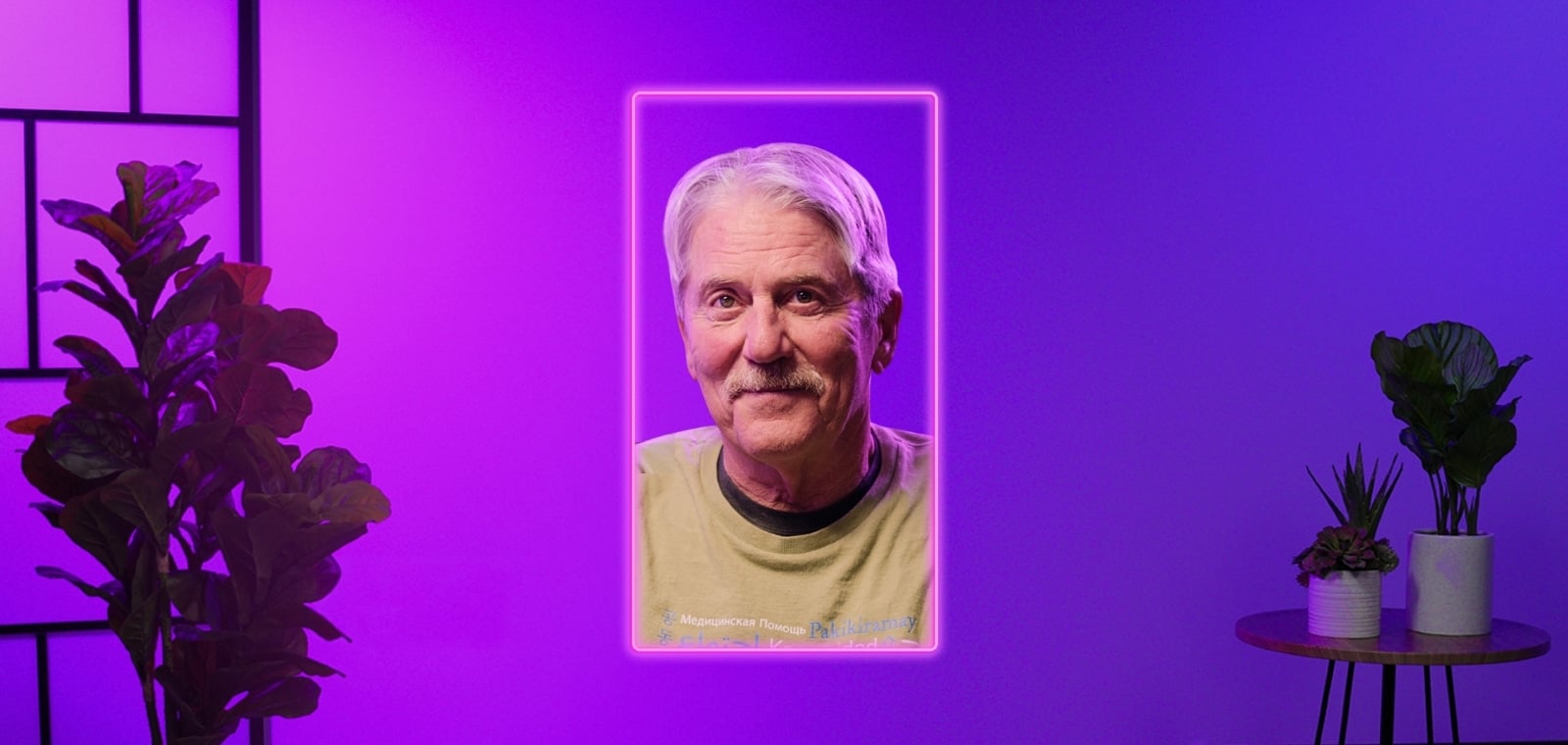
Ep. 55 | Bridging the Language Gap: Lessons from the Seattle/King County Clinic
In this episode of the Elevate Care On the Road podcast, host Christin Stanford closes out the two-part series with a conversation with Dr. Rick Arnold, one of the longest-serving medical directors at the Seattle/King County Clinic. Recorded on-site, this episode examines how one of the country's largest free clinics delivers care to thousands of patients over four days, and why interpretation services stand at the center of that effort.
Dr. Arnold walks through the scale of the clinic's operation, from orienting thousands of volunteers to coordinating everything from dental care to ultrasound exams. He speaks candidly about the barriers that make a clinic like this necessary in the first place, and how professional medical interpretation, supporting over 50 languages, transforms both the patient experience and the provider experience. Along the way, he shares a memorable story about a patient in active labor awaiting dental care and reflects on why this work reconnects him to the reasons he became a physician.
Timestamps
00:00 – Introduction to the Elevate Care On the Road Series
00:49 – Rick's Role and the Scale of the Clinic
02:11 – Why This Clinic Needs to Exist
03:06 – A Day at the Clinic: Volunteers, Services, and Numbers
04:20 – Connecting Patients to Long-Term Care
06:19 – Interpretation Services and Continuity of Care
06:56 – Challenges and Rewards for Clinicians
10:14 – A Patient Story: Labor, Language, and Dental Care
12:04 – Why Volunteers Keep Coming Back
14:08 – Supporting Over 50 Languages at the Clinic
15:56 – The Risks of Family Members as Interpreters
19:24 – The Value of Professional Medical Interpreters
21:00 – What Happens Without Language Access
22:35 – Language Access and Operational Efficiency
23:32 – Rick's Personal Connection to This Work
24:47 – A Moment That Reinforced the Mission
26:24 – The Future of Language Access in Health Care
27:59 – Advice for Health Systems Building Language Access Programs
About Rick Arnold
Rick Arnold, MD, serves as one of the medical directors at the Seattle/King County Clinic, a role he has held for over a decade, longer than any other medical director at the clinic. He oversees the medical section, which spans physical exams, immunizations, imaging, laboratory services, acupuncture, physical and occupational therapy, and wound care. Beyond direct patient care, Dr. Arnold focuses heavily on connecting patients to federally qualified health centers and community resources so that care continues well after the clinic closes for the year. His work centers on removing barriers, whether financial, linguistic, or cultural, that keep underserved populations from accessing quality health care.
Transcript
00:00:00.040 — 00:00:57.080 · Speaker 1
Today's conversation brings our two part Elevate Care on the road series to a close, and underscores just how impactful this model of care can be. When clinical leadership, volunteers, and community partners align around a shared mission. I am so inspired from innovative care delivery to the critical role of interpretation services and interdisciplinary teamwork.
Seattle King County Clinic offers a powerful example of how thoughtful collaboration can transform access to care for thousands of patients. Thank you for joining us for both parts of this special series. I'm Christin Stanford, a host of Elevate Care. Rick, could you describe your role at Seattle King County Clinic and what your teams are doing in the field?
00:00:57.600 — 00:01:53.180 · Speaker 2
That's a complicated Question. Christin. So I often think about what what is my role here. And and trying to describe it to people is a little bit difficult. I'm one of the medical directors for the clinic. I've been here the longest of any of the medical directors, so I, I'm sort of first among equals, I think.
But, uh, uh, my job is to orient the volunteers for the medical section when they, when they arrive here. A lot of our volunteers are brand new and they don't understand. This clinic is very complicated. And so we have to explain to them how things operate. I get in my miles every day and my 20,000 steps, and it's a busy, a long and busy day, and we try and make the clinic run as smoothly as possible.
00:01:53.540 — 00:02:01.440 · Speaker 1
And, Rick, from a provider's perspective, what makes this clinic so important for the patients that you serve here?
00:02:01.760 — 00:02:25.960 · Speaker 2
Well, that's a that's a gigantic question. And this this is this is a clinic that the people who work here wish we could put ourselves out of business. There is a tremendous gap in the vision for health and healthcare for
00:02:27.120 — 00:03:06.020 · Speaker 2
people in this country, depending on their economic situation or their immigration status or any number or their language, any number of barriers to care. Um, and unfortunately, this clinic is necessary because so many people have insurmountable barriers to care. So this And for this clinic unfortunately needs to exist because it is the only way many people can get their health care needs addressed.
00:03:06.300 — 00:03:20.860 · Speaker 1
And what is it like clinically when you are out there? Uh, how many patients? Uh, what kinds of services? The the numbers that you're seeing during the clinic. Yeah. Tell us about.
00:03:20.860 — 00:04:35.399 · Speaker 2
That. Yeah. So over the course of our clinic, we'll see about over 3000 individual patients who who may receive multiple services while they're here. Uh, but over the over the four days of the clinic, we will see over 3000 patients. And we have over 3000 volunteers trying to make this clinic run smoothly and efficiently for those patients.
I'm in charge of the medical section, which medical care can include anything from a physical exam to immunizations, to X-rays or ultrasound exams, to laboratory services, getting blood drawn and urine testing. And we have acupuncturists, we have physical therapists, we have occupational therapists.
We have people who do foot care and wound care here. Probably the most important thing we do here is that we try to connect people to health care services after the clinic closes down for the year. And so we have a
00:04:36.440 — 00:04:56.700 · Speaker 2
plethora of social workers, and we have community federally qualified health centers onsite here who try to connect people to services that they might need after the clinic is closed. Mhm. And that is is in my mind is the, the most important thing we do.
00:04:56.740 — 00:05:03.700 · Speaker 1
Mhm. Because you want those patients to continue getting high quality care after these four days.
00:05:03.740 — 00:05:40.899 · Speaker 2
Absolutely. Yeah. The problem with any free clinic is health care is needs to be a continuum. You need to if you institute a treatment plan you need to make sure that people are following through with that, that the treatment plan is actually working for that person. And when you're limited to a four day clinic, obviously you cannot do that very well.
And so to the extent that we can get people follow up, uh, to in the future, that is
00:05:41.980 — 00:05:43.100 · Speaker 2
all important.
00:05:43.140 — 00:05:59.890 · Speaker 1
Mhm. And I would imagine that with language services and the access for that hopefully that would create better continuity of care after the clinic, since in theory the interpretation would be a clear communication,
00:06:00.970 — 00:06:04.330 · Speaker 1
clearer discharge or next steps. Instructions.
00:06:04.530 — 00:06:20.250 · Speaker 2
Absolutely right. Absolutely, yes. Yeah. That is that is critical. And and about half of our patients require interpretive services. And so if, if in the absence of that we couldn't do our job.
00:06:20.330 — 00:06:21.850 · Speaker 1
Yeah that would be very challenging.
00:06:21.890 — 00:06:33.730 · Speaker 2
Absolutely. Yeah. That's like going to the vet. That's the veterinary lab. It's it's like you can't talk to if you couldn't talk to a patient. That's exactly what it would be like.
00:06:33.770 — 00:06:49.010 · Speaker 1
Mhm. Great analogy. So Rick talk to us about the challenges for your clinicians in the clinic. What would be some of the bigger challenges that they're facing as they're trying to deliver care in this condensed environment.
00:06:49.070 — 00:07:37.230 · Speaker 2
Yeah. Well, you know, there. There are some things about this situation. There are both positives and negatives. Some of the negatives would are some of the challenges rather would be that you don't speak the same language as the patient. You're not from the same culture as the patient. Um, you do not get to follow up with this patient and make sure that they are adhering to the treatment plan that they that they are indeed getting.
If they had a problem that they are indeed improving, that you don't need to modify the treatment plan going forward. But the positives of this are
00:07:38.430 — 00:09:18.350 · Speaker 2
and and it's frankly it's unique for medical professionals is they don't have to worry about this person's financial status, that they are going to do the best they can for the person in front of them, irregardless of that person's ability to pay. Um, and that is game changing for a medical provider. There's burnout is a big problem in in, in for health care providers.
And I think one of the big problems with one of the big contributors to burnout in, in health care is people doing things that are not in concordance with their values. And so filling out insurance form, fighting with, uh, a drug company or an insurance company to try and get somebody the care that they need.
Nobody wants to do that. And they don't have to do that here. We we will take care of any person who walks in the door. And we will we can tell our providers, you know, if your patient needs it. You know you spend is. We want you to see as many patients as you possibly can, but you spend as much time as you feel like you need with that individual patient.
Mhm. Um, and that's, that's why most people go into health care. And so to be able to do that is is really refreshing for a lot of people. So there are challenges and but then there are also some real rewarding things about being in this in this situation.
00:09:18.510 — 00:09:36.670 · Speaker 1
I bet that's so freeing for these very busy, overworked physicians, doctors, therapists, dentists, optometrists, just all the different caregivers out there. Uh, when the average patient visit these days in a regular setting is.
00:09:36.710 — 00:09:36.950 · Speaker 2
Yeah.
00:09:36.990 — 00:09:37.630 · Speaker 1
Ten minutes.
00:09:37.950 — 00:10:12.930 · Speaker 2
Yeah, exactly. Exactly. Yeah. It's I so I told you earlier that I do the orientation for the providers, and I always start out by telling them, this is going to be the best experience you've had in healthcare in many, many years. This it's it's really, really rewarding to be able to to actually your priority is entirely what the patient needs and do your damnedest to try and fulfill those needs.
And that's why we do this stuff, right?
00:10:13.050 — 00:10:34.810 · Speaker 1
That's beautiful. I love that. How about on the patient side? Do you have a specific story or example you could share with us today of the patient impact from the community, and maybe specifically as it relates to language services and that interpretation moment?
00:10:35.130 — 00:11:45.730 · Speaker 2
I believe it was two years ago. We had a patient come in for dental services, and I was asked to come and see her because she was a non-English speaker. She was here with a family member, and she was in active labor while she was trying to wait to get a dental dental services. And so it became this monumental, uh, negotiation with her about, can we get you in it?
We are going to do our best to get you in a dental chair and get your needs met. But then will you please go to the hospital, and we will give you a ride to the hospital? Oh my God. To to get this taken care of. And that one always stuck out for me because it was, uh, we had a language barrier. We had a cultural barrier.
We had family members that needed cajoled and smoothed out a little bit to try and get everything done, and it just went so well with the help of good interpretation.
00:11:45.770 — 00:11:51.890 · Speaker 1
I love that. My goodness. That's a scary moment. Probably.
00:11:51.930 — 00:11:59.930 · Speaker 2
It was scary for me because I don't normally do OBE and yeah, yeah, I haven't done that for a long time.
00:11:59.970 — 00:12:03.410 · Speaker 1
Yeah. You stepped into a different discipline didn't you.
00:12:04.930 — 00:12:22.330 · Speaker 1
So Rick you talked about it earlier, but could you maybe go a little bit deeper into what makes this experience at the clinic different for clinicians, other caregivers? You know, how do you how do you say that this is a unique experience for them.
00:12:22.890 — 00:12:29.570 · Speaker 2
Particularly in our current, uh, political and healthcare climate right now?
00:12:30.650 — 00:12:38.890 · Speaker 2
Um, I think people are searching for ways that they can meaningfully get give back to their community. And.
00:12:40.110 — 00:13:41.890 · Speaker 2
we've we've had an unprecedented demand for volunteer slots at this clinic. Uh, it's increased every year. Um, but this year was off the charts. And I think it's it's mostly because people feel so strongly that they want to give back. They want to serve people who are disadvantaged or underserved for one reason or another.
Um, and this gives them an opportunity to do it. Plus, it is an incredible community of people who come together for this clinic. It's just I it having done this now for ten years, uh, it's like old home week coming here and just seeing friends that I've made for over the years. Because once people start volunteering at this clinic.
They try and do it again and again and again because it it just feels so good.
00:13:41.930 — 00:14:02.530 · Speaker 1
Mhm. And probably taking it to the next level, we were visiting with a young lady Olivia and she mentioned how she started volunteering at the clinic first. And then after a few years she stepped in even further as the employee of the clinic because she just got her cup filled up so much from it. Yeah. That's beautiful.
00:14:02.570 — 00:14:07.050 · Speaker 2
Yeah, it really is. Yeah, it really is. Yeah. And I think a lot of people feel that way.
00:14:07.090 — 00:14:27.290 · Speaker 1
Mhm. I would imagine. Talk to us a little bit about how language access, uh impacts the ability to treat patients, give them high quality care. You know how many languages we're supporting right now at the clinic? Just speak to us about what that means for the clinic.
00:14:27.330 — 00:15:57.820 · Speaker 2
Yeah. So a big component in effective health care is building trust with the patient and that stems from good communication. And good communication is hard enough if you speak the same language, but if you don't speak the same language or you come from a different culture, it is that much more fraught.
So having good communication are good interpretive services is absolutely essential. And so at our clinic, I, I think the I've heard that last year we had 54 different languages spoken. Who knows how many we will have this year. I bet it'll be at least that many. And so we could not operate without good interpretive services.
And having a professional interpreter is we have a lot of volunteer interpreters here who are incredibly helpful. But. at times they do not understand the the medicine has its own language. And so you have to be able to understand that language as well as whatever your native language is and whatever you're trying to interpret, it just becomes that much more difficult.
And,
00:15:59.100 — 00:17:00.400 · Speaker 2
you know, oftentimes people will try and get by with a family member doing the interpretation. That doesn't work very well. It's family members are immediately compromised because they have a relationship with this person. And so they they cannot they cannot do the same. They may have another agenda besides just providing quality interpretation or cultural interpretation.
So it it's it's really important to have professional interpreters. So typically when we utilize our volunteer interpreters, if we get into a deep into the medicine, then we try and switch to a professional interpreter, uh, because it's, it's just so important that this be done well. So someone who has actually trained in doing medical interpretation is essential in those instances.
Um.
00:17:01.000 — 00:17:19.199 · Speaker 1
It's interesting you bring up the, the family interpreter. Uh, we definitely know that that happens to and I would imagine that maybe is compromising how forthright a patient might, could be, how how intimate they might be able to describe what's happening to them.
00:17:19.240 — 00:18:07.340 · Speaker 2
Yeah. And so one of the things that happens here at our clinic, you know, 54 different languages, some of those communities are fairly small in the Seattle area, and it may well be that everyone who is in that particular community that speaks that language, they all know everyone else. Yeah. So if if a family member or a friend is interpreting that the patient immediately has the could conceivably could have the fear that they are spreading their secrets to every other person they know in this area.
And and that's a real problem.
00:18:07.380 — 00:18:16.220 · Speaker 1
Yes. So yeah, it prevents that meeting of the moment of why they're here in the first place. Absolutely. The quality care that they're looking for.
00:18:16.260 — 00:18:18.260 · Speaker 2
Yeah. It's just another barrier.
00:18:18.300 — 00:18:36.160 · Speaker 1
Yeah. For people that and I would imagine as a family member translating depending on the situation, there's a lot of emotion. Fear. Oh yeah. You know, concern for my aging parent or my child. Yeah. So that probably adds an extra layer of.
00:18:36.200 — 00:18:59.640 · Speaker 2
Yeah. And there's a lot of cultures that the, uh, a patient has a serious diagnosis. The patient is the last one to know, because there are a lot of cultures where you try and protect the patient from that knowledge, because there's concern that that will increase their suffering.
00:18:59.680 — 00:19:02.840 · Speaker 1
Oh my goodness. So all kinds of layers to this.
00:19:02.880 — 00:19:04.760 · Speaker 2
That's totally, totally.
00:19:05.000 — 00:19:26.120 · Speaker 1
That's where the the value of the professional interpreter comes in. And I do think you're onto something about the medical expertise of an interpreter. Um, I would imagine there's many interpreters who could interpret in many different forums or settings, but medical interpretation just takes it to a whole nother level.
Right.
00:19:26.160 — 00:19:55.940 · Speaker 2
Yeah. And the other piece of that is that there's, uh. People's language skills varies markedly. And for to for someone to be a medically certified interpreter, they've got a lot of training. And at least we can have some confidence that they have a level of expertise in this language. So I, I, I remember a couple of years ago we had a volunteer,
00:19:56.980 — 00:20:23.620 · Speaker 2
uh, interpreter who was assisting me with a Spanish patient, and I speak a little bit of Spanish, and I knew that I think my Spanish was better than that interpreter. Spanish. And so we had to say, time out. We we need to rewind this. We need to get a a, uh, someone who can really interpret this and that. That was difficult.
00:20:23.660 — 00:20:55.720 · Speaker 1
Mhm. I bet. I bet. So powerful. I mean, even as someone who. English is my first language, I've been in some situations where there was a very serious medical moment and just feeling very overwhelmed. And, uh, you know, I'm probably not catching all of the guidance and next steps and medications and whatever.
So add the complexities of language barriers and now you're dealing with an impossible task.
00:20:55.760 — 00:20:56.280 · Speaker 2
Yeah.
00:20:56.320 — 00:20:56.880 · Speaker 1
Mhm.
00:20:57.160 — 00:20:57.560 · Speaker 2
It's really.
00:20:57.560 — 00:21:12.520 · Speaker 1
True. Similarly what challenges exist for the clinical clinic or any caregiver situation when language access isn't available. How do you possibly work through that to give quality care or can you.
00:21:12.520 — 00:21:13.640 · Speaker 2
I don't think you can.
00:21:13.680 — 00:21:14.280 · Speaker 1
Yeah.
00:21:14.360 — 00:21:50.460 · Speaker 2
You know if, if uh, uh, again it, it it becomes veterinary medicine under the best of circumstances. Many patients don't follow medical advice, but boy, you throw in misunderstandings related to language or culture. On top of that, the chances that somebody is going to follow through and fully understand what they've been advised to do or have a full understanding of their situation, it just gets terrible.
Mhm.
00:21:50.900 — 00:21:52.220 · Speaker 1
Very challenging.
00:21:52.460 — 00:21:53.380 · Speaker 2
Totally.
00:21:53.460 — 00:21:57.660 · Speaker 1
And prevents you from the whole purpose of what you're doing in the first place.
00:21:57.700 — 00:21:58.700 · Speaker 2
Yeah, exactly.
00:21:58.740 — 00:22:16.140 · Speaker 1
So Rick, how does language access impact the efficiency of the clinic. We've talked about the patient moment, the clinical moment. But if you're thinking about the scale of such a large enterprise in these four days, how does language access help operate at scale?
00:22:16.220 — 00:23:08.600 · Speaker 2
Yeah. Well, so when you're dealing across language differences. Things always go slower because you if you think about it, you immediately. You've you got three people involved in the conversation and and things have to. Get repeated because you need to have understanding. You need to have effective communication.
Um, but to be able to have, uh, particularly with the Am machines, to be able to get somebody on the line who, you know, is a quality interpreter, who understands medicine as well as the two languages that you're trying to bridge. Much more efficient. Right? Yeah. So it makes things possible, um.
00:23:09.080 — 00:23:15.200 · Speaker 1
Especially if half of the patients require a language. Yeah. I mean, that's significant.
00:23:15.240 — 00:23:17.960 · Speaker 2
Absolutely, absolutely. Yeah.
00:23:18.000 — 00:23:33.140 · Speaker 1
And, Rick, maybe on a personal level now. Um, how has this experience with the clinic shaped your vision for your care? And, uh, you know why you got into medicine in the first place? Maybe.
00:23:33.620 — 00:23:35.060 · Speaker 2
Well, so
00:23:36.140 — 00:24:24.000 · Speaker 2
being at the clinic takes me back to why I got into medicine in the first place. It allows me to do that effectively and actually walk away from an experience in medicine and feel good about what I've done. This is such a positive experience for a healthcare provider to be involved in this endeavor. Uh, it is absolutely the best.
And it just, I, I, I will work really hard this week, yet I will feel so good about it and I will have such a good time doing it. You know, I think we're all capable of working really hard if we're doing something that we really love. And
00:24:25.160 — 00:24:27.040 · Speaker 2
that's the way I feel about the clinic.
00:24:27.080 — 00:24:37.480 · Speaker 1
I love that. I feel like many of those things you're you're giving out, and it can almost be selfish because you're getting so much back.
00:24:37.520 — 00:24:40.520 · Speaker 2
You get so much back. Yes. Absolutely.
00:24:40.760 — 00:24:54.360 · Speaker 1
Can you share a moment as you reflect on the clinic and everything that you've done with it? Uh, something that reinforced why this work is so critical and so important.
00:24:55.160 — 00:25:00.880 · Speaker 2
The moments that really jump out for me at the clinic are
00:25:02.040 — 00:25:25.180 · Speaker 2
when that patient who hasn't been able to see for years gets their new set of glasses, and suddenly they can see or that person who had horrible dentition and they couldn't get a job because
00:25:26.260 — 00:25:30.740 · Speaker 2
they either looked like a drug addict or they
00:25:32.020 — 00:26:18.010 · Speaker 2
they're they've got a public facing employment opportunity and they don't get hired because their teeth are all pointed, different directions that they get their new dentures, their new flipper, and they look in the mirror and they see their smile for for the first time, and they look like a normal person again.
And, uh, just the the joy that they, uh, have on their face and the gratitude that they have for the efforts of everyone here that that's the words cannot describe how good that feels.
00:26:18.050 — 00:26:18.570 · Speaker 1
Mm.
00:26:19.610 — 00:26:42.930 · Speaker 1
You brought me to tears. Good. Then thinking about that. That was a beautiful, beautiful example. As health care evolves, it becomes more complex. There's so many drivers and and macro factors involved. How do you see language access continuing to be part of the health care journey going forward?
00:26:42.970 — 00:27:37.790 · Speaker 2
Well, it seems like it's getting better. You know, the the I, you know, just in the time we've partnered with Am, the quality of the interpretation and the technology has stepped up remarkably. And I think in the early days of this clinic, we relied much more on our volunteer interpreters. And to the extent that we're able to move away from that to professional interpreters.
That's a really good thing. That's that really improves our health care delivery. And I think it makes a better for a better patient experience and a better provider experience as well to to have confidence that what what you're saying to the patient actually is understood and taken in. Mhm.
00:27:37.910 — 00:27:39.790 · Speaker 1
Yeah. Comprehension.
00:27:39.830 — 00:27:41.070 · Speaker 2
Absolutely. Yeah.
00:27:41.310 — 00:28:00.830 · Speaker 1
Yeah. So this is a clinic setting. But what would you say to health care systems who are looking to um, build up a more robust language access program or take some of the best practices, maybe from the clinic to their own settings.
00:28:01.150 — 00:28:37.650 · Speaker 2
I think we have a horribly broken health care system. It is the best health care system in the world in many ways, but it is So inequitable delivered. It's embarrassing how so many people are deprived access to this system. So the thing I think we can learn from a clinic like this is number one. Then we can get a fuller appreciation of the need that exists out there and how.
00:28:39.690 — 00:29:25.990 · Speaker 2
Much more rewarding it is for providers and patients to actually remove those barriers. And so, you know, I think we anybody who's involved in almost anybody who's involved in health care is trying to remove barriers for patients. Obviously, a clinic like this does a tremendous job, and interpretive services is a big piece of that.
The fact that it is readily available. And we're going to make sure that this we are not going to cut corners on this. We are going to find somebody who actually speaks your language. And that's a game changer, right?
00:29:26.030 — 00:30:01.870 · Speaker 1
Yeah, totally. Well, Rick, it has been such a true pleasure to be here with you today. And I just want to say thank you for all the amazing work you've done over the decade that you've been supporting this clinic. We're so fortunate to be partners with you in this. And I had heard about this for so long. But being boots on the ground today and seeing it firsthand has been so impactful.
And I'm very grateful to have you in your community, but also as a partner with us. Thank you.
00:30:01.910 — 00:30:30.730 · Speaker 2
Yeah, you're so welcome. The you know, that works both ways. One of the great things about this clinic is the partnerships and the and the collaborations that occur in order to deliver the services that we provide here. Partnerships are are a good thing. Collaboration is a good thing. So yes. Yeah it works.
Everyone benefits. That's right. So I'm I'm thank you.
00:30:30.770 — 00:30:46.250 · Speaker 1
Thank you. Appreciate it. If you enjoyed these conversations be sure to subscribe. Share the episodes with your network, and stay tuned for more stories that showcase how care is being elevated across communities.