
Ep. 54 | Care Without Barriers: Inside Seattle King County Clinic's Mission to Serve the Underserved
In this episode of the Elevate Care podcast—and the first installment of the new series on the road—host Christin Stanford travels to Seattle, Washington to visit Seattle King County Clinic, a large-scale, free pop-up clinic that has delivered more than $33 million in health services over 11 years.
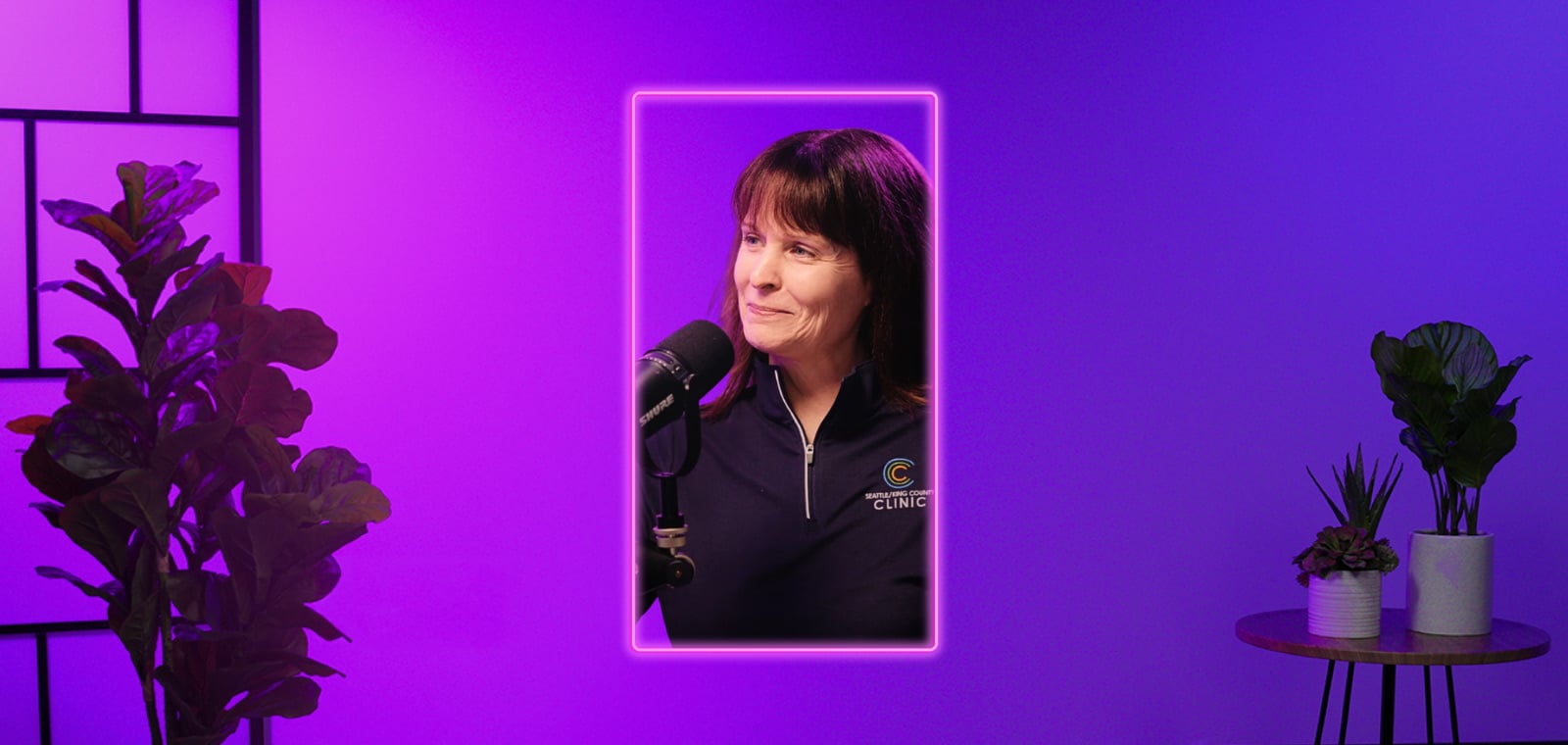
Christin sits down with Julia Colson, the clinic's founder and project executive, to unpack the vision, partnerships, and community impact behind this remarkable initiative. Julia shares how a single episode of 60 Minutes sparked the idea, how a "stone soup" model of collaboration keeps the clinic running, and why her ultimate goal is to see the clinic put out of business. She also speaks to the power of language access in delivering truly equitable care—including a moving story about a patient who found an interpreter for Quechua, an indigenous language of the Incan empire.
This is part one of a two-part series. Part two will feature medical director Rick Arnold and focus on the clinical delivery side of the clinic.
Timestamps
00:00 – Welcome and Series Introduction
00:28 – Introducing Julia Colson and Seattle King County Clinic
01:43 – What the Clinic Is and Who It Serves
02:32 – The Origin Story: From a 60 Minutes Episode to a Community Clinic
03:14 – What the Clinic Means to Patients and Volunteers
04:12 – Patient Demographics and the Biggest Care Needs
04:54 – Barriers to Care: Affordability, Language, and More
06:03 – Why Language Access Changes Everything for Clinicians and Patients
07:10 – A Powerful Story: Finding an Interpreter for Quechua
09:50 – The "Stone Soup" Model of Community Partnership
11:28 – Downstream Impact: What Happens After the Clinic Closes
12:45 – Advice for Communities Looking to Build Similar Models
13:44 – The Unexpected Goal: Putting the Clinic Out of Business
15:10 – What Julia Is Most Proud Of
16:06 – AMN Healthcare's Role as a Language Access Partner
17:38 – Preview of Part Two with Medical Director Rick Arnold
About Julia Colson
Julia Colson is the Founder and Project Executive of Seattle King County Clinic, operating under Seattle Center, a department of the City of Seattle. Without a background in healthcare, Julia built this community-driven initiative from the ground up—knocking on doors, forging partnerships, and uniting healthcare organizations, civic agencies, nonprofits, businesses, and volunteers around a shared mission. Over 11 years, the clinic has provided free dental, vision, and medical care to more than 36,000 patients, delivering over $33 million in services to underserved populations across the Seattle-King County region.
Transcript
00:00:00:05 - 00:00:28:00
Speaker 1
Welcome to the Elevate Care podcast. Today we're kicking off an exciting new series called Elevate Care on the road where we go directly to our guests to see health care in action. For this first stop, we travel to Seattle, Washington to visit Seattle King County Clinic. A remarkable example of what's possible when communities come together to expand access to care.
00:00:28:02 - 00:00:57:19
Speaker 1
There's so much to talk about today. So we're breaking this out into a two part series. This is part one of the series where we're going to discuss the vision, partnerships and community impact behind the clinic with Julia Colson, founder and project executive. Julia Colson works for Seattle Center, a department of the City of Seattle. Where she is the founder and project executive of Seattle King County Clinic.
00:00:57:20 - 00:01:32:20
Speaker 1
This community driven project unites health care organizations, civic agencies, nonprofits, businesses, and volunteers to produce an annual large scale, free health clinic over 11 years. The clinic has provided more than 33 million in dental, vision and medical services to over 36,000 people, helping to improve access to health care for underserved populations. I'm Kristen Stanford, one of your hosts.
00:01:32:22 - 00:01:34:16
Speaker 1
Julia, welcome to the show.
00:01:34:17 - 00:01:36:05
Speaker 2
Thank you so much for having me.
00:01:36:07 - 00:01:43:18
Speaker 1
So can you share with our listeners what Seattle King County Clinic is and the purpose behind it?
00:01:43:21 - 00:02:08:20
Speaker 2
Absolutely. So Seattle King County Clinic is a large scale pop up clinic. We exist for only four days each year. We believe that we're the largest of our kind in the United States. We provide free dental, vision, and medical care to people who are underserved. And during those four days, we bring together about 4000 clinical and non-clinical volunteers to care for about 3000 patients.
00:02:08:22 - 00:02:25:17
Speaker 2
Many of those patients, really struggle to access and afford care. The other purpose I think, of the clinic is to really highlight some of the challenges within our health care system so that we can work towards, more barrier free access to care in our communities.
00:02:25:19 - 00:02:32:15
Speaker 1
Yes. And so what inspired the creation of the clinic. What what drew you to this?
00:02:32:16 - 00:02:50:08
Speaker 2
We were working on an event here at Seattle Center. And the topic of global health came up, and I happened to see an episode of 60 minutes where they were doing a rural pop up health clinic. And so I went to the leadership of Seattle Center. And I said, I think we could do something like this here at Seattle Center.
00:02:50:08 - 00:03:07:23
Speaker 2
And they said, why don't you go start exploring and figure it out? And so I went out and started knocking on doors in the community did not come from a health care background, so obviously we needed some health care professionals and experts. And so really started to develop this community that created this clinic.
00:03:08:01 - 00:03:14:03
Speaker 1
What would you say that the clinic means to this community that you're serving.
00:03:14:04 - 00:03:33:23
Speaker 2
For patients who struggle to access and afford care? I think it definitely helps to meet a need for them. But one of the things we also hear from the patients is that they really feel welcomed and they feel listened to and they feel seen when they come here. And that's really, I think, a testament to what this community has developed.
00:03:34:01 - 00:03:58:08
Speaker 2
I think for the volunteers and for some of our partner organizations, it's an opportunity for them to give back to their community to come together and collaborate, maybe in ways that they don't get an opportunity to in their professional lives. And I think just having the entire community come together partners, volunteers, patients, all working together to help meet the needs of our neighbors is really empowering.
00:03:58:10 - 00:04:00:12
Speaker 1
It sounds like a win win win win win.
00:04:00:13 - 00:04:02:23
Speaker 2
I certainly hope so. I certainly hope so.
00:04:03:03 - 00:04:12:09
Speaker 1
That's great. Who are the patients that are coming to the clinic? What do you see as the biggest needs that they're seeking out in the clinic setting?
00:04:12:11 - 00:04:44:04
Speaker 2
Patients really come from a wide variety of backgrounds. We see, families. We see seniors, veterans, people who are low income immigrants and refugee is, again, just a real diversity of of patients. Traditionally, we have seen a high need for dental and vision care in our community, but recently we have seen a definite increase around, medical care, especially around some of the diagnostic services that patients struggle to access and afford in our community.
00:04:44:08 - 00:04:45:04
Speaker 2
00:04:45:06 - 00:04:54:09
Speaker 1
I can imagine what barriers to care. Do you find that the clinic patients see for regular access to care?
00:04:54:10 - 00:05:20:06
Speaker 2
Absolutely. I think probably affordability tops the list. Whether they have insurance or not. The cost of pursuing health care can be pretty steep, and especially in some of these economic times where they're already maybe struggling to put food on the table or paying rent affordable is definitely a top area, but so are language barriers, and that's one of the reasons we really appreciate partnering with Am and health care and language services is.
00:05:20:12 - 00:05:51:17
Speaker 2
About 50% of our patient population use a primary language other than English. And when that is when that language service is not available in other sources, it is a true barrier to care for many of the patients and and their accessibility to getting the care, to being understood, to being able to receive some of the diagnosis and the information from their health care providers that make them feel empowered and able to move forward and be healthy.
00:05:51:19 - 00:06:03:22
Speaker 1
I can only imagine, I would guess, that there is a similar benefit to the clinicians who are also providing the care when they can communicate in a similar language. Can you talk a little bit about that.
00:06:03:23 - 00:06:37:11
Speaker 2
Absolutely. Well one of the things like I mentioned earlier that the patients feel most appreciative of coming besides getting the actual clinical care is being heard and being heard for what they understand their condition to be and the challenges that that's facing. And if there is a language barrier and they can't say that in their own words, in their own language to their clinician, and the clinician cannot respond and have that be accurately interpreted and shared with the patient, that diagnosis, that's a true barrier.
00:06:37:11 - 00:06:57:22
Speaker 2
And that can have some downstream effects, for that patient and making sure that they do get an accurate diagnosis. They understand how to take the prescription. They understand why they might be getting a prescription and other steps down the road. So having the ability for a clinician to communicate in that patient's language is absolutely vital.
00:06:57:23 - 00:07:09:23
Speaker 1
Can you share an example of what you're talking about, a maybe a specific instance of a patient or a clinician and the positive outcome with language access in this clinic?
00:07:10:01 - 00:07:40:02
Speaker 2
One of my favorite stories, and I should preface this with I am not a clinician, so I have not had that direct experience as obviously as a clinical provider working with with the patient. But one of the experiences I have observed with a patient was a couple of years ago, patient came in and they were working to get registered in the clinic, and we were trying to identify the language that they used, and we learned that they had they spoke a language called and I'm probably going to pronounce this incorrectly.
00:07:40:04 - 00:08:11:17
Speaker 2
Kekua, which I subsequently learned was an indigenous language of the Incan empire that went back to Peru. And so the patient managed to explain that they could probably speak to us in a language other than kekua, but that was that was their primary language. So we decided to explore whether that was available with Aman. And the patient was very skeptical that that was going to happen because not find that in the rest of the community.
00:08:11:17 - 00:08:38:18
Speaker 2
And lo and behold, you all had the interpreter for Kekua. And the look on that patient's face when that interpreter came on the screen, and they could have that conversation, it was like it was a family member and that they were back home. And the relief and the joy from that patient and being able to converse in their own language was just the most amazing experience.
00:08:38:20 - 00:08:58:22
Speaker 1
That is so fantastic. I love that. I love that. I'm sure you and I both have even been in health care situations that are fraught, urgent, pressured, just any of that. And sometimes it's hard to remember all the things, even in the same language, much less in a different language.
00:08:59:00 - 00:09:23:14
Speaker 2
Navigating our health care system is complicated, even in English. And add to that some of the medical terminology that's hard to understand, that's hard to interpret. Your I'm having to look it up all the time, you know, having to search it on the internet. What what does this mean? So imagine then having the added barrier of not receiving that information in your own language.
00:09:23:16 - 00:09:33:12
Speaker 2
I can just I can only imagine, how frustrating that would be. How, And what a deterrent that that might be for somebody seeking care in the first place.
00:09:33:14 - 00:09:50:17
Speaker 1
Yes, absolutely. As we talk through that, this clinic does bring together so many different kinds of groups, businesses, teams. How do you construct that into one holistic outcome when you're dealing with so many different partners?
00:09:50:19 - 00:10:23:15
Speaker 2
We all share very similar values and I'm very thankful for that. That's where we find that the partnerships we kind of gravitate towards, towards similar values, similar perspectives and missions. I like to equate it to the stone soup model. I don't know if you know the folk tale of Stone soup, where there's a village, it's in the middle of winter and people are starving and somebody finds a big pot, starts a roaring fire, and people come and all contribute what they have, and they create this giant pot of soup that then feeds the village.
00:10:23:17 - 00:10:45:02
Speaker 2
And I really like to say that Seattle King County Clinic is our version of Stone soup. We have partners that come together and contribute what they're expert at, and it takes every single one of them contributing this expertise and collaborating and having these discussions on how we can be more effective and efficient together. And they're bringing their heart to it as well.
00:10:45:03 - 00:10:53:22
Speaker 2
It's an amazing community project. It's amazing spirit of collaboration, and I wish there were more things like it in our world.
00:10:54:00 - 00:11:14:05
Speaker 1
Absolutely. Especially as you frame it against traditional health care systems, delivery models, the challenges that come with that. How beautiful to have so many different people, organizations, volunteers, businesses come together for a singular purpose for the people in this community.
00:11:14:06 - 00:11:15:03
Speaker 2
Absolutely.
00:11:15:05 - 00:11:28:14
Speaker 1
What would you say is the ongoing impact of the clinics? So even after these few days of the clinic proper, what's the, downside cream impact to these patients in the community?
00:11:28:14 - 00:11:54:04
Speaker 2
Absolutely. Well, for the patients, I believe there is an absolute ripple effect. Somebody, when they come to the clinic, they are their pain is alleviated. And so they might be able to go now and focus more at work or in school if they're a younger person, are still involved in education, if they happen to get new eyeglasses, maybe they can see a little bit better.
00:11:54:04 - 00:12:16:11
Speaker 2
Hopefully they're we're safer on the roads if they happen to be driving. But the downstream effects and how that affects their family, we talked about that. Some of it is, is about affordability. So if they can have this cost alleviated, maybe they can do something else in their life to benefit their family or, or their security and in, in the world and how they, how they operate in the world.
00:12:16:17 - 00:12:34:15
Speaker 2
And so I really do believe there is there is a downstream effect when we all feel, more healthy and we're more productive, we can contribute more to, to society and to our families. And so health is health of one is really the health of the community.
00:12:34:17 - 00:12:45:17
Speaker 1
What advice would you give to other communities or health systems that maybe don't have this structure or a free clinic and are interested in exploring that?
00:12:45:19 - 00:13:14:21
Speaker 2
I think it was really important for us when we were starting the clinic that we designed this clinic by our community, for our community. What's right for Seattle may not be right for another area. It's important to take a look at what are what are your community needs, what are your community resources and focus your efforts on that because what's unique to Seattle may not be applicable somewhere else.
00:13:14:21 - 00:13:33:16
Speaker 2
And that's where you also get the community Buy-In. It's not picking up, and it's not this cookie cutter thing that you pick up and try to plant somewhere else. You get the community by and by, welcoming people and listening to their ideas, letting them collaborate and work together to develop, this model that you have to care for your neighbors.
00:13:33:18 - 00:13:34:12
Speaker 2
00:13:34:16 - 00:13:44:04
Speaker 1
What do you hope, is the future of the clinic if it continues to grow and expand next ten, 20 years, what do you hope to see.
00:13:44:04 - 00:14:05:16
Speaker 2
This is going to be the shocking answer. I want to see us put out of business. I we have said from the beginning, when we first started, the Affordable Care Act had just come into implementation and we did not think it was going to solve all of the health care issues, but we thought we were moving in a direction that was creating greater access for people.
00:14:05:17 - 00:14:24:09
Speaker 2
Unfortunately, that was not there has not played out over the past 10 or 11 years, but that is still the ultimate goal is let's use this clinic as a spotlight to showcase some of the gaps that we have and what we need to work on as a community to put the clinic out of business.
00:14:24:11 - 00:14:28:14
Speaker 1
That is such an interesting goal, and I can totally see why it is.
00:14:28:19 - 00:14:53:07
Speaker 2
Know we want people to be able to get the care that they need when they need it, not wait for a once a year clinic. Not be getting health care in the middle of this temporary pop up environment. It's not an ideal form of health care. We are so honored by the community that has come together. We're so honored that the patients trust us and come and that we can give this quality care, but it is not an ideal form of health care.
00:14:53:07 - 00:14:58:18
Speaker 2
People should be able to get the care that they need when they need it and in their own language.
00:14:58:20 - 00:15:10:15
Speaker 1
And I imagine that there's a laundry list. But if you had to choose a few, things of what you're most proud of, of the clinic and all, all of the great efforts that you've done here, what would those be?
00:15:10:21 - 00:15:41:13
Speaker 2
It's the community, plain and simple. And by community I mean the partners, the volunteers and the patients. We all come together and we end up developing this relationship with one another. We come together with respect and dignity and out of a commitment to service. And we even have patients come back sometimes and volunteer. They may not have the financial resources, but they can give of their time and expertise or sometimes of their language services to help patients kind of navigate the clinic.
00:15:41:15 - 00:15:48:04
Speaker 2
So seeing that collaboration, seeing what's possible really gives me hope. And that's really what I'm most proud of.
00:15:48:06 - 00:15:53:00
Speaker 1
I love that. Well, we love being a a partner with you in that endeavor.
00:15:53:01 - 00:15:54:11
Speaker 2
We are so thankful for that.
00:15:54:12 - 00:16:06:16
Speaker 1
Yes. Us too. It's just such a special representation of what happens when good humans, good intentions, good partners all come together for a common goal.
00:16:06:20 - 00:16:07:21
Speaker 2
And show what's possible.
00:16:08:00 - 00:16:48:00
Speaker 1
Yes, that's right, Julia. We are honored to be here with you, both for our longevity as partners together. Ammon's commitment to supporting this beautiful work that you're doing. And I do think that's something special of providing language access. 50 languages over video, 300 languages over audio. Our big team that's coming here this week to help support with boots on the ground and, this beautiful marriage of technology, but with people and heart and great outcomes and great support.
00:16:48:00 - 00:16:58:19
Speaker 1
And I just want to thank you for all the amazing work you've done and for having this great idea so long ago that has manifested so beautifully. Congratulations.
00:16:58:20 - 00:17:05:22
Speaker 2
Well, thank you so much for your partnership. It. We couldn't do it without you and we are so grateful for the collaboration.
00:17:06:00 - 00:17:38:17
Speaker 1
This conversation is a reminder of what's possible when communities come together to remove barriers and expand access to care for our listeners. Tune in to part two of this series, where we'll continue the conversation at Seattle King County Clinic with medical director Rick Arnold. We'll shift the focus to the clinical side of care delivery and what it takes to deliver safe, high quality care at scale and the people and processes that make it happen.
00:17:38:19 - 00:17:48:16
Speaker 1
I'm Kristen Stanford, and thank you for listening to Elevate Care. Be sure to follow us wherever you listen to your podcasts, and we'll see you next time.