

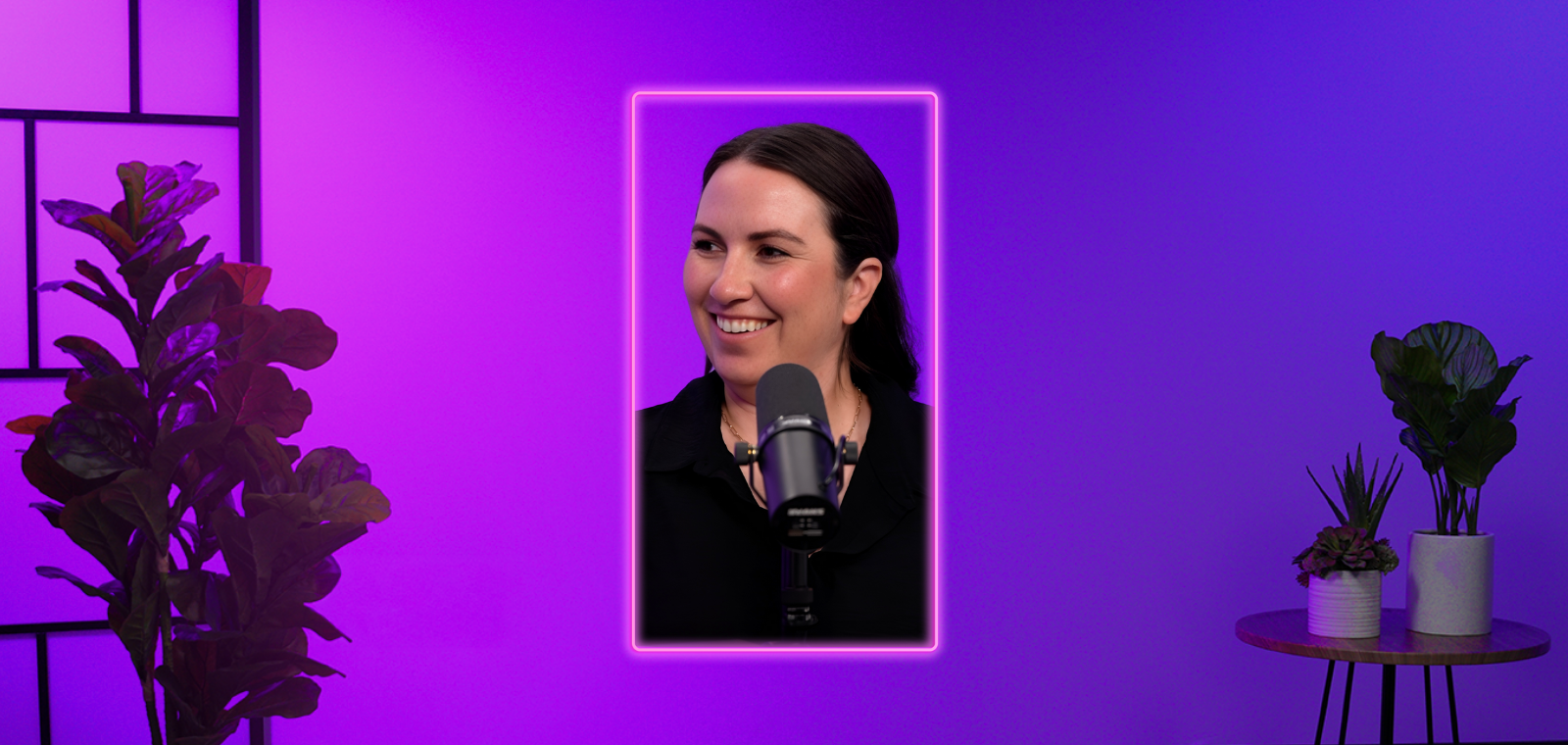
Ep. 46 | Navigating the Future of Candidate Acquisition and Retention
In this episode of Elevate Care, hosts Kerry Perez and Liz Cunningham dive deep into the evolving landscape of healthcare candidate acquisition and retention. Leveraging their extensive backgrounds in strategy, marketing, and technology, they explore how regulatory changes and the rise of Generative AI are reshaping how clinicians search for jobs and how organizations must adapt their digital marketing strategies. The conversation uncovers critical insights into the shifting balance between high-tech self-service adoption and the enduring value of high-touch human connection in the hiring process. They also challenge traditional notions of loyalty programs, proposing a "long tail" approach to clinician engagement that prioritizes consistent service and access over points-based rewards. Tune in to discover actionable strategies for optimizing workforce solutions and building lasting relationships with talent in a rapidly changing market.
Listen On!


Timestamps
00:00 Introduction: Candidate Acquisition Trends
01:31 Regulatory Changes and Gen AI in Job Search
04:13 The Future of Job Boards
05:46 Balancing Authenticity with AI Automation
08:09 Adoption of Self-Service Technology
10:12 Lessons from Locum Tenens Tech
12:26 Hyper-Personalization via AI
15:03 Human vs. Digital Brand Loyalty
16:54 Redefining Loyalty in Healthcare Staffing
21:58 Digital Transformation in Credentialing and Onboarding
24:12 Conclusion and Key Takeaways
About Liz Cunningham
Liz Cunningham, Vice President of Digital Solutions at AMN Healthcare since 2020, drives digital transformation for a seamless user experience powered by self-service, AI, and automation. She manages a diverse team of senior leaders and team members across product management, digital marketing, engineering, analytics, and user experience. In 2023, Liz also assumed the role of transforming AMN's enterprise customer support department, implementing new technology and a streamlined operating model.
In her 11-year tenure with AMN, Liz has taken on various roles, from heading AMN's clinician strategy during COVID-19 response to leading enterprise operations and branding for the Healthcare Staffing Divisions. Presently, Liz leads her team in managing the industry-leading healthcare professional application, AMN Passport, and spearheads new digital experience platforms, fostering digital-first engagements for clients and candidates.
Outside of work, Liz is dedicated to innovation and entrepreneurship. As a Board Member for the ZIP Launch Pad, a San Diego State-funded Innovation center, she actively champions early-stage startups founded by SDSU students and faculty. In her free time, Liz is cultivating a unique passion for cheese and is working towards becoming a cheese monger, adding a flavorful layer to her diverse interests.
About Kerry Perez
Kerry Perez leads the design and development of enterprise strategy in addition to overseeing Marketing, Corporate Communications, and Creative Services. Ms. Perez joined AMN Healthcare in 2007 and has held various roles during her tenure, including recruitment, marketing, innovation, strategy, and M&A. She most recently served as the company’s Vice President of Enterprise Strategy. She also stood up AMN Healthcare's Diligence and Integration Management Office, which led the strategic and functional integration of new acquisitions to drive synergy. She was named among Staffing Industry Analyst’s Top 40 Under 40 in 2021, and she hosts the AMN Healthcare podcast, Elevate Care.
Ms. Perez maintains the guiding principles of being customer-obsessed, thinking big, and delivering results. She has a passion for mentoring emerging leaders and building effective teams. Ms. Perez holds a Bachelor of Arts degree in Business Economics and a Bachelor of Arts degree in Communication from the University of California at Santa Barbara. For more than four years, she has served on the board of Dallas-based nonprofit CitySquare, which focuses on fighting the causes and effects of poverty. Connect with Kerry.
Transcript:
00:00:00.120 — 00:24:47.510
Welcome to Elevate Care. We're your hosts, Kerry Perez and Liz Cunningham. And we're excited to talk to you today about trends in candidate acquisition and retention. So Liz, let's get into it. I guess let's kind of keep it open ended to start. What are some things that you're kind of seeing right now? Well, first can I introduce us a little bit more. Sure. So, you know, I'm super excited to talk to Kerry about this topic because Kerry and I actually were both started at Am in a marketing background. And we, you know, what was that about 15 years ago? We were both in the marketing department and Carrie's now our CMO, and I was over our digital side for a while. we had some a great partnership around technology and marketing strategy.
So hopefully we can provide everyone with some insights on what's going on in today's market. Well, thank you for that lovely introduction and for you to and now your current role. Oh, now I am our vice president of our Technology and Workforce Solutions. So taking everything I've learned on the candidate experience side and really pushing that towards the client experience and how we bring them technology solutions that help them maximize and optimize their workforce.
Awesome. And then right before this, I was over our enterprise strategy. So similarly, it's kind of nice to bring things from across our organization into our new role. So thanks for that set up. Okay, so I guess getting back into, um, marketing trends and candidate acquisition and I think we can open the table for, you know, nursing, allied physician and anything else.
So maybe kick it off with a little bit of what you're one thing that you're seeing new. Yeah, I think one of the, the main areas that I think we all should be paying attention to is how we have traditionally attracted talent and what's going to be different about that. And if I think about how we attract talent and what's going to be different, I think about it in maybe two facets.
One is around regulatory. And I know that's not the fancy and fun thing to talk about, but there are a lot of regulatory changes happening around how and when you can contact people, different types of consent, and then also around first and third party data that's drastically changing. So, you know, before the world of email blasts and text blasts like that's really gone.
Like you really cannot send out mass text messages anymore without explicit consent. Same with email. Right. We used to do a lot of around, you know, search behavior and what people were looking at on websites. But, you know, third party data is oftentimes banned on a lot of sites now. And we'll continue to kind of thinking about the way of the of the UK and the EU and what they've done.
Those third party cookies are going to go away. So the information we know about clinicians and how we attract them is, you know, coming down. So we have to learn new ways to think about what that communication pipeline looks like. The other side is the house is the channels that traditionally clinicians find us and find out about.
Jobs are changing with the introduction of gen AI. So I guarantee you, if you went and talked to someone who was in their 20s and said, hey, how do you look for jobs? They're probably searching for it on ChatGPT or some other LLM model. and how those jobs show up, and how often those jobs are refreshed is kind of a mystery to a lot of us.
There's not a lot of analytics around, you know, how often content is being refreshed, how often content is being indexed. And some of the traditional ways that you looked at Google search and organic search and, you know, you knew when your pages were getting indexed by Google, right? You knew what search terms you'd have to put into your jobs to pull up on the job search.
Now we're going into this world where we're kind of all learning a platform together as marketers, and how we actually are going to use that to attract talent. If you, you know, if you were to Google search right now, nursing jobs in, you know, San Diego, there's probably only 1 or 2 companies that come up, and even those companies don't know why they're coming up versus another company.
So it's just something interesting that we're going to have to find out on the attraction side and what that job search experience looks like. Yeah, that is interesting because, you know, the LinkedIn's of the world, the in deeds of the world, they have a lot of users still. So I don't think the the complete swing has has happened yet, but would be interested in, you know, even how I use ChatGPT if I still might even look up like a what are the best job boards for for nursing.
So do you think that that is, you know, job boards, a way of the past? I don't that's a good question. I don't know if I think job boards are going to go away. I think job boards will still remain. If it's a good hiring experience. I think maybe the job aggregator type job boards are the ones that I would, you know, predict maybe not being as popular, the ones where it's like a LinkedIn or maybe an indeed where the employer is explicitly posting that job and they are communicating with you when you're interested in that job.
That's still a benefit for the user because they're directly connecting with that employer, the job boards, where you're just putting your name in a massive resume database and getting blasted by a bunch of, you know, I don't I don't know if I see that being the way of the future, but that's just my opinion.
What do you think about that? No, I mean, I think I think, you know, we had spoken earlier in a different podcast with Nahshon about just how long it might take for people to adopt things. I do think that there's probably a long tail where it is still the place to go, right? It's still a trusted place that, you know, where it can kind of sort of be verified, where even still on, you know, ChatGPT you still really you want to trust but verify, like, am I actually getting all of the information?
Did it only serve me part of the web? And so that's where it's like, okay, the old standbys I still think are there when, you know, like where to go. But I agree with you that things probably will change and will adopt. And, you know, maybe even other job boards are figuring out a way to have a better sort of onboarding experience to, to plug into, um, employers, you know, directly or to staffing companies and things like that.
Right. Well, what do you think? So kind of going further down the funnel. Right. So it's okay. Maybe it's a different way for them to find us, right? Google analytics won't be the only way we find out. You know, how people are finding us. But what about, you know, once someone decides to apply for a job? Do you see anything different in that process?
I mean, some of the things that come top of mind to me is how are we going to maintain authenticity and quality in that process when they can go and say, hey, ChatGPT, write me a resume for this job and upload it? Like, what do you think is different about that kind of application process or what should we be thinking about differently?
Yeah, that's a good question. I mean, I think we're we're in a space where verification is like very critical. And, you know, we are very serious about that. So I feel like, um, you know, it's like, oh, have your robot talk to my robot. There is sort of a risk there of how you how you validate that. So I don't think that, um, there should be a path where it can be completely self-service.
But I do think that there is some points that are important for human interaction. You know, there are some things that do require an interview. There are some things that do require, you know, vetting with a recruiter. But what I will say, maybe a little bit different than what you asked, is I think there are different ways in which people do want to interact at different times.
So what I am seeing in this trend of once people apply is that speed is the name of a game of who is first to actually have a human interaction with that individual, which is first to make the connection, make the build the relationship, make the connection. Exactly. Because at some point there can be decision fatigue.
And if you are getting blasted by, you know, ten different people, who are you going to go to? And it's like, well, maybe. Who did I feel that quickest affinity to where that brand sort of matters. So it's a little bit of a different flavor than what you asked, so I'll put it back on you. But it is that connection point a digital one or is it still people are picking up the phone?
I think it's both. I think it's a digital one. But then, you know, I think even in some of the surveys that we've seen, the speed to make a first contact and get to know your recruiter, at least today, that seems to make a difference, because loyalty is, you know, um, often shown to that relationship with the recruiter.
And it's why it's also important to start to build loyalty to your brand, because there are so many other places you can go and look for a job now. Um, well, and what I've been noticing is, you know, as the trend and the adoption of self-service continues to increase, it seems like we're just asking clinicians to do more up front to make our lives easier and their lives easier.
What what does adoption look like for that? I'm thinking about a lot of trends in the staffing industry around pre credentialing or using preferences or auto submitting. You know themselves based on a job coming in. Like what do you see adoption looking like in that space. Well you know you might even be more apt to speak to that with your oversight of passport previously.
But I do think we are seeing more adoption. But it is probably in particular either, I guess like generations or user types. Yeah, it's not everybody. And I think even if we step back and take a look at ourselves and what we want to do, if I get told to like download another app, there really has to be a good reason in there for me.
So I think we're seeing adoption as there's more benefit for it, showing the value that you'll get at that touch point for them, that you'll get that job quicker, that you'll be first in line. So it really is about adoption, not just to get something done from them, but that we're going to be able to provide the value to them.
Yeah, I think generational to your point, I see the differences. But then also I see the differences in like disciplines and specialties, right? So the clinicians out there that are in high demand, right? They know if a job comes up, they are the most qualified person that get it. They can, you know, get five job offers at one time.
They're likely not the ones that are doing a bunch of self service because they know that they, you know, are slim pickings and they're highly desirable. It's the ones that are have a lot of competition. So maybe you think about some of like the med surge or the tele positions or even some Pts and OTS on the Allied side, right?
It's the ones where when a job opens up, there's ten candidates against it in five seconds. Like those are the ones doing the self-service. So it'll be interesting if does that keep changing as market dynamics shift or, you know, are we creating the behavior in one group and not the other. And we'll see what that looks like.
Yeah. No that's interesting too. And you know maybe goes to some tech only services out there. It's like the easiest ones to find are probably the ones who you'll be matching tech only. Right. You know, so to find sometimes those purple squirrels or to to engender yourself to the higher need specialties or the more scarce they know that they can be wooed, I suppose.
Right. I know also with passport, which is our candidate facing app, we're starting to expand more into the locum space. What are some of your thoughts or your predictions of either what we're seeing from an adoption standpoint, or what features or benefits might be the most useful to them. That might not be what you might see for nursing an outline.
Well, you know something interesting. If we kind of go back in time, we built a self-service portal for physicians, probably like 8 or 9 years ago, and we built this really robust credentialing thing for them to do. So it was they could put all their metadata in for credentialing. They could upload everything.
You know, it was really kind of all the bells and whistles. No one used it. These physicians were like, I'm not going to take this time and upload all these individual documents. I don't trust where my data is going. I already have this. You know, one guy came, he literally came into my office. He's like, I have this folder of all these documents, like, just take it.
It's like, okay, that was the reality of what happened. So we probably missed there. But where we saw adoption was around, if you need to enter time to get paid, they're going to enter time. Right. So focused on that piece. Now that we move to the mobile app side for physician, we're still seeing that same adoption on the time entry, which it's that's kind of a table stakes to me.
Right. You have to do that. Where we're seeing more uplift in terms of what physicians are adopting is they are more willing to kind of self-serve, look at jobs. Whereas before they would just rely on the recruiters to do that. And then also we're seeing a lot more physicians be willing to kind of self schedule once they're actually credentialed at a hospital and looking to do that.
Credentialing, I think, is still a beast. And we got to think about an easier way to to do that. But I do see the job search and the kind of self scheduling as an opportunity in the physician space. That makes sense. You were talking, I don't know, a few minutes ago, just sort of about the communication preferences.
Another trend that I'm seeing as it relates back to your point of digital or human is even in the digital communication, having more personalization and making it feel that there's a human on the other end of that communication is becoming more and more important. Any thoughts that you have there? Yeah, I think one that's a great space to dive into when you're starting to think about AI use cases and where you can really add that personalization in which I know sounds impersonal, saying, oh, we can use AI to do personalization.
But the reality is organizations and, you know, are we have done this like is invested. We've invested a lot in data over the last couple of years. So organizations that have a really central data repository and really have focused on, you know, creating that single clinician record and really understand the 360 degree view of the clinician, have been able to unlock value from some of these new AI use cases by quickly digesting a lot of data points around, you know, where clinicians interact, what time of day they interact with their communication preferences, their generational preferences, and turn that into automated, intelligent journeys that serve up the right content at the right time, in the right tone.
Like, you know, you can literally, these days have one single message about the job that goes out to five people and is done at five different times of the day on different devices and with different tone in the message. And that's really what makes the difference. You know, we're seeing the more we can personalize messages, the higher engagement we get.
Some of these engagement rates we have on email these days are higher than I've ever seen, you know, in my history of being in the digital and marketing space, which is crazy to me because I feel like no one really uses email. You know, that in their 20s, right? So it's interesting seeing just that, that personalization.
And you can create that same connection and engagement with the digital side, just like you can on the human side. Yeah. Really important. Just the exactly as you mentioned, a little bit of a nuance, but it's also introducing maybe who they will be talking to, you know, giving a little bit of insight into the personality of a recruiter that they might be working with, of a company of what their sort of ethos is, I think is another element kind of rolling into the content that's important.
I'm doing a little bit more like short form videos, where you can sort of get a sense for things, in addition to everything that you just mentioned are some trends that we're seeing. That's a tricky one because I, I don't know if I'm more just on the digital side of thinking about this, and because I want you to push back with me on the human side.
But I agree that the human interaction has to mirror and supplement or vice versa, the digital interaction. I don't know if I'm so sold on it has to be an individual person, because I think there's some inherent risk of that. So I don't know the right answer, but it's like, how do you actually just create the engagement and the loyalty with the brand and the service with the brand?
So hey, I know Am and healthcare has this amazing level of service, and I'm going to call this number and I know either my recruiter will talk to me or these five other people will. And is that more what you want to do with a digital model versus like supplementing an individual. I don't I don't know. That's a fair point.
And and I agree that, you know, hey, people change, people get promoted, people leave jobs. You can't really hang your hat on an individual person. So I agree with that. With the brand, I think as a conduit to give like a little bit of an insight into it is where a person can sort of represent a brand or express a brand versus be the brand.
So it's a yes. And to what you said, um, because even I think as individual users, I like to know that it's not just a robot. That robot might be helpful. Um, and I don't know, maybe some people don't care, but it feels lonely to just think, you know, you're just kind of being put through a machine. You're right.
I mean, and especially with hiring decisions, right? Or career decisions. Right, you know, where am I going to live? Do I trust that this company is going to take care of me? Do I trust this is the right job for me? That human interaction is definitely important. I guess I'm more thinking about like, how are you?
How do you scale that where there's not a single point of failure, right? But you still are creating that trust. So it's probably maybe a recruiter and a team. Right? Or something. Totally. Yeah. All right, so, Liz, talking about sort of retention and loyalty. One topic that I want to bring up is about loyalty programs.
It is something that is always talked about here and probably in every industry. But it feels a little bit, you know, tricky to hit the exact market. The mark of loyalty. When we know that some of the reasons why clinicians are looking for jobs, maybe they're trying to go to a specific location to see their family and that job might not be available.
Or it's a pay rate that is a little bit different. Your thoughts on like loyalty programs or. Well, let me, let me I'm not going to flip the question, but I'm going to ask you a question to help answer my question. Okay. What are the top two brands you're loyal to and why? And you're probably American Airlines and probably literally American Airlines.
I don't know if I'm loyal to like any other brand. Okay. So why why are you loyal to American? Well, I guess I am loyal to American because of the experience that I know that I'm going to get, and because of the frequency in which it is in my life. But are you loyal to it because you continuously rack up points every time you travel and it becomes this like cycle you can't get out of?
There is a little bit of a gamification of it. There is a little bit of I got suckered into, I guess, buying the credit card. And so now I'm kind of like, it's sticky for me, and I get to go sit in the lounge before, so I might as well. It's also within my, my, my bubble, you know, the airport I go to is DFW. That is a flagship.
It seemed also smart to be loyal to them. Right, exactly. And I think so. There's that type of loyalty. I would also say, you know, there are probably companies that you're loyal to and I am to that have like no sort of points program at all. Right. So, um, like Sephora, I guess not to kind of devolve this conversation into makeup products.
Yeah. But on makeup, that's what it's about. But it has the products I like. I don't care about the points. They say always. I have x number of points. That doesn't really mean anything to me. I like the experience that I'm going to get there. I like the type of products, I like the service. I like the consistency.
Right, right. Um, yeah. You could think of like Amazon too. I mean, I know people, you know, you don't say, oh, I'm so loyal to Amazon, but it's probably the one thing you use the most. Same with like Uber and Uber Eats, right? The reason I'm bringing it up is because there are different ways you can think about loyalty.
There's the points program and the I get more by doing more, which is American Airlines, right? Things like that. There's also the I'm loyal to this company because they always do right with me and they're so easy to work with. I think in our space it's the latter. You know, I, I agree we could we could get to a space where we're like, oh, if you work this many hours, then you can do this.
But just like your American Airlines example, when I moved to San Diego, I had to stop being an American Airlines loyalist because the only other airlines I could fly were Alaska and Southwest. If a clinician wants to go take a job in San Diego, and we don't have jobs there. They're going to go find a job in San Diego with another company without us.
Right. So there is that like necessity of there's also clinicians have an idea of where they want to go and they can go find anywhere else they want to go. So I think it's that relationship and that customer service and that customer experience that will help them kind of maybe maintain that loyalty more than just kind of a points program.
That is nice, but it's not helping me, you know, not go switch to another company, I guess. And, you know, maybe loyalty. I completely agree 100% with with what you said. And by that experience and even just getting the basics right, you know, of that consistency. But loyalty might even be different in this environment, which means you you will come back at some point.
Not that it is. You have to take every single consecutive assignment, but it is like we are in your consideration set and you have had a good experience to come back. So it might even challenge a concept like how do we define loyalty? Yeah. That's interesting. Like, I haven't looked at the data recently, but like, are the times of the traveler that traveled with us for ten years gone?
Are people taking less assignments, or are they doing one and a half and converting? And then to your point, it's it's more of a long tail sailed. We're like we're like the car salesman, not the used car. I don't know. Yeah. Not like a new car place, a new car place where it's like, I know I'm gonna make this great experience for you right now, because you're going to come back to me in seven years from now and buy another car.
Right. And you know what? I'm even going to come back and get my oil changed at the dealership or like, a realtor. I mean, you're not going to go buy another house, but they keep they keep in touch with you when you are ready to go. You usually call your realtor. Yeah. So maybe we gotta think about that long tail game and not the short tail on some of it.
I don't know. We're not used car salesman, I know. Okay, so we talked a little bit about, you know, acquisition and where candidates are coming from, how they're searching, what might be different. Talked a little bit about once they sort of get engaged with us, the application process, the sort of personalization, human and digital touchpoints.
And then we just sort of talked about retention and loyalty and experience. What other aspect of this customer journey should have we not talked about that? You know, might be insightful? I think just a point to make is the whole part of the middle, you know, the harder part around some of the credentialing and onboarding and whatnot.
I do think that's where we're seeing a lot more adoption of self-service and digital, and I think it's the right place to focus on to allow for more of that front end and back end personalization interaction. So, you know, gone are the days of the recruiter calling to collect the credential documents right there.
Focus on the relationship building. So I think we'll continue to see investments in things like virtual interviewing, virtual onboarding, third party credential integrations, uh, you know, even like automated skills checklists and things like that. So that middle part of the process is where I see the most adoption, the most self-service.
But I also see that as a potential area of risk as we keep adding more and more AI and automation in it to really figure out, like, how are you differentiating candidates? I think something that I feel like is really interesting is, you know, during the pandemic, which makes sense. We had to do a lot more virtual interviewing, virtual orientation type things because there was so much demand, like you could not possibly get through it.
We've really seen it. The the scales tip back towards that personal interviewing. So a lot more clients are requesting phone interviews, a lot more clients are requesting references, things that like we were like, oh, that'll be automated in the way of the future. We'll just tell you the right candidate.
And here's this magical score. I do see us kind of going back to a little bit more old school in that space. Um, which is interesting because that's also the space where you're seeing more AI kind of, oh, have a virtual assistant that does your interviews for you. Um, it'll be interesting to see if that happens in that space and if the quality of the talent still remains the same.
Yeah. And how else we might even think about that at all. You know, at Amazon, they basically have these interview loops these days where, you know, you just take all the entire interview team and you have 30 candidates come through and interview them all at once. So these interview days, that just might be interesting of where things are enabled by by tech.
But, you know, you still really need to have that personal personal decision. Yeah, exactly. So. Okay. Well, I think we kind of covered a decent amount of ground. Any any parting thoughts or do you want to you want to give us our outro? Yeah. Well, thank you for joining Kari and I. We love talking about Canada experience, digital marketing, um, self service, new applications.
So we're super excited to be able to share some of those insights with you all today. So thank you so much. See you next time. Thank you for joining us today on Elevate Care. If you found this episode valuable, please consider sharing it with a colleague and subscribing to our show on your favorite podcast platform.
You can learn more about this episode in our show on our website at AMN healthcare, and follow us on social media to stay updated on new episodes and the ever changing world of health care.


