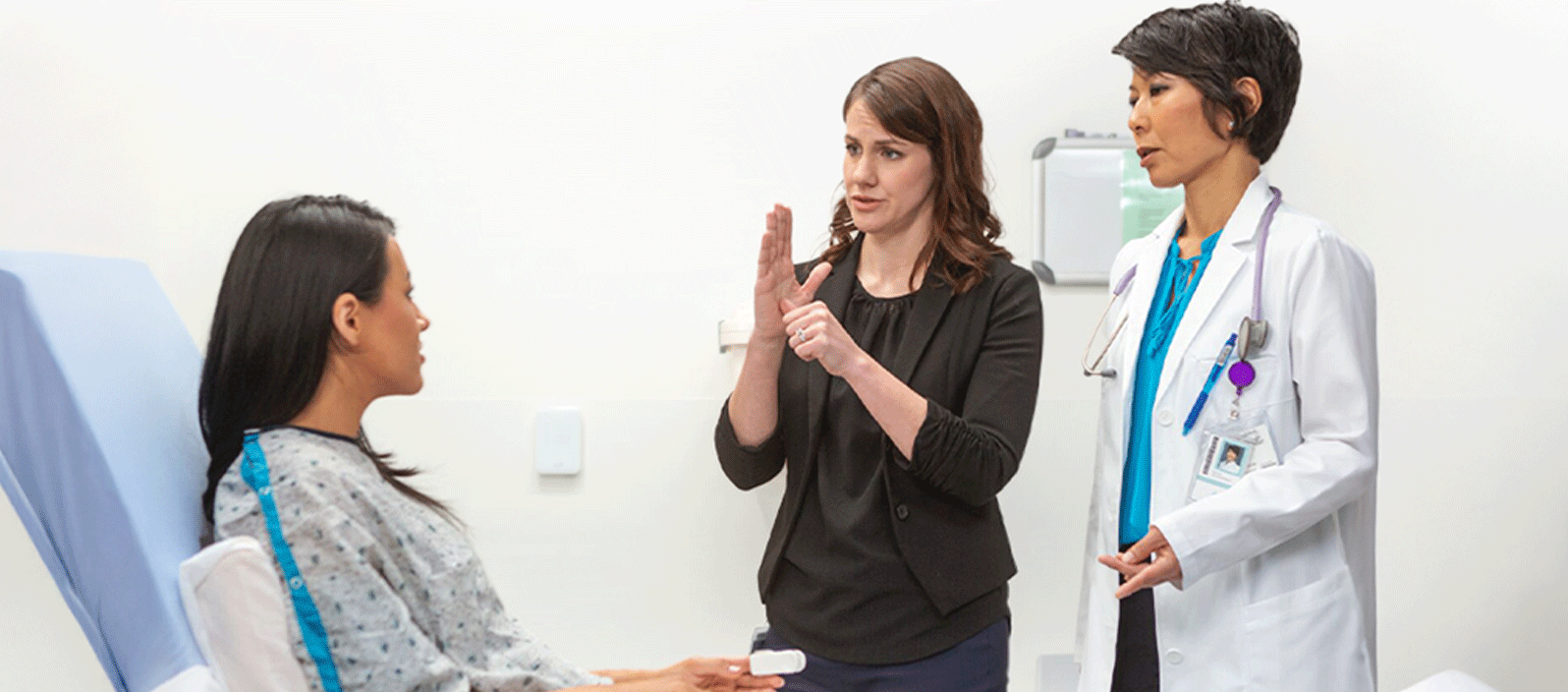


Breaking Barriers: Best Practices for Interpreting in Behavioral Health
For medical interpreters working in behavioral health, your role is critical. In most medical scenarios, diagnostic tools like X-rays, blood tests, or thermometers provide objective data about a patient's condition. However, behavioral health is different. In mental health care, communication is the primary diagnostic tool. A psychiatrist or therapist relies almost exclusively on a patient's words, tone, and cultural context to understand their distress and formulate a treatment plan.
For patients with limited English proficiency (LEP) or those who are Deaf or Hard of Hearing, a language barrier in a mental health setting can be challenging. Without accurate interpretation, symptoms may be misunderstood, and cultural nuances can be mistaken for pathology. This is why skilled medical interpreters are important. You aren't just translating words; you are ensuring equity and enabling patients to control communications about their own health.
Whether you are looking for new medical interpreter jobs or seeking to improve your current skills, understanding the nuances of behavioral health is essential for success.
The Importance of Modality: In-Person vs. Video Remote
Providing the best care often begins with choosing the right method of interpretation. While the goal is always clear communication, the setting whether it is an emergency crisis intervention or a routine therapy session dictates the best approach.
The Power of In-Person Interpreting
For many behavioral health encounters, in-person interpreting is the gold standard. Being physically present allows you to pick up on subtle non-verbal cues that are crucial in mental health assessments, such as a patient’s hygiene, body movements or specific posturing.
The onsite presence of an in-person interpreter may help build a stronger therapeutic alliance between the provider and the patient. In sensitive situations, such as trauma counseling, your presence can offer a sense of stability and human connection that technology sometimes struggles to replicate.
The Reach of Video Remote Interpreting
However, physical presence isn't always possible or immediate. Video remote interpreting (VRI) has become a critical tool in expanding access to behavioral health services. VRI combines spoken or signed language with visual cues, which offers a significant advantage over audio-only phone interpretation.
VRI is particularly effective in emergency rooms or rural facilities where an in-person interpreter for a specific language may not be available within a reasonable timeframe. It ensures that care is not delayed. For qualified interpreters, VRI offers the flexibility to work from home while still making a meaningful impact on patient care across the country.

Critical Skills for Behavioral Health Interpreters
To truly excel in this specialty, interpreters must go beyond basic fluency.
Cultural Competence
Mental health concepts vary wildly across cultures. Some cultures may describe depression somatically (physical pain), while others view it spiritually. A skilled interpreter understands these cultural frameworks and can convey the patient's meaning accurately without judgment. This helps providers distinguish between a cultural belief and a psychiatric symptom.
Maintaining Neutrality and Boundaries
Behavioral health sessions can be emotionally charged. Patients may share traumatic experiences or display aggressive behavior. As noted in professional interpreter code of ethics and standards of practice, it is vital to remain neutral, accurately interpreting everything said. This accuracy helps the provider assess the patient's mental state.
Managing Vicarious Trauma
Because of the intense nature of the work, interpreters in this field must prioritize their own mental well-being. Recognizing the signs of vicarious trauma and utilizing support systems is key to a long, healthy career. Learn more about vicarious trauma here.
Launch Your Career with AMN Healthcare
The demand for skilled professionals in this field is growing. If you are passionate about health equity and ready to advance your career, AMN Healthcare offers a wide variety of interpreter jobs to fit your lifestyle.
We hire and contract highly skilled interpreters for:
- Video Remote Interpreting: Enjoy the flexibility of working from home with a supportive digital community.
- In-Person Interpreting: Work on-site at top healthcare facilities, managing your own schedule.
- ASL Interpreting: Facilitate communication for the Deaf and Hard of Hearing community.
At AMN Healthcare, you gain more than just a job. You gain a partner in your career. We offer competitive pay and a dedicated 24/7 Client Success Team to support you. For eligible employees, we also provide health insurance, paid time off, and 401k matching.
Your expertise can bridge the gap between a patient in crisis and the help they desperately need.
Ready to Make an Impact?
If you are ready to take control of your career and help patients access the care they deserve, we want to hear from you. Explore our current interpreter employment opportunities and find the role that fits your skills.